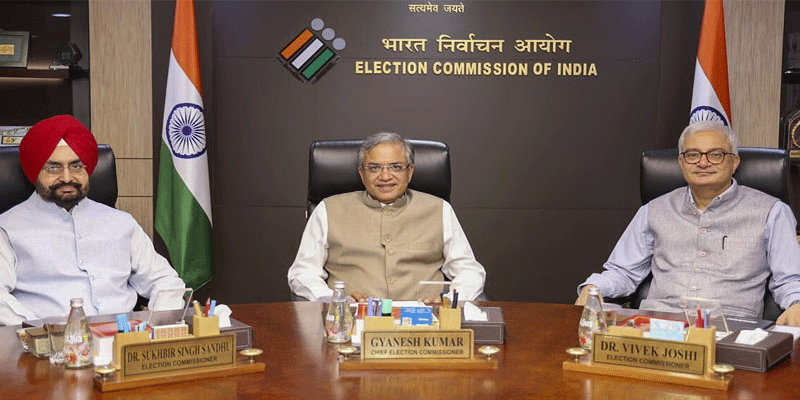
The Election Commission of India (ECI) has completed the scrutiny of nominations for the upcoming Assembly elections, clearing 2,140 candidates to contest across 296 constituencies in Assam, Kerala, Tamil Nadu, and Puducherry. With this crucial stage concluded, the electoral battlefield is now firmly set for what promises to be a politically significant contest.
Scrutiny Process: Filtering the Field
Over March 24–25, Returning Officers undertook a detailed verification of nomination papers, eliminating entries with discrepancies in affidavits, incomplete documentation, or deposit issues. This rigorous process ensures that only eligible and compliant candidates enter the fray, strengthening the integrity of the electoral system.
The final tally reflects a competitive landscape: Kerala leads with 985 candidates across 140 seats, Assam has 789 candidates for 126 seats, while Tamil Nadu and Puducherry together account for the remaining pool. The trimmed list sets the stage for intense, multi-cornered contests in nearly every constituency.
State-Wise Political Dynamics
In Assam, the BJP is contesting almost all seats, aiming for a third consecutive term under Chief Minister Himanta Biswa Sarma. The Congress, along with regional allies, is attempting a comeback, making the state a key battleground in the Northeast.
Kerala presents its traditional bipolar contest between the Left Democratic Front (LDF) and the United Democratic Front (UDF). With a narrow margin separating them in 2021, the stakes are high as the incumbent government seeks continuity while the opposition eyes consolidation of minority and swing votes. The BJP is also expanding its footprint, hoping for incremental gains.
Tamil Nadu’s political theatre is dominated by the DMK-led alliance and a resurgent AIADMK, with the BJP attempting to carve out a stronger presence through alliances. Puducherry, though smaller, remains politically volatile with tight contests among national and regional players.
Election Machinery and Voter Preparedness
The elections will be conducted in phases starting April 6, with results scheduled for early May. The ECI has activated the Model Code of Conduct and deployed over 15,000 electronic voting machines. Around 50% of polling booths will be webcast to ensure transparency.
Security remains a priority, with central armed police forces deployed across sensitive areas. Notably, 1.2 crore new voters have been added, while initiatives under SVEEP aim to boost turnout beyond previous levels.
Why These Elections Matter Nationally
Beyond state boundaries, these elections carry significant national implications. They will serve as a barometer of political momentum ahead of future national contests, testing the strength of both the ruling establishment and opposition alliances.
Key ideological narratives—federalism versus centralisation, welfare versus development, and regional identity versus national politics—will play out across these states. The results could reshape alliance equations and influence policy direction amid ongoing economic and geopolitical challenges.
A Defining Electoral Moment
With candidates finalized and campaigns set to intensify, these Assembly elections represent more than routine democratic exercises. They are a critical test of leadership, strategy, and public sentiment across diverse regions.
As India navigates both domestic challenges and global uncertainties, the outcome of these polls will not only determine state governments but also offer a glimpse into the evolving contours of the nation’s political future.
(With agency inputs)