A Strategic Deflection
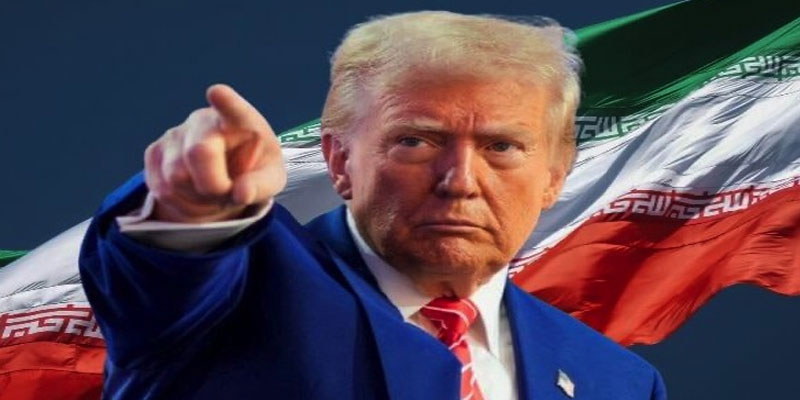
U.S. President Donald Trump has shifted much of the responsibility for initiating the Iran war onto Defence Secretary Pete Hegseth, portraying him as the first senior official to advocate military action. Speaking at a public forum, Trump framed Hegseth’s push “Let’s do it” as central to the decision to escalate, effectively redistributing accountability within his administration. This move allows Trump to maintain a dual narrative: projecting decisive leadership while insulating himself from potential fallout over the war’s consequences.
Mixed Messaging: Threats vs Talks
Trump’s approach has been marked by sharp contradictions. On one hand, he issued stark warnings of striking Iran’s power infrastructure if the Strait of Hormuz remained blocked. On the other, he abruptly paused such threats, citing “productive” talks with Tehran. Iran, however, has categorically denied any negotiations, calling these claims “fake news” aimed at influencing global markets.
This oscillation between confrontation and conciliation creates strategic ambiguity. While the pause briefly stabilised oil prices and investor sentiment, it also raised questions about policy coherence. The administration appears to be leveraging both escalation and diplomacy as tools of signalling, rather than committing fully to either path.
Internal Fault Lines in Washington
Beneath the surface, the Iran strategy reflects divisions within the U.S. leadership. While Trump and Hegseth leaned toward assertive military action, figures like JD Vance reportedly expressed caution over prolonged conflict and potential casualties. Similarly, other senior officials are believed to have harboured reservations about the scale and duration of engagement.
External influences have also played a role. Benjamin Netanyahu has pushed for sustained pressure on Iran, reinforcing a more hardline stance. These overlapping pressures—internal caution versus external urgency—have shaped a policy that appears less unified and more reactive.
A War Without Clear Alignment
The lack of consensus is further complicated by diverging objectives among allies. While Washington hints at possible de-escalation, Israel has signalled its intent to continue military operations against Iranian targets and regional proxies. This disconnect suggests that even if the U.S. moderates its stance, the broader conflict may persist.
For global observers, including countries dependent on stable energy flows, this inconsistency heightens uncertainty. The Strait of Hormuz remains a critical flashpoint, and any miscalculation could trigger wider disruptions across energy markets and regional security frameworks.
Strategy or Political Shielding?
Trump’s decision to shift the onus onto Hegseth reflects more than internal delegation—it points to a broader attempt to manage political risk amid an unpredictable conflict. Coupled with fluctuating rhetoric on war and diplomacy, it underscores a strategy driven as much by perception as by policy. Yet, in a volatile geopolitical environment, such ambiguity carries its own dangers. Without a clear and consistent approach, the line between calculated manoeuvre and strategic drift becomes increasingly blurred, raising the stakes not just for the U.S., but for global stability at large.
(With agency inputs)