Tehran Signals Readiness for War
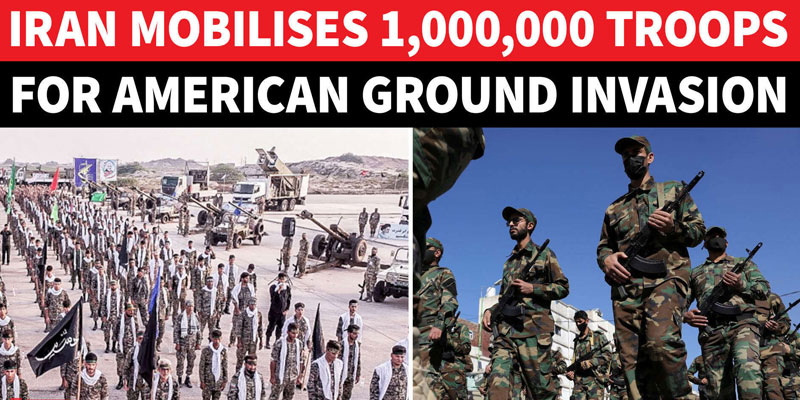
Tehran has sharply escalated its stance, readying over one million fighters amid fears of a possible US ground invasion. The move comes even as US President Donald Trump pauses strikes on Iranian energy infrastructure until April 6, allowing room for backchannel diplomacy. However, Iran’s leadership remains defiant. Foreign Minister Abbas Araghchi has rejected negotiations framed as concessions, while signals from the top leadership indicate a willingness to endure prolonged pressure rather than yield to US demands, including reopening the Strait of Hormuz.
A Rapidly Expanding US Military Footprint
Even as diplomacy flickers, Washington is reinforcing its military presence across West Asia. The Pentagon is preparing for multiple contingencies, ranging from securing shipping lanes to potential ground operations.
At the forefront is the deployment of elements from the 82nd Airborne Division, with 2,000–3,000 paratroopers mobilizing for rapid-response missions. Their role would include securing key bases, protecting strategic assets, and potentially targeting Iranian missile or mining infrastructure.
Simultaneously, two Marine Expeditionary Units are being positioned for amphibious operations. These units are designed for swift assaults on critical points like Kharg and Larak islands—vital for controlling oil flows and maritime chokepoints. Their capabilities include helicopter-borne raids targeting radar systems, fast-attack boats, and coastal defenses.
Air and Naval Power Surge
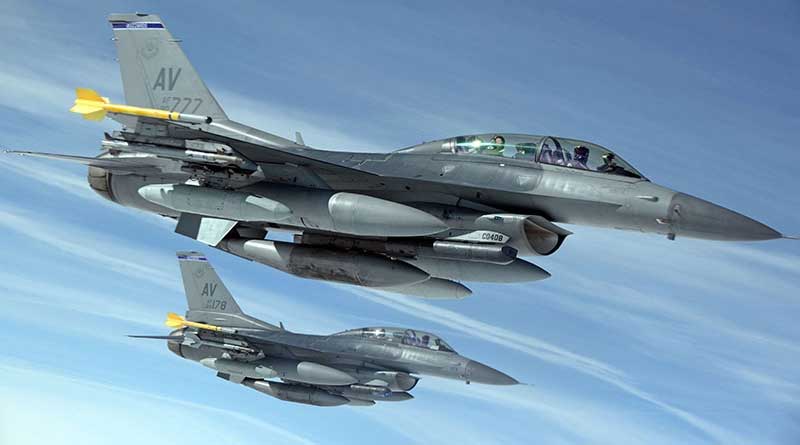
The build-up is not limited to ground forces. Advanced fighter squadrons, including F-35 and F-22 aircraft, are being deployed to ensure air superiority and prepare for precision strikes if tensions escalate after the deadline. Strategic bombers stationed at Diego Garcia further enhance long-range strike capability.
On the naval front, the USS Dwight D. Eisenhower carrier strike group is leading operations, supported by destroyers tasked with mine-clearing missions in the Strait of Hormuz. This layered deployment underscores a clear objective: maintain control over one of the world’s most critical oil transit routes, through which nearly 20% of global oil flows.
Strategic Intent and Operational Scenarios
Pentagon planning reflects a spectrum of scenarios. These include blockading Iran’s primary oil export terminal at Kharg Island, securing disputed islands like Abu Musa and Larak for maritime dominance, and even limited ground incursions targeting nuclear facilities.
The planned addition of over 10,000 troops in the coming weeks signals readiness for escalation, even as Washington maintains that these moves are defensive and deterrent in nature. The total US presence in the region could exceed 60,000 troops, forming a formidable force capable of rapid offensive or containment operations.
Global and Regional Implications
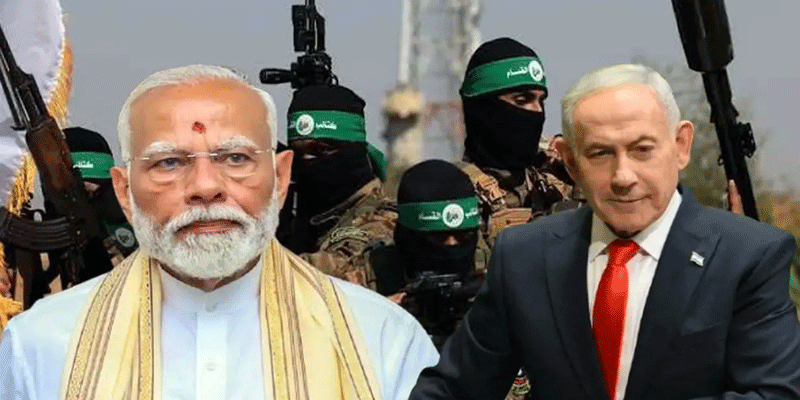
The military build-up is already sending ripples through global markets and vulnerable economies. Countries heavily dependent on fuel imports are experiencing panic buying and price volatility, highlighting the far-reaching consequences of a potential Hormuz disruption. Meanwhile, diplomatic channels—bolstered by leaders like Narendra Modi—are attempting to prevent a full-scale conflict that could destabilize global trade and energy flows.
A Narrow Window Before Decision
The current moment reflects a precarious balance between war and diplomacy. While the US military build-up signals preparedness for decisive action, Iran’s mass mobilization is equally a show of deterrence. The April 6 deadline now looms as a critical turning point.
Whether this leads to de-escalation or confrontation will depend not just on military strength, but on political will and diplomatic agility. In a region already on edge, even a limited miscalculation could trigger consequences far beyond its borders, reshaping global security and economic stability.
(With agency inputs)