Escalation in the US–Israel–Iran War
The widening conflict involving the United States, Israel, and Iran has entered a dangerous new phase, with hostilities now extending deep into the Indian Ocean. On March 4, 2026, Iran launched missiles at a US Navy destroyer and its refueling tanker hours after an American submarine torpedoed an Iranian warship. The exchange marks one of the most direct naval confrontations between Washington and Tehran in decades and underscores how the six-day-old war is rapidly expanding beyond the Middle East into critical global shipping routes.
The clash also places the conflict uncomfortably close to India’s maritime neighbourhood, raising concerns about trade routes, energy security, and regional stability.
The Sinking of IRIS Dena
At the centre of the crisis is the sinking of the Iranian frigate IRIS Dena. The vessel was torpedoed by a US submarine in international waters roughly 100 kilometres south of Sri Lanka while returning from multinational naval exercises.
The frigate had recently participated in the MILAN 2026 hosted by the Indian Navy in Visakhapatnam from February 18 to 25. According to US officials, the attack was carried out after intelligence suggested the ship was linked to Iranian military operations supporting the ongoing war.
US Defense Secretary Pete Hegseth confirmed the strike, describing the sinking as a “quiet death” for a vessel that “thought it was safe.” Pentagon footage reportedly showed the torpedo impact. Iranian authorities said the attack killed 87 sailors, while Sri Lankan forces rescued 32 survivors.
The sinking is historically significant as it marks the first confirmed destruction of an Iranian naval vessel by a US submarine since the Second World War era of major submarine warfare.
Iran’s Retaliation at Sea
Iran responded swiftly. The Islamic Revolutionary Guard Corps launched what it called “Operation True Promise 4,” firing Ghadr-380 ballistic missiles and Talaieh cruise missiles at a US destroyer and its accompanying tanker during a refueling operation more than 600 kilometres from Iranian territory.
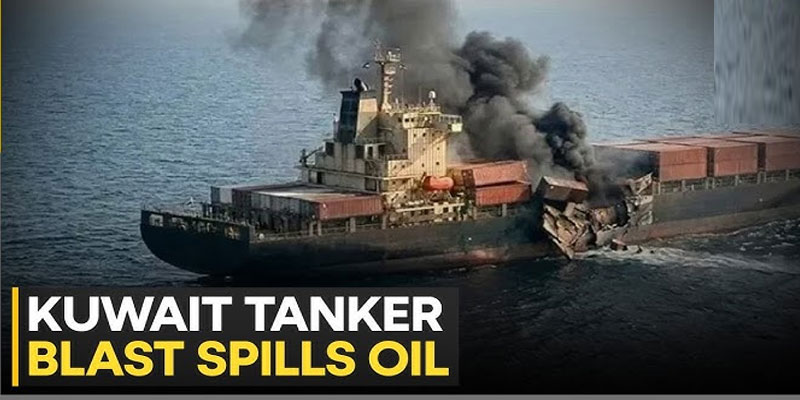
Iranian authorities claimed the strikes triggered widespread fires aboard both vessels. Tehran simultaneously declared the strategic Strait of Hormuz a war zone, and reports indicated that more than ten oil tankers had been targeted in the broader campaign.
Beyond the maritime front, Iranian forces also struck US facilities in Erbil and Kuwait and intensified drone and missile attacks against Israeli and Gulf targets.
The Wider War Context
The naval confrontation is part of the rapidly escalating conflict triggered by the killing of Iran’s supreme leader Ali Khamenei and subsequent Israeli-American operations against Iranian military infrastructure.
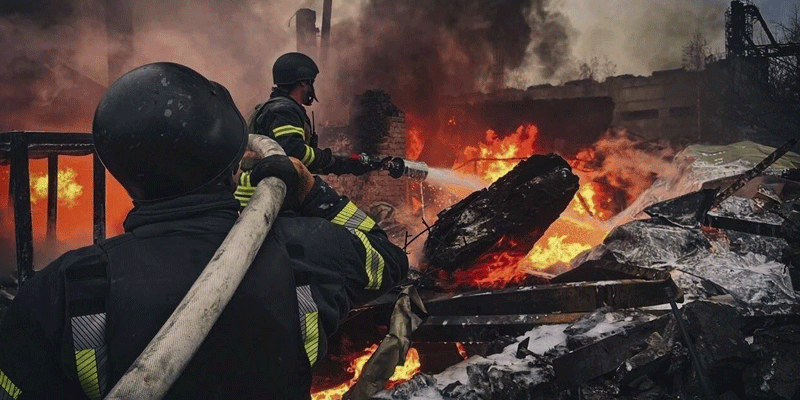
The joint offensive—dubbed Operation Epic Fury—has reportedly struck around 2,000 Iranian targets and destroyed more than 20 vessels while drastically reducing Iran’s missile inventory. Tehran has retaliated with attacks on diplomatic facilities, military bases, and energy infrastructure across the region.
The humanitarian toll is rising rapidly, with more than 100,000 residents reportedly fleeing Tehran amid continuous strikes.
What Role Did India Play in Seizing US-Sanctioned Ships?
India has found itself indirectly entangled in the unfolding maritime drama. The Iranian frigate sunk by the United States had recently visited India for the MILAN naval exercises, prompting questions about New Delhi’s neutrality.
Separately, Indian authorities have in the past cooperated with international maritime enforcement actions involving vessels suspected of violating US sanctions on Iran. Indian port and customs authorities have occasionally detained or inspected such ships under international compliance frameworks, though New Delhi maintains that these actions are based on legal obligations rather than alignment with any military campaign.
In the current crisis, India has been careful to avoid being drawn into the conflict. The government has instead focused on maritime security, increasing naval patrols and monitoring shipping routes that carry roughly 95 percent of India’s oil imports.
A Conflict Reaching Critical Sea Lanes
The confrontation between the United States and Iran has now spilled far beyond the Middle East battlefield into some of the world’s most vital maritime corridors. With missiles flying across the Indian Ocean and tankers under threat, global commerce and energy supplies face growing uncertainty.
For India, the stakes are particularly high. Its economic lifelines pass through the very waters now becoming a theater of war. New Delhi’s challenge will be to safeguard shipping, maintain diplomatic balance, and push for de-escalation—while ensuring that the expanding conflict does not destabilize the broader Indo-Pacific region.
(With agency inputs)