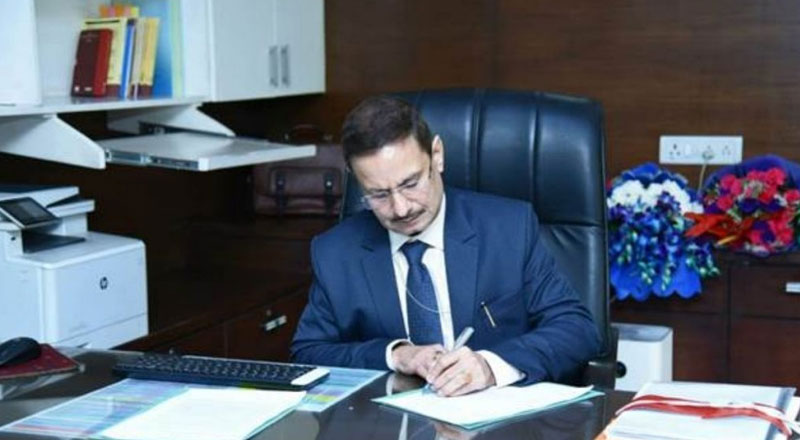
Vice Presidential Elections 2025 in Context
India’s Vice-Presidential elections have historically been more than a procedural formality; they often serve as a reflection of the country’s political alignments and parliamentary equations. The 2025 election was particularly significant, as it followed the unexpected resignation of Jagdeep Dhankhar in July, citing health concerns but also sparking speculation about internal tensions within the ruling establishment. Against this backdrop, CP Radhakrishnan, backed by the National Democratic Alliance (NDA), secured a decisive victory, emerging as India’s 15th Vice President. His journey from the textile hub of Tirupur to the corridors of the Rajya Sabha epitomizes both persistence and adaptability.
The Numbers: A Convincing Victory
The election was a straight contest between CP Radhakrishnan of the NDA and B Sudershan Reddy, fielded by the INDIA bloc. Radhakrishnan clinched the post with 452 votes, defeating Reddy, who garnered 300, creating a clear margin of 152 votes. Notably, Radhakrishnan received more support than anticipated — 452 against the expected 437 — while Reddy fell short of his projected 324. This discrepancy pointed towards cross-voting, underlining disquiet within sections of the Opposition.
Prime Minister Narendra Modi set the tone by casting the first ballot, accompanied by senior Union ministers, underscoring the ruling coalition’s unity. In contrast, abstentions from regional players such as the Biju Janata Dal (BJD), Bharat Rashtra Samithi (BRS), and Shiromani Akali Dal (SAD) highlighted the INDIA bloc’s limitations in mobilizing non-aligned forces.
Who Supported Whom? Political Alignments in Play
Radhakrishnan’s win was powered by a robust alliance comprising the Bharatiya Janata Party (BJP), Telugu Desam Party (TDP), Janata Dal (United), Shiv Sena, Nationalist Congress Party (Ajit Pawar faction), AIADMK, Lok Janshakti Party (Ram Vilas), Rashtriya Lok Dal (RLD), Asom Gana Parishad, and Janata Dal (Secular). A crucial boost came from Jagan Mohan Reddy’s YSRCP, which openly voted for him.
On the other side, Sudershan Reddy was backed by Congress, Dravida Munnetra Kazhagam (DMK), Trinamool Congress (TMC), Samajwadi Party, Aam Aadmi Party, Jharkhand Mukti Morcha, Rashtriya Janata Dal, Left parties, and Shiv Sena (UBT), among others. However, the INDIA bloc’s inability to consolidate support outside its immediate circle underscored its organizational fragility.
CP Radhakrishnan: A Profile in Perseverance
Born in 1957 in Tirupur, Tamil Nadu, Radhakrishnan’s ideological journey began early with the Rashtriya Swayamsevak Sangh (RSS) at just 16. He entered electoral politics through the Janata Party and later became a BJP stalwart. His big break came in 1998, when he won the Coimbatore Lok Sabha seat in the aftermath of the city’s bomb blasts. Riding on a security-focused narrative and AIADMK support, he retained the constituency in 1999, even as the BJP struggled to expand in Tamil Nadu’s Dravidian-dominated political space.
Between 2004 and 2007, as Tamil Nadu BJP president, Radhakrishnan led a 93-day rath yatra, campaigning on issues like terrorism, social equity, and interlinking rivers. This positioned him as a grassroots organizer with a conciliatory style. His reputation as the “Vajpayee of Coimbatore” came from his ability to balance ideological commitment with personal warmth, making him acceptable across divides.
From Electoral Losses to Constitutional Posts
Despite early parliamentary successes, Radhakrishnan’s later attempts in 2014 and 2019 ended in defeat. However, his loyalty to the party saw him appointed governor of Jharkhand and later Maharashtra, where he maintained a largely balanced relationship with Opposition-led state governments. His non-combative approach was in contrast to some of his gubernatorial peers, further consolidating his image as a consensus-builder.
What His Election Means for BJP and Indian Politics
Radhakrishnan’s elevation carries layered implications. For the BJP, it signals recognition of an old loyalist who has navigated difficult terrains with grace. His Gounder community background — an influential OBC group in western Tamil Nadu — may also serve as a strategic nod to caste dynamics, strengthening the BJP’s alliance with AIADMK and bolstering its OBC outreach nationally.
As Rajya Sabha Chairman, Radhakrishnan’s temperament will matter. His soft-spoken demeanor and inclusive outlook can ease tensions in a chamber often marked by confrontational politics. His reminder during past interviews — that one can oppose terrorism without vilifying communities — highlights a rare nuance in today’s polarized discourse.
Stability, Strategy, and Symbolism
The 2025 Vice Presidential election was more than a routine exercise; it was a statement about political arithmetic, cross-party trust, and the ruling coalition’s strategic foresight. CP Radhakrishnan’s rise reflects not only the NDA’s organizational strength but also its effort to balance ideology with inclusivity, loyalty with pragmatism, and politics with symbolism.
As he takes charge as Rajya Sabha Chairman, Radhakrishnan’s challenge will be to uphold the dignity of Parliament while navigating turbulent debates and safeguarding consensus-building. His personal journey — marked by perseverance, cross-party goodwill, and commitment to public service — suggests he is well-equipped for the task. India’s political establishment now looks to him to translate his conciliatory style into legislative stability at a time when the nation needs it most.
(With agency inputs)