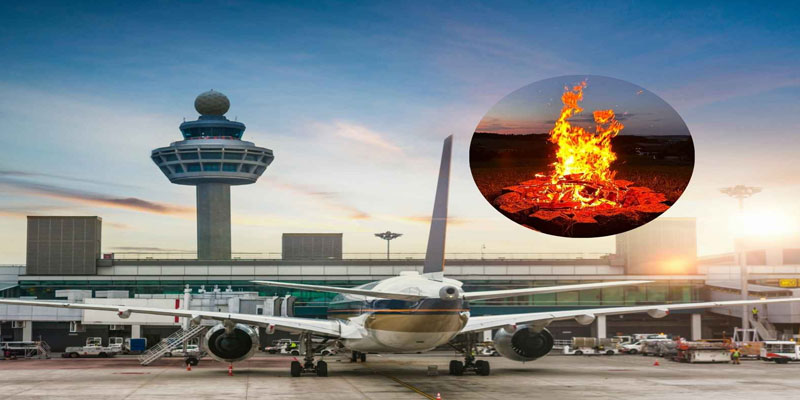
Blaze Near Dubai International Triggers Flight Shutdown
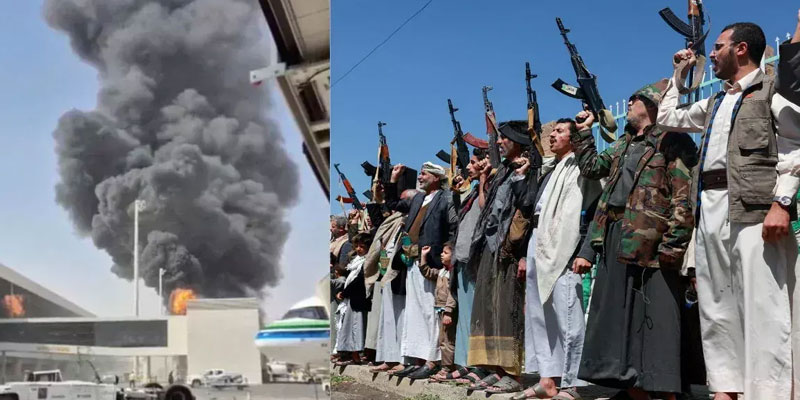
A fire broke out near Dubai International Airport (DXB) early Monday after a suspected drone strike hit a nearby fuel storage facility, forcing authorities to temporarily suspend all flight operations. The incident, which occurred amid rising regional tensions, sent thick smoke into the skies over Dubai and prompted an immediate emergency response from local civil defence teams.
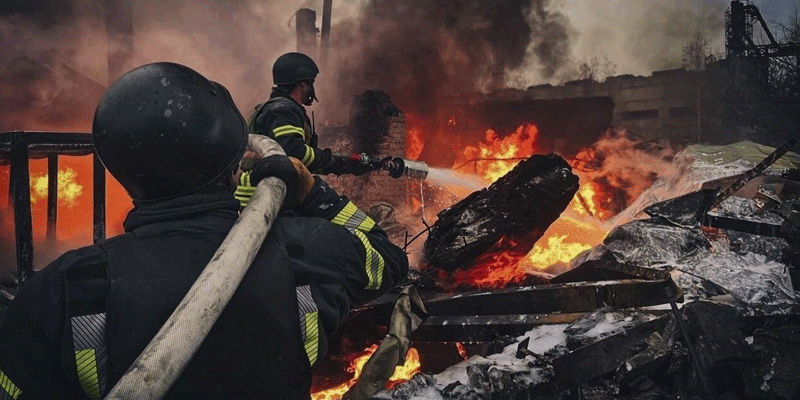
Officials from the Dubai Media Office confirmed that the drone impact ignited a fuel tank near the airport perimeter around dawn. Firefighters managed to contain the blaze quickly, preventing it from spreading to critical aviation infrastructure. Fortunately, no casualties were reported, but the airport—one of the world’s busiest for international travel—halted departures and arrivals as a precaution.
The disruption is significant because DXB handles around 87 million passengers annually and acts as a major hub connecting Asia, Europe and Africa. Authorities also imposed temporary airspace restrictions while air defence systems reportedly intercepted additional aerial threats in the area.
Flight Cancellations and Alternative Routes for Passengers
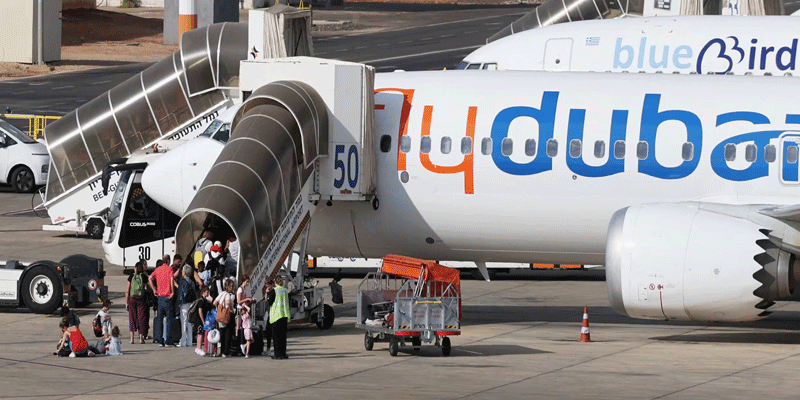
The incident caused widespread disruptions to global travel schedules. Emirates, the airport’s flagship carrier, suspended all flights from DXB for several hours and urged passengers not to travel to the airport until further updates. Airlines across the region quickly began diverting or cancelling flights to maintain safety.
Several international carriers were affected. Air India and Air India Express cancelled their scheduled services to Dubai for the day following instructions from UAE authorities. IndiGo also revised its flight schedules and began rerouting passengers where possible.
With Dubai temporarily closed, airlines diverted flights to alternative regional hubs. The nearby Al Maktoum International Airport in Dubai handled some diverted traffic, while other flights were redirected to airports in Abu Dhabi, Doha and Riyadh. Passengers traveling between India, Europe and the Gulf were advised to check airline notifications and consider connecting through these cities until normal operations resumed.
Travel industry analysts warn that even a brief shutdown at DXB can disrupt thousands of passengers daily because the airport serves as a critical transit hub. Cargo movements were also affected, with delays expected in shipments of electronics, pharmaceuticals and perishables moving between Asia and Europe.
Who Claimed Responsibility for the Drone Strike?
As of now, no group has formally claimed responsibility for the drone strike. However, authorities in the United Arab Emirates have indicated that the attack likely involved a drone launched by forces linked to Iran amid the ongoing regional confrontation involving the United States and Israel.
The suspected attack follows a series of escalatory incidents across the Gulf after the reported killing of Iranian Supreme Leader Ali Khamenei in recent military strikes. Security agencies believe the drone strike may be part of a broader campaign targeting infrastructure and energy facilities in the region.
While Iran has not acknowledged involvement, similar attacks in the past have been linked to networks associated with the Islamic Revolutionary Guard Corps. In earlier crises, proxy groups and drone operators have used relatively low-cost aerial systems to disrupt strategic infrastructure without openly claiming responsibility.
Investigations are currently underway, and UAE authorities say enhanced surveillance and counter-drone measures have already been deployed around key airports and energy installations.
A Stark Reminder of Aviation’s Strategic Vulnerability
The drone strike near Dubai International Airport underscores how geopolitical conflicts can quickly ripple into global transportation networks. As one of the world’s busiest aviation hubs, even a brief disruption at DXB can affect thousands of flights, millions of passengers and billions of dollars in trade.
While emergency teams managed to contain the fire quickly and prevent casualties, the incident highlights the growing security challenge posed by drone warfare and asymmetric attacks on civilian infrastructure. Strengthening air defence systems, improving crisis coordination and diversifying aviation routes will be crucial for maintaining resilience in the face of escalating regional tensions.
(With agency inputs)