A Shifting Landscape for Indian Professionals
For decades, the United States’ H-1B visa has been the most sought-after pathway for Indian professionals aspiring to work abroad. With Indians accounting for over 70% of H-1B holders, changes in U.S. policy inevitably carry significant consequences. The recent steep hike in H-1B application fees—jumping from around $1,500 to an astonishing $100,000 per petition—has created widespread concern among skilled workers and companies alike. At a time when America’s migration environment is being questioned for unpredictability, other nations, notably Germany and France, are seizing the opportunity to attract Indian talent by offering more stable, transparent, and rewarding pathways.
Germany’s Open Call to Skilled Indians
Germany has positioned itself as a strong contender for skilled Indian professionals seeking opportunities abroad. Dr. Philipp Ackermann, the German Ambassador to India, recently extended a clear invitation through a video message on X.
· Earning Potential: He highlighted that Indians working in Germany are among the top earners, even surpassing the national average salary. This, he said, reflects not only individual success but also the significant contributions Indians make to German society and welfare.
· Predictable Migration System: Comparing Germany’s migration policy to the country’s famous automobiles, Ackermann described it as reliable, modern, and predictable—a system without abrupt changes or uncertainties.
· Opportunities Across Sectors: Skilled professionals in IT, management, science, and technology are in particular demand, making Germany an attractive hub for highly qualified Indians.
This outreach reflects Germany’s pragmatic approach: to fill critical labor gaps while ensuring professionals feel secure about their long-term prospects.
The H-1B Visa Row in the United States
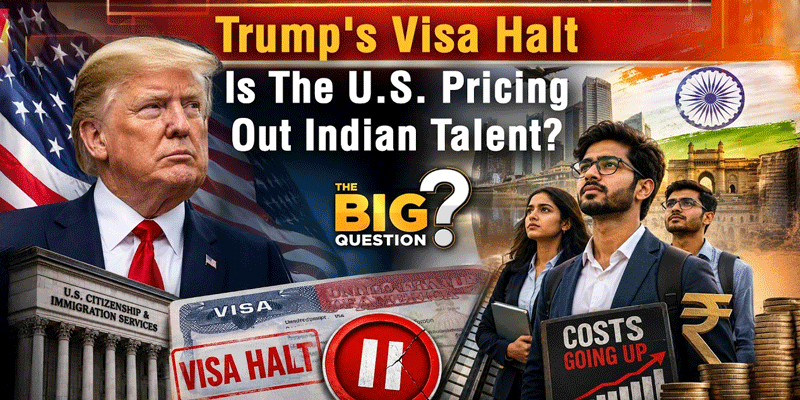
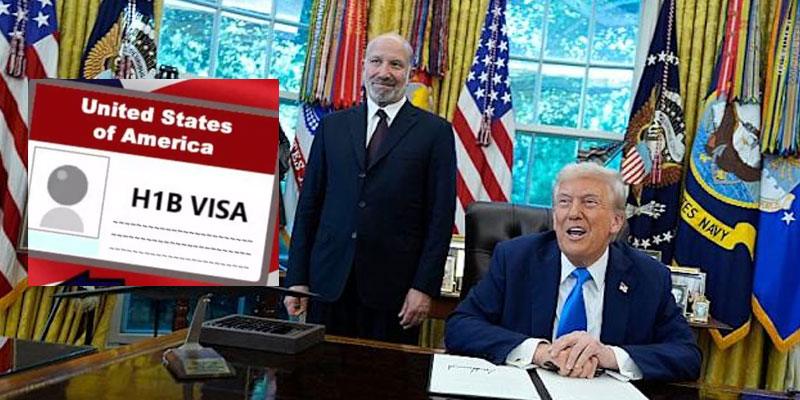
The U.S. remains a dream destination for many Indians, yet recent policy changes have cast a shadow of doubt. President Donald Trump’s proclamation mandating the $100,000 fee for new H-1B applications has drawn sharp criticism for its exclusionary nature.
While the State Department clarified that current visa holders and earlier petitions remain unaffected, the new rules apply to all fresh applicants entering the lottery after September 21. Given the heavy reliance of Indian professionals on H-1B visas, this move could disrupt career plans for thousands and prompt many to explore alternative destinations.
France’s Strategic Push for Indian Talent
France, too, has stepped up its engagement with India, recognizing both the skill shortages in its economy and the strength of Indo-French ties. Several targeted initiatives are already underway:
· Student Attraction: France aims to welcome 30,000 Indian students by 2030, backed by simplified visa processes and academic partnerships.
· Post-Study Pathways: Indian Master’s graduates from French institutions now qualify for a 5-year post-study work visa, along with a short-stay Schengen visa option.
· Young Professionals Scheme (YPS): A two-way mobility program enabling Indians and French nationals to work in each other’s countries, strengthening cultural and professional exchanges.
· Skill Partnerships: New agreements are focusing on aeronautics, hospitality, and fashion, encouraging collaboration between training institutions and industry players.
By combining education, employment, and mobility, France is deliberately building a pipeline of Indian professionals to address its long-term labor needs in tech, engineering, finance, and business management.
New Horizons for Indian Professionals
The shifting global visa landscape highlights a stark reality: while the U.S. remains an influential magnet, its restrictive policies are creating opportunities for others. Germany’s promise of stability and France’s structured talent programs are positioning Europe as a welcoming alternative for Indian professionals.
For India, this trend has dual significance. On one hand, it expands opportunities for its workforce, ensuring that talent is valued globally. On the other, it underscores the need for strong partnerships with nations that align migration with mutual growth. In the long run, these developments could reshape mobility patterns, reducing dependency on the U.S. and broadening the horizons of Indian talent worldwide.
(With agency inputs)