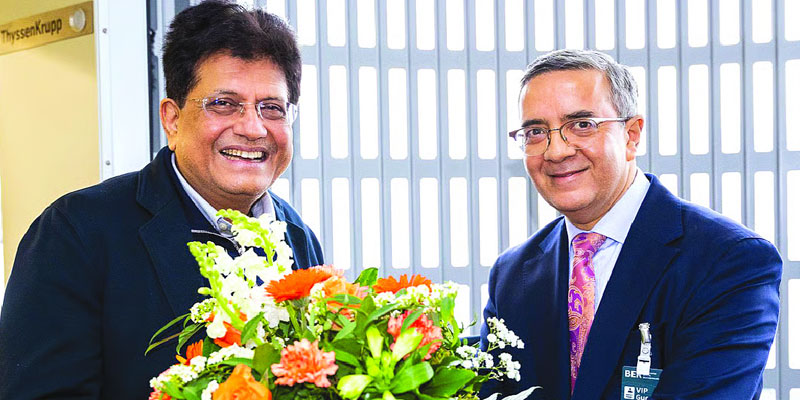
Commerce and Industry Minister Piyush Goyal has sharply criticised the European Union’s carbon tax on steel and other industrial imports, warning that the policy could increase production costs, intensify inflation and undermine European competitiveness. Speaking at the Berlin Global Dialogue, Goyal described the EU’s approach as “inviting disaster”, particularly as the bloc combines its carbon-border measures with steep tariffs on steel imports exceeding prescribed quotas.
How CBAM Could Raise Industrial Costs
The EU’s Carbon Border Adjustment Mechanism (CBAM) is designed to impose a carbon-related charge on imports of emissions-intensive products, including steel, aluminium, cement, fertilisers, hydrogen and electricity. Its objective is to prevent “carbon leakage”, whereby companies shift production to countries with less stringent climate regulations.
Goyal, however, argued that Europe’s expanding regulatory framework is placing excessive pressure on businesses. He said additional compliance requirements would make industrial inputs more expensive, with manufacturers ultimately passing higher costs on to consumers.
He also criticised the accumulation of approximately 75–77 regulations, arguing that excessive regulatory burdens could weaken European industries against international competitors.
India’s Steel Exports Face Fresh Pressure
CBAM entered its definitive phase on January 1, 2026, making the issue particularly important for Indian exporters. Steel and aluminium producers face additional costs linked to the carbon emissions associated with their products.
Industry estimates cited in reports suggest Indian exports of these metals could face an effective tariff burden of 20–35%, depending on the product and applicable carbon costs. The pressure is compounded by the EU’s steel import safeguards. Imports within the tariff-rate quota generally avoid additional safeguard duties, while volumes exceeding the quota attract a 50% tariff.
India exports substantial quantities of steel to European markets, making the combination of carbon charges and quota restrictions a significant concern for domestic manufacturers. Opposition leader Jairam Ramesh has also highlighted a reported decline in India’s steel and aluminium exports to the EU from $7 billion to $5 billion.
India-EU Trade Deal Faces Climate Test
Goyal’s criticism comes as India and the EU pursue closer economic engagement. He indicated that their proposed free trade agreement could become operational between January and March, although differences over carbon-related trade measures remain significant.
New Delhi argues that developing economies need sufficient time and financial support to transition towards cleaner industrial production. It also questions whether border carbon charges could disadvantage exporters that lack comparable access to green technologies and transition financing. The EU maintains that CBAM is necessary to prevent carbon leakage and ensure imported goods face carbon costs comparable to those borne by European producers.
Balancing Climate Ambitions with Industrial Growth
The dispute highlights a fundamental challenge in global trade: reconciling environmental commitments with affordable production and equitable market access. While reducing industrial emissions is essential, the transition must account for differences in technological capabilities and economic development. Ultimately, constructive negotiations, transparent carbon accounting and greater cooperation on clean technology will be crucial to preventing climate policies from becoming prolonged trade disputes.
(With agency inputs)