India among 130 countries calling for an end to the US embargo on Cuba at the United Nations marks another expression of New Delhi’s opposition to unilateral economic restrictions and its support for national sovereignty. The resolution, adopted by the UN General Assembly, calls on Washington to lift its decades-old economic, commercial and financial embargo against Havana. Although the measure passed by a substantial majority, the declining support compared with previous years reveals a changing diplomatic landscape.
What India Supported and Why
India voted in favour of the resolution, maintaining its longstanding position that unilateral measures undermining another country’s sovereignty and development should be lifted. New Delhi has consistently favoured dialogue, development cooperation and opposition to the extraterritorial application of sanctions.
The vote also reflects India’s engagement with the Global South, where many countries argue that broad economic restrictions can disproportionately harm ordinary citizens rather than achieve their stated political objectives.
However, the resolution is non-binding. It expresses the General Assembly’s position but does not compel the United States to change its policy.
A Historic Vote with Declining Support
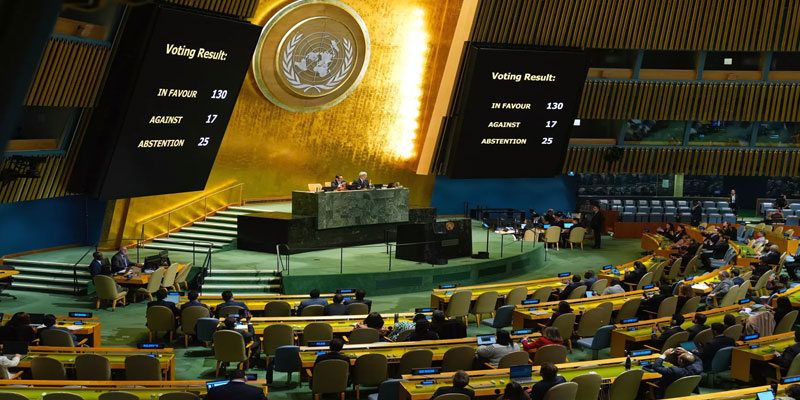
The resolution has been presented almost annually since 1992, making this the 34th adoption. It passed by 130 votes in favour, 17 against and 25 abstentions.
The number supporting the measure fell from 165 in the previous year, marking its lowest level of support since 1995. The United States and Israel voted against it, alongside several other countries, including the United Arab Emirates, Ukraine, Morocco, Slovenia, Lithuania, Czechia, and Bosnia and Herzegovina.
The outcome suggests that Washington’s diplomatic efforts have narrowed the consensus, even though they have not prevented a substantial majority from backing Cuba’s appeal.
Cuba’s Humanitarian Crisis at the Centre
This year’s resolution specifically highlighted US restrictions on fuel supplies imposed since January. UN officials warned that tightening economic pressure has aggravated Cuba’s energy crisis and raised concerns about a potential humanitarian collapse.
Cuba argues that the embargo restricts access to fuel, medicines, international finance and trade, worsening shortages and daily hardships. Washington rejects the characterisation of its policy as a blockade, pointing to more than $876 million in US exports to Cuba during the first eight months of 2026, alongside supplies from other countries and UN agencies.
The disagreement reflects competing interpretations of responsibility: Havana attributes much of its economic hardship to US restrictions, while Washington argues that Cuba’s domestic economic policies and governance are central to the crisis.
Diplomatic Tensions Spill into Public Confrontation
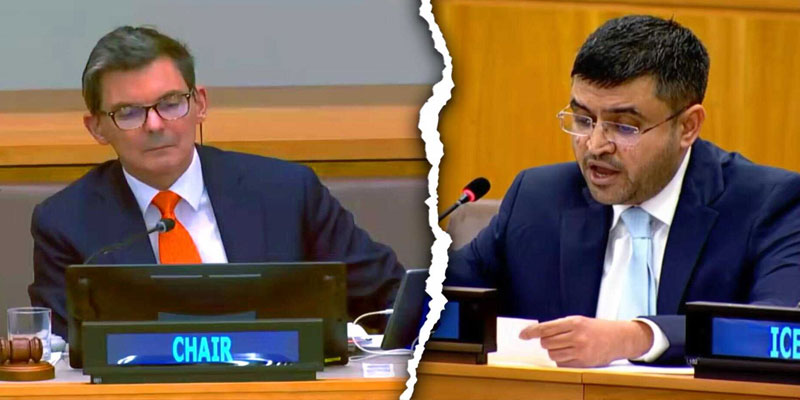
The vote was accompanied by a heated exchange between Cuban Foreign Minister Bruno Rodríguez and US Ambassador Mike Waltz. Rodríguez reportedly confronted Waltz, accusing him of lying, while the American diplomat demanded that he step back. The presiding officer briefly suspended proceedings and asked both delegations to return to their seats.
Waltz blamed Cuba’s leadership for the country’s economic difficulties, arguing that wealth had benefited the ruling elite rather than ordinary citizens. The confrontation exposed the ideological divide underpinning the dispute.
Why the Resolution Matters Beyond the UN
The vote will not automatically change American policy, but it preserves international pressure on Washington and provides Cuba with a platform to highlight the humanitarian consequences of the embargo.
For India, the position reinforces its emphasis on sovereignty, multilateral diplomacy and solidarity with developing countries. For Cuba, however, declining support is a warning that maintaining international backing may become more difficult as US diplomatic pressure intensifies.
The Road Ahead: Pressure Must Give Way to Dialogue
The resolution highlights a fundamental question in international relations: whether prolonged economic restrictions can achieve political objectives without imposing disproportionate costs on ordinary people. While Washington defends its approach, the continuing humanitarian concerns make the dispute more than a bilateral disagreement.
The real test will be whether diplomatic pressure can translate into meaningful policy change. India’s vote reinforces the call for dialogue, but ending the embargo ultimately depends on decisions made by the United States. Until then, Cuba’s economic challenges and the wider debate over unilateral sanctions will remain firmly on the international agenda.
(With agency inputs)