EU Banks to Gain Expanded Branch Access in India
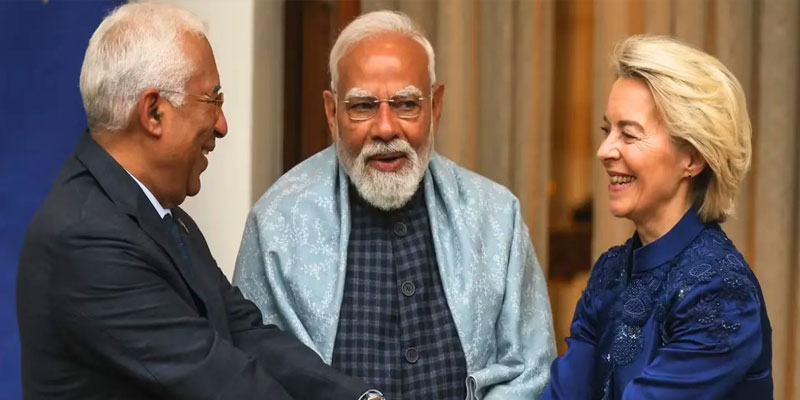
Under the recently concluded India–European Union Free Trade Agreement (FTA), European banks will be allowed to open additional branches in India, marking a significant step toward liberalising the country’s financial services sector. The arrangement permits EU banks to establish up to 15 new branches over four years following the agreement’s ratification, exceeding India’s earlier commitments under WTO rules.
The move reflects India’s effort to modernise its financial ecosystem while maintaining regulatory oversight through the Reserve Bank of India (RBI), which will continue approving branch expansion requests.
Why Banking Access Matters in the FTA
Financial services form a critical pillar of modern trade agreements, as banking access determines how efficiently businesses and investors operate across borders. By allowing greater presence for European banks, India aims to attract global capital, expand credit availability, and introduce advanced financial technologies.
European banks already operate in India, but expansion has been restricted under previous global commitments. The FTA’s updated framework allows gradual liberalisation while preserving safeguards designed to protect domestic financial stability.
In return, Indian banks gain improved access opportunities in European markets, though operations will still need to comply with local regulations in individual EU member states.
How Does This Compare to India’s Banking Offers to Countries Like New Zealand?
India’s concessions to EU banks mirror commitments extended in earlier bilateral trade agreements, notably the FTA signed with New Zealand.
1. Branch Expansion Limits
Under both the EU and New Zealand agreements, foreign banks can open up to 15 branches in India over a four-year period—an increase over the earlier WTO ceiling of 12 branches. After this transition phase, expansion may continue subject to RBI approvals, effectively easing numerical restrictions over time.
This demonstrates India’s cautious yet progressive approach: offering increased market access while maintaining regulatory discretion.
2. Reciprocity in Market Access
Both agreements ensure reciprocal treatment. Indian banks face no overall numerical restrictions in operating within EU countries or New Zealand, although local banking rules still apply. This allows Indian lenders opportunities to expand overseas operations in trade financing, remittances, and diaspora-focused banking services.
However, while European banks already maintain a significant presence in India, New Zealand banks have limited direct operations in the Indian market, making the EU arrangement more commercially significant.
3. Wider Financial Cooperation
The EU agreement goes beyond traditional banking access by covering digital payments, fintech cooperation, credit information services, and cross-border remittance systems. Discussions include potential integration or interoperability with India’s digital payment platforms, an area where India has gained global recognition.
Such provisions were less developed in earlier agreements, making the EU pact comparatively more comprehensive.
4. Opportunities and Concerns
Greater foreign participation could bring technological expertise and competitive financial products into India, improving services for consumers and businesses. At the same time, domestic banks may face pressure in corporate and retail lending segments. Regulators must also address concerns around data security and financial stability.
Controlled Opening with Strategic Intent
India’s decision to expand branch access for EU banks under the FTA signals a carefully managed opening of its financial sector. By aligning commitments with earlier agreements such as that with New Zealand, India maintains policy consistency while pursuing broader economic integration. The success of this liberalisation will depend on balancing competition with stability, ensuring domestic banks remain resilient even as India positions itself as a more globally connected financial hub.
(With agency inputs)