IRGC Alleges Destruction of US Aircraft in Jordan
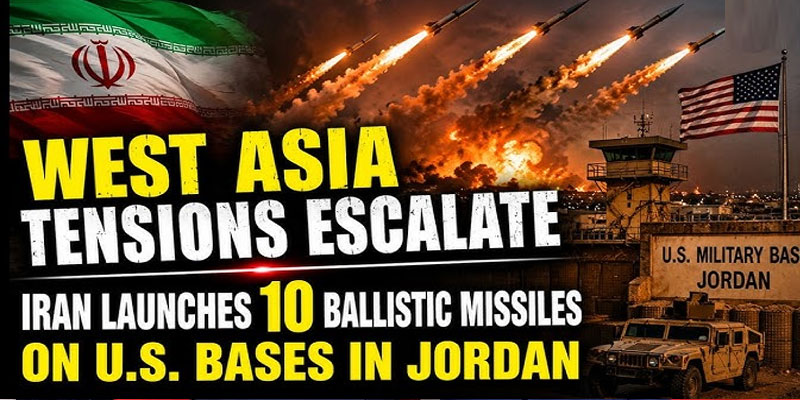
Iran's Islamic Revolutionary Guard Corps (IRGC) has claimed responsibility for a major missile and drone strike on a US-operated military facility in Jordan, alleging that several American refuelling aircraft and fighter jets were destroyed and many others seriously damaged. According to Iranian state media, the attack targeted the US section of the Al-Azraq air base in eastern Jordan using ballistic missiles and drones. However, these assertions remain unverified, with neither the United States nor Jordan confirming the reported destruction or casualties. The episode has nevertheless intensified concerns over the expanding US-Iran confrontation and the growing vulnerability of regional states hosting American military forces.
A Region Under Rising Military Tensions
The latest claims come amid an escalating cycle of military exchanges between Washington and Tehran. Recent months have witnessed reciprocal strikes involving US forces, Iranian military assets and Iran-backed regional groups, reflecting an increasingly volatile security environment across the Middle East.
Iran has portrayed its military actions as retaliation for US operations targeting Iranian interests and allied militias, while also linking the confrontation to broader disputes over the Strait of Hormuz, maritime security and continued US support for Israel. Jordan, a key US security partner that hosts American forces at facilities including Al-Azraq air base, has already acknowledged intercepting multiple Iranian missiles during previous exchanges, highlighting the growing spillover of regional hostilities onto its territory.
Iran's Account of the Alleged Strike
Iranian state media asserted that the strike destroyed multiple aerial refuelling aircraft, fighter jets and drones while inflicting serious damage on several additional military platforms. Some reports further claimed that F-16 and F-35 fighter aircraft, along with tanker aircraft, sustained heavy damage and that the attack disrupted operations at the base.
These assertions form part of Iran's broader strategic narrative that it possesses the capability to directly target high-value American military assets across the region rather than limiting its operations to proxy engagements or peripheral targets.
US and Jordan Remain Cautious
Despite the detailed claims made by Tehran, neither Washington nor Amman has confirmed the reported destruction.
Jordanian authorities have previously stated that their air defence systems intercepted most incoming Iranian missiles during earlier attacks, reporting no significant casualties or material damage. Following the latest Iranian statement, there has been no immediate confirmation from either the US military or Jordanian officials regarding damaged aircraft or operational losses.
The absence of independent verification reflects a familiar pattern in regional conflicts, where wartime claims by one side often differ substantially from official assessments issued by the opposing parties.
Strategic Messaging Beyond the Battlefield
Beyond its military dimension, the IRGC's announcement carries significant political and psychological objectives.
Domestically, the claims reinforce the image of the Revolutionary Guards as capable of imposing substantial costs on US forces while demonstrating resolve in defending Iranian interests. Regionally, the message is intended to deter future US military operations by signalling that American bases across neighbouring countries remain within Iran's operational reach.
The IRGC also urged Jordanians to oppose what it described as "American aggression," seeking to amplify public pressure on governments hosting US military installations and highlighting the political risks associated with their continued presence.
Verification Will Determine the Strategic Narrative
The latest episode illustrates the persistent "fog of war" that accompanies modern conflicts, where competing narratives often emerge well before independent verification becomes available. While Iran portrays the strike as a significant military success, the lack of corroboration from the United States or Jordan makes it impossible, at present, to independently assess the scale of any damage.
Regardless of the eventual facts, the incident signals a dangerous escalation in the US-Iran confrontation. The willingness to target a US-operated base in a third country underscores the widening geographic scope of the conflict and places countries such as Jordan in an increasingly delicate position—as both strategic partners of Washington and frontline states vulnerable to regional instability. As tensions continue to rise, credible verification, diplomatic engagement and effective crisis management will be essential to prevent further escalation into a broader regional conflict.
(With agency inputs)