Pakistan, Saudi, Turkey Forge New Islamic Security Axis
Trilateral Defence Pact Nears Final Shape
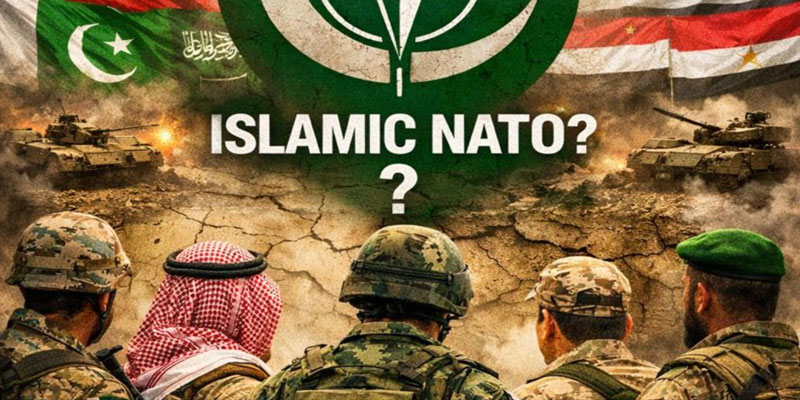
The long-discussed idea of an "Islamic NATO" appears to be moving from strategic speculation to geopolitical reality. Pakistan, Saudi Arabia and Turkey are reportedly set to sign a trilateral defence agreement in Jeddah, marking a significant step towards institutionalising military cooperation among three of the Muslim world's most influential powers. The proposed pact is expected to bring together Saudi Arabia's financial muscle, Turkey's advanced defence technology and Pakistan's military strength under a coordinated security framework, potentially reshaping the strategic landscape of West Asia and beyond.
From Concept to Concrete Framework
The notion of an "Islamic NATO" has existed for decades as a broad vision of collective defence among Muslim-majority nations. However, it gained real momentum in September 2025 when Pakistan and Saudi Arabia signed a Strategic Mutual Defence Agreement incorporating a NATO-like collective defence clause. The agreement committed both countries to treat an attack on one as an attack on the other while expanding intelligence sharing, joint military planning and security cooperation.
Over the following months, discussions focused on bringing Turkey into the arrangement. By early 2026, officials confirmed that a draft trilateral agreement had been prepared after prolonged negotiations, although Ankara and Riyadh maintained that broader regional consultations remained necessary before its formal adoption.
What the Emerging Alliance Offers
Each member contributes distinct strategic advantages:
· Saudi Arabia: Financial resources, energy influence, strategic geography and Gulf diplomatic leadership.
· Turkey: NATO-standard armed forces, a rapidly expanding defence industry and globally recognised drone capabilities.
· Pakistan: A large, battle-experienced military, nuclear deterrence and expertise in conventional and counter-insurgency warfare.
The agreement is expected to institutionalise regular joint military exercises, intelligence-sharing, defence-industrial cooperation, technology transfers and coordinated security planning.
Implications for India
The proposed alliance carries several strategic implications for New Delhi:
· Closer Pakistan-Turkey military coordination may strengthen defence cooperation directed towards regional security issues.
· Coordinated diplomatic positions on Kashmir and other international forums could increase pressure on India.
· Expanded defence-industrial collaboration may enhance Pakistan's military capabilities through Turkish technology.
· Greater Gulf strategic alignment could complicate India's diplomatic balancing in West Asia.
· Maritime cooperation in the Arabian Sea and adjoining waters may require closer Indian strategic monitoring.
· Regional influence competition could intensify as the bloc seeks a larger security role across West Asia.
A New Regional Security Architecture
The alliance also reflects Saudi Arabia's broader effort to diversify its security partnerships rather than depending solely on traditional external guarantors. Turkey seeks greater strategic influence in the Middle East, while Pakistan aims to deepen its defence footprint in the Gulf.
Despite growing momentum, experts caution against describing the arrangement as a full-fledged "Islamic NATO." It lacks an integrated military command, permanent multinational forces and wider membership. Instead, analysts see a hub-and-spokes model built around the Pakistan-Saudi mutual defence pact, supplemented by Turkey and potentially supported through separate arrangements with countries such as Qatar, Bahrain, Jordan and Egypt.
Strategic Shift Worth Watching
Whether or not it evolves into a true collective defence alliance, the emerging Pakistan-Saudi-Turkey security framework marks one of the most significant geopolitical developments in the Islamic world in recent years. By combining Saudi financial power, Turkish military technology and Pakistan's nuclear-capable armed forces, the proposed pact signals a gradual shift towards a more autonomous regional security order. For India, it underscores the need for sustained diplomatic engagement with Gulf partners, stronger regional partnerships and continued vigilance as the strategic balance across West Asia and South Asia continues to evolve.
(With agency inputs)