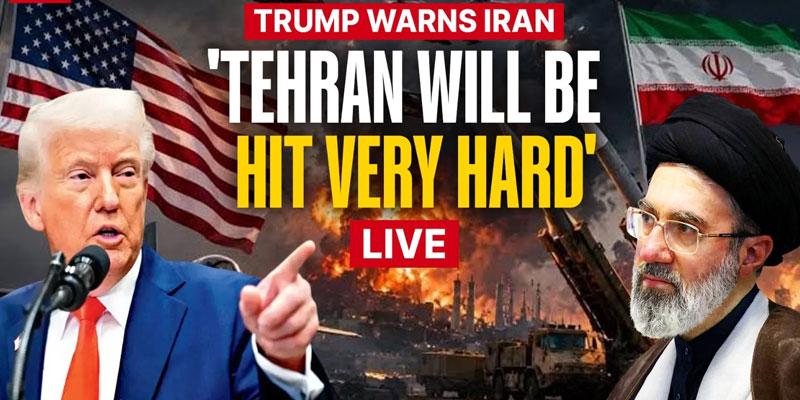
Iran Issues Chilling Warning After Lindsey Graham’s Demise
Iran has issued a chilling warning to US President Donald Trump and Israeli leaders following the death of US Senator Lindsey Graham, using the occasion to intensify its rhetoric amid an already volatile confrontation with Washington and its allies. Iranian state-linked media portrayed Graham, a long-time advocate of a hardline policy toward Tehran, as a symbol of American hostility while publishing provocative messages aimed at Trump and Israeli Prime Minister Benjamin Netanyahu. Although the language was highly inflammatory, analysts view it primarily as political messaging designed to project defiance rather than as evidence of an imminent operational threat.
Why Lindsey Graham Became a Symbolic Target
Lindsey Graham was among the most outspoken supporters of tougher US action against Iran and a strong advocate of close US-Israel strategic cooperation. Over the years, he repeatedly backed sanctions, military pressure and efforts to curb Iran's regional influence, making him one of Tehran's most prominent political adversaries.
Following his death, Iranian newspapers transformed the event into a political spectacle. Hamshahri carried the headline "Get Ready for Sudden Death," while Vatan-e Emrooz described Graham as the "Merchant of Death." The accompanying imagery prominently featured Trump, Netanyahu and other senior US and Israeli officials, indicating that the messaging extended far beyond Graham himself and was intended to reinforce Iran's broader strategic narrative.
Escalating Rhetoric and Strategic Messaging
The latest developments reflect an increasingly confrontational information campaign by Iranian state-linked media and officials. Foreign Ministry spokesman Esmaeil Baqaei sharply criticised Graham's political legacy, describing him as a promoter of aggression and declaring that Tehran would not mourn his death. State broadcasters echoed similar sentiments, with some presenters openly celebrating the senator's passing while condemning longstanding US policies toward Iran.
The timing of these statements is significant. They come amid heightened military tensions in the Gulf, where Iran and the United States have exchanged strikes and diplomatic accusations over security in the Strait of Hormuz. By coupling Graham's death with warnings directed at Trump and Israeli leaders, Iranian media sought to reinforce a deterrence narrative—that continued confrontation with Tehran could have serious consequences.
Understanding the Broader Implications
For Washington, the significance lies less in the newspaper headlines themselves than in what they reveal about Iran's willingness to personalise geopolitical rivalry. Dramatic phrases such as "Get Ready for Sudden Death" are intended to capture attention, mobilise domestic audiences and signal resilience in the face of external pressure.
For Israel and Trump-aligned political circles, the messaging reinforces long-standing concerns about Iran's hostile information ecosystem. Even when such statements are rhetorical rather than operational, they can heighten threat perceptions, deepen diplomatic mistrust and further inflame an already fragile regional environment.
More broadly, the episode illustrates how modern geopolitical competition increasingly extends beyond military actions into the realm of information warfare. State-linked media are being used not only to report events but also to shape political narratives, influence public opinion and project strategic resolve.
Propaganda, Deterrence and Persistent Geopolitical Rivalry
Iran's reaction to Lindsey Graham's death should be understood primarily as a calculated exercise in propaganda and strategic signalling rather than as a literal forecast of future events. By combining provocative media narratives with official criticism, Tehran has sought to portray strength during a period of heightened confrontation with the United States and Israel. While the rhetoric itself does not alter the military balance, it contributes to an atmosphere of distrust and escalation, underscoring how words, symbolism and information campaigns have become central instruments in today's geopolitical conflicts.
(With agency inputs)