Israel and Lebanon have agreed to extend their ceasefire by 45 days following two days of negotiations in Washington, offering a temporary but significant diplomatic breakthrough in one of the Middle East’s most volatile conflicts. The announcement was made by the U.S. State Department after talks involving political and military representatives from both sides concluded with commitments for further discussions in the coming weeks.
The extension comes after months of escalating violence between Israel and Hezbollah that displaced nearly 1.2 million people in Lebanon and raised fears of a wider regional war involving Iran. While the agreement provides a short-term pause in hostilities, the path toward a lasting settlement remains highly uncertain.
How the Conflict Escalated
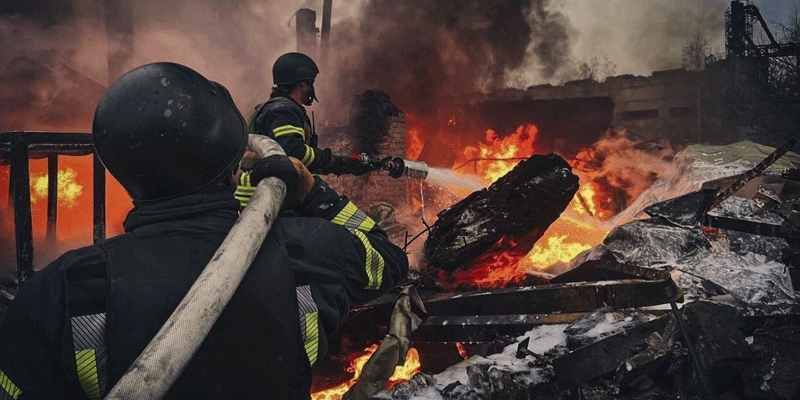
The latest confrontation intensified dramatically in early March 2026 when Hezbollah launched missiles into Israel just days after the outbreak of the U.S.-Israeli conflict with Iran. Israel responded with extensive airstrikes and a ground offensive in southern Lebanon, targeting Hezbollah infrastructure and positions.
The fighting quickly evolved into one of the most serious cross-border escalations in recent years. Entire communities in southern Lebanon were uprooted, while both Israeli and Lebanese civilians faced continuous security threats.
President Donald Trump announced an initial cessation of hostilities on April 16 after preliminary diplomatic contacts in Washington. However, despite the truce, violence did not fully stop. Lebanese reports indicate that hundreds of people have still been killed in Israeli strikes since the ceasefire began, underscoring the fragile nature of the arrangement.
What the 45-Day Extension Means
The newly extended ceasefire is designed to create additional space for political and security negotiations. According to U.S. officials, separate diplomatic and military tracks are now underway, with security talks scheduled at the Pentagon and broader political discussions continuing through early June at the State Department.
Washington hopes the extension will prevent a collapse of the ceasefire while creating conditions for more durable stability between Israel and Lebanon.
The agreement also reflects growing international concern that renewed fighting could pull the region into a much larger conflict involving Iran and its allied groups.
Lebanon’s Shift Toward State-Led Diplomacy
One of the most significant aspects of the talks is Lebanon’s decision to pursue negotiations despite opposition from Hezbollah. The Iran-backed group has rejected direct discussions and continues demanding a full Israeli withdrawal from Lebanese territory before any broader agreement.
Lebanese officials, however, appear increasingly focused on strengthening state institutions and reducing the risk of another devastating war. The Lebanese delegation described the extension as critical “breathing space” for civilians and an opportunity to build a political path toward long-term stability.
This marks an important moment where the Lebanese state is attempting to assert a more independent diplomatic role, even as Hezbollah retains considerable influence inside the country.
Israel’s Security Priorities
Israel maintains that any long-term settlement must include the disarmament of Hezbollah, which it considers a major security threat. Israeli officials argue that repeated missile attacks and cross-border operations cannot continue under any future arrangement.
Israeli representatives described the Washington discussions as “frank and constructive,” suggesting that despite deep disagreements, communication channels remain open.
A Narrow Window for Regional Stability
The 45-day ceasefire extension represents a rare moment of diplomatic progress in a region shaped by mistrust and recurring violence. Yet the agreement remains fragile, with unresolved issues surrounding Hezbollah, Israeli security concerns, and Iran’s regional influence continuing to complicate negotiations. Whether this temporary pause evolves into lasting peace will depend on sustained diplomacy, restraint from all sides, and the willingness of regional powers to prioritize stability over escalation.
(With agency inputs)