AAP Chief Alleges Social Media Restriction, Targets Meta and Centre
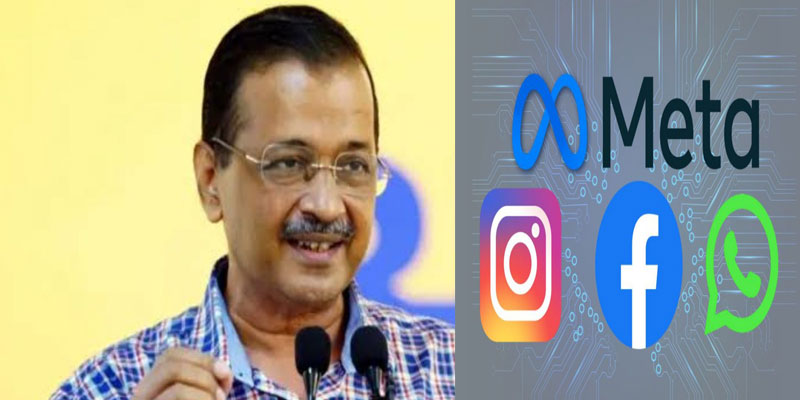
The confrontation between the Centre and Meta has taken a fresh political turn after Aam Aadmi Party (AAP) chief Arvind Kejriwal alleged that his social media account had been "restricted" in India. Claiming that his Instagram profile displayed the message "Unavailable in some locations," Kejriwal accused the technology giant of succumbing to political pressure and urged it "not to bow down before PM Modi." He also alleged that despite repeatedly seeking clarification, Meta had responded only with routine acknowledgements and had failed to explain the apparent restriction. The allegation comes at a time when Meta is already facing intense scrutiny over its content moderation practices following the controversy surrounding Prime Minister Narendra Modi's social media post.
How the PM Modi Video Triggered the Controversy
The current dispute traces its origins to July 23, 2026, when Prime Minister Narendra Modi uploaded a selfie video on Facebook and Instagram addressing students and promising strict action against examination paper leaks. The post was briefly removed from Facebook before being restored.
Meta attributed the removal to an error in its artificial intelligence-powered content moderation system rather than any deliberate human action. Although the company immediately apologised and restored the post, the explanation failed to satisfy the government.
The Ministry of Electronics and Information Technology (MeitY) and Parliament's Standing Committee on Communications and Information Technology questioned Meta's handling of sensitive content and raised broader concerns over platform accountability.
The PM Modi Video Row: Key Developments
· July 23, 2026: PM Modi's Facebook video was briefly removed before being restored.
· Meta termed the incident a technical error caused by its AI moderation system.
· The company issued an immediate apology and restored the content.
· During meetings with government representatives, Meta reportedly acknowledged that money had been paid to boost certain categories of content and admitted its moderation systems were not fully equipped to handle the growing volume of illegal material.
· On August 5, 2026, Parliament's IT panel gave Meta CEO Mark Zuckerberg a three-day deadline to issue an unconditional public apology, warning that the company could risk losing its safe harbour protection under Section 79 of the Information Technology Act.
· Meta subsequently conveyed Zuckerberg's apology to the government and assured authorities that additional safeguards—including multiple review layers and senior-level approvals for action against prominent accounts—would be introduced to prevent similar incidents.
Kejriwal's Allegation Adds Fresh Political Dimension
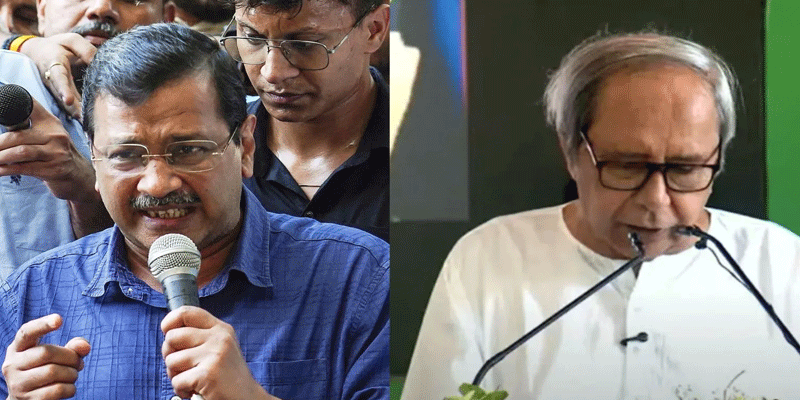
Against this backdrop, Kejriwal alleged that his Instagram account had been restricted without any explanation. Posting on X, he questioned Meta's neutrality and accused the company of yielding to political pressure from the ruling establishment. He also claimed that repeated emails to Meta's India office had elicited only automated acknowledgements without any substantive response.
As of now, Meta has not issued any public clarification regarding Kejriwal's allegation. It also remains unclear whether the reported restriction reflects an official geo-block, a temporary technical issue or an account-status display glitch. Nevertheless, the episode has intensified the political debate over digital platforms and their handling of high-profile accounts.
Digital Accountability at the Centre of Public Debate
The Meta controversy has evolved beyond an isolated content moderation error into a larger debate on platform accountability, algorithmic transparency and freedom of expression. While the government maintains that stricter compliance is essential to curb illegal content and safeguard digital users, opposition parties argue that inconsistent moderation and unexplained restrictions undermine public trust in social media platforms. With Meta facing simultaneous scrutiny from regulators, Parliament and political leaders, the outcome of this controversy could shape the future framework governing digital platforms in India, balancing technological autonomy with democratic accountability and user rights.
(With agency inputs)