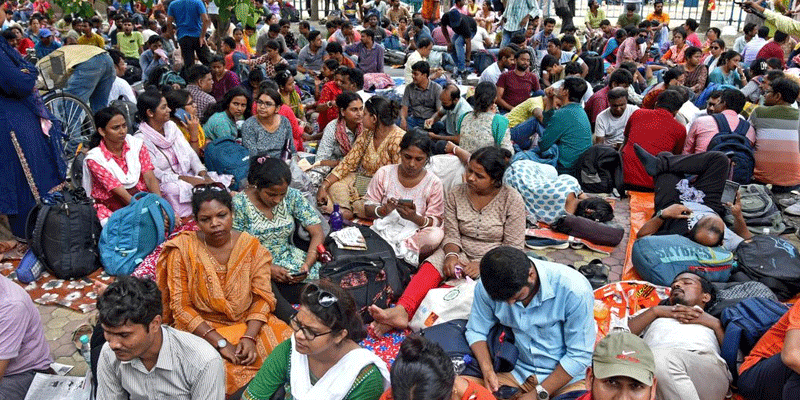
Manipur has shut all schools, colleges and universities from August 20 to 22 amid a worsening law-and-order situation triggered by protests demanding an updated National Register of Citizens (NRC) before the Census proceeds. The temporary closure, ordered by the state government, reflects how unresolved questions surrounding migration, displacement and political representation are increasingly disrupting everyday life. While authorities describe the shutdown as a precautionary measure, the agitation has once again exposed the deep social and political fault lines that continue to shape the state's fragile recovery.
Why the NRC Demand Has Become a Flashpoint
The current unrest cannot be viewed in isolation. Manipur has remained under strain since the ethnic violence that erupted in 2023, leaving thousands displaced and deepening mistrust between communities. Against this backdrop, concerns over migration, demographic change and political representation have gained renewed urgency.
Protest groups argue that conducting a Census before updating the NRC could produce disputed population figures, affecting future delimitation and the distribution of political representation. They also insist that internally displaced persons (IDPs) must be properly resettled before any nationwide enumeration takes place.
State Orders Three-Day Academic Shutdown
Late on August 19, the Education Department issued an order directing all educational institutions to remain closed until August 22.
The directive covers:
· Schools affiliated with the Board of Secondary Education Manipur.
· Council of Higher Secondary Education institutions.
· CBSE and other board-affiliated schools.
· Government, aided and private colleges.
· Universities and higher education institutions across the state.
Officials cited the prevailing law-and-order situation rather than announcing a prolonged academic suspension, indicating that the measure is intended to minimise immediate risks to students and educational infrastructure.
Bandh and Street Clashes Escalate Tensions
While essential services and religious ceremonies remain exempt, the bandh has disrupted classes, examinations, administrative work and student mobility.
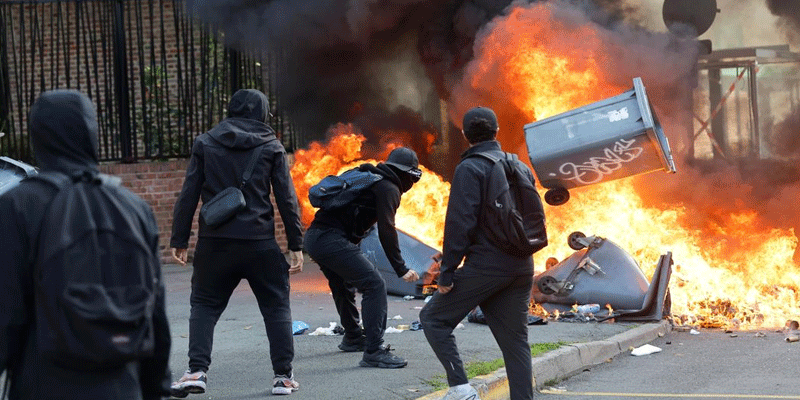
The situation intensified after confrontations at New Checkon in Imphal East, where police used tear gas and stun guns following reports that protesters damaged public property. The clashes underscored official concerns that educational campuses, transport routes and students could become vulnerable as demonstrations escalate.
JFD Expands the Movement
The JFD has broadened its campaign beyond a single protest by organising torch rallies, public meetings and awareness programmes across the Imphal Valley.
Demonstrations have taken place along Uripok-Kangchup Road, Tiddim Road, Kongba Road and Khurai-Lamlong Road, with protesters attempting to reach Deputy Commissioner offices while demanding that no Census proceed until the NRC is updated and displaced families are resettled.
The organisation has also sought support from civil society groups, including Meira Paibi organisations, signalling an effort to build a wider coalition around migration, Census procedures and representation.
A Larger Debate Over Identity and Representation
The controversy highlights a difficult governance challenge. Supporters view the NRC as a mechanism to address concerns about illegal immigration and demographic imbalance. Critics caution that any such exercise involves complex legal, administrative and humanitarian questions, including documentation requirements and the risk of excluding vulnerable residents.
Beyond School Closures Lies a Deeper Challenge
The temporary shutdown may reduce immediate security risks, but it cannot resolve the underlying tensions driving the protests. Manipur's debate over the NRC, Census and displaced communities ultimately reflects a broader struggle over identity, representation and trust in public institutions. Moving forward, restoring normalcy will require more than administrative orders—it will depend on transparent dialogue, credible safeguards and durable solutions that ensure every community feels counted, protected and represented in the state's future.
(With agency inputs)