Escalation Signals a Wider Conflict
The US-Israel war against Iran has entered what Israeli officials describe as its “next phase,” raising fears of a broader regional confrontation. Israel, operating alongside the United States since February 28, 2026, has intensified airstrikes on Tehran and Beirut while promising further military surprises. Israeli military chief Lt. Gen. Eyal Zamir stated that the campaign will continue to dismantle Iran’s military infrastructure.
The fighting has already caused heavy casualties, with reports indicating over 900 Iranian deaths, including Supreme Leader Ali Khamenei. Tehran has rejected any ceasefire talks and pledged continued retaliation. Meanwhile, Iranian missile and drone waves targeting Israel have intensified, marking one of the most volatile military standoffs in the Middle East in decades.
Israel’s Expanding Offensive Strategy
Israel’s declaration that the war is entering a new operational stage signals a shift from initial strikes to a sustained effort to weaken Iran’s long-term military capabilities. Fresh attacks on strategic locations in Tehran and in Lebanon suggest that the conflict is expanding beyond Iranian territory to include Iran-aligned forces across the region.
Israeli officials have hinted at additional undisclosed tactics and operations designed to degrade Iran’s missile infrastructure and command systems. These strikes come amid continued Iranian retaliation through large-scale missile and drone attacks, highlighting a cycle of escalation that neither side appears ready to halt.
Russia’s Intelligence Support Raises Global Stakes
A major development in the war is Russia’s reported intelligence support to Iran. According to US officials, Moscow has been providing Tehran with sensitive information on US military assets, including warship deployments and aircraft movements in West Asia.
If confirmed, this would mark the first direct Russian involvement targeting US forces in the conflict. Such intelligence assistance significantly improves Iran’s ability to plan missile and drone strikes against US and allied targets.
Iran has already launched more than 600 missiles and over 2,000 drones as part of its retaliatory campaigns, increasing the risk that the war could evolve into a confrontation involving multiple major powers.
Oil Markets Surge, Russia Gains Economic Leverage
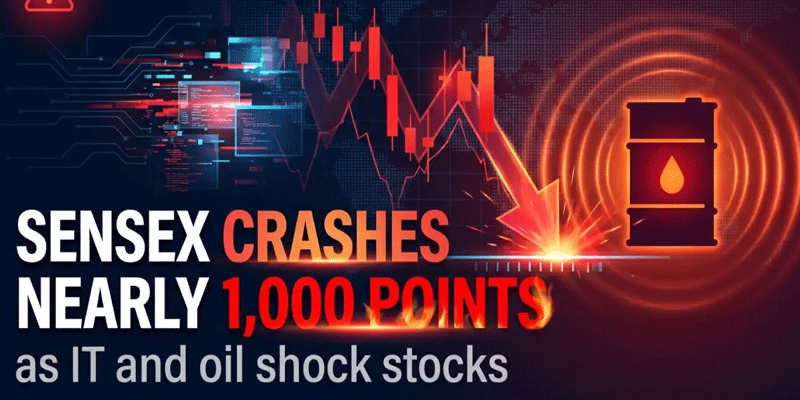
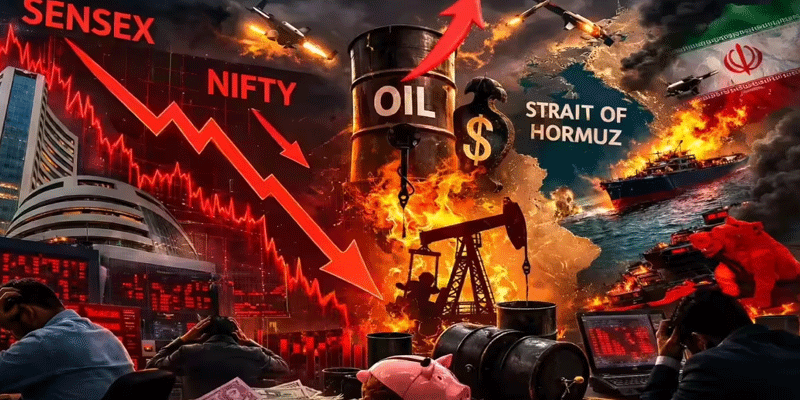
The war’s ripple effects are already reshaping global energy markets. Brent crude prices have surged to around $78 per barrel and analysts warn they could approach $100 if tensions continue.
The biggest risk lies in Iran’s disruption of the Strait of Hormuz, a critical energy chokepoint through which nearly half of India’s oil imports and about 60 percent of its LNG shipments pass.
As uncertainty grows in Gulf supply routes, demand for Russian oil is expected to rise—particularly from India, which already imports more than two million barrels per day from Russia. Increased purchases from Russian floating storage could help bypass Hormuz disruptions while giving Moscow economic relief from Western sanctions tied to the Ukraine war.
Europe Pulls Back from the Conflict
While the United States and Israel deepen their military operations, European countries appear determined to avoid direct involvement. Germany has withdrawn additional Bundeswehr troops from West Asia after the war’s first week. Defense Minister Boris Pistorius emphasized Berlin’s commitment to de-escalation rather than participation in the strikes. Belgium has also refused to join military operations. These moves highlight Europe’s caution about being drawn into another Middle Eastern war that could threaten global energy supply routes.
Cluster Bomb Accusations Heighten Humanitarian Concerns
Israel has accused Iran of repeatedly using cluster munitions in its missile attacks. Some of these strikes reportedly involved Kheibar Sheikan missiles targeting areas near Tel Aviv and triggering fires.
Cluster bombs are widely criticized due to their indiscriminate impact and long-term danger to civilians. At least 12 people have been killed in Israel during these attacks, while Hezbollah actions from Lebanon have added further pressure on Israeli defenses.
A War with Global Consequences
The US-Israel-Iran war is rapidly evolving from a regional confrontation into a conflict with global implications. Russian involvement, European caution, and disruptions to vital oil routes are reshaping geopolitical alliances and economic dynamics.
For countries like India, the stakes are particularly high. Rising oil prices, reliance on Gulf shipping lanes, and the need to balance relations with both the West and Russia create complex strategic challenges.
Unless diplomatic channels reopen soon, the conflict risks triggering wider proxy battles and sustained energy shocks—turning the Middle East crisis into a defining geopolitical flashpoint of the decade.
(With agency inputs)