A Brief Opening: A Shift in Diplomatic Tone
Israel has ruled out the possibility of a ceasefire with Hezbollah, making it clear that any talks with Lebanon will center on disarmament rather than a temporary halt in hostilities. This marks a significant escalation in diplomatic positioning, as Israel signals that it is no longer interested in short-term de-escalation but in fundamentally altering the security dynamics along its northern border.
The Israel–Hezbollah Conflict
The conflict between Israel and Hezbollah is deeply rooted in decades of hostility, shaped by territorial disputes, ideological opposition, and broader regional rivalries. Hezbollah, backed by Iran, has evolved into a powerful military and political force in Lebanon.
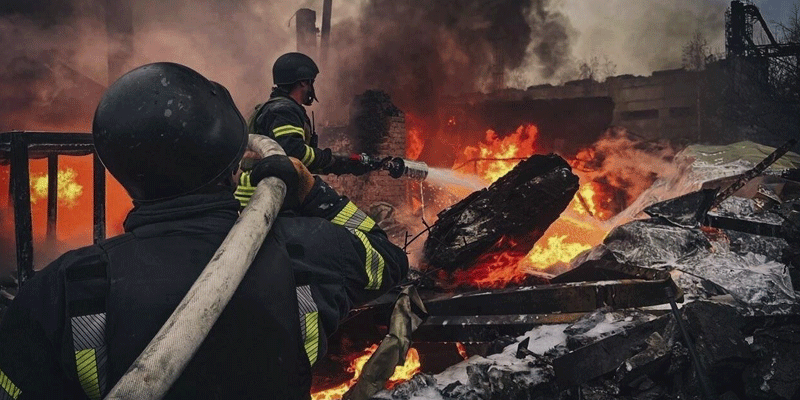
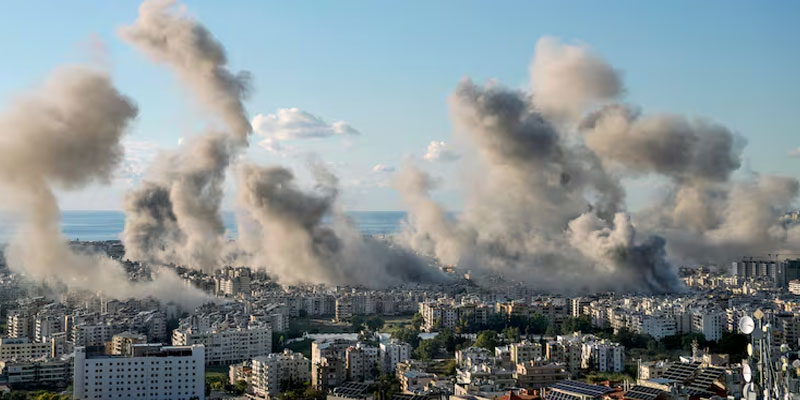
Frequent border skirmishes, rocket attacks, and retaliatory strikes have defined this volatile front. The latest escalation has seen intensified Israeli military operations in southern Lebanon, alongside continued Hezbollah attacks, reinforcing a cycle of deterrence and confrontation.
From Border Clashes to Diplomatic Openings
Despite ongoing hostilities, Lebanon has reportedly sought direct talks with Israel multiple times, creating a rare diplomatic window. These overtures come amid mounting pressure on Lebanon due to Israeli strikes and internal instability.
However, the context remains complex. While diplomatic channels have opened, they coexist with active military engagement, making negotiations fragile and heavily influenced by battlefield developments.
Israel’s Position: Disarmament as a Non-Negotiable Goal
Prime Minister Benjamin Netanyahu has taken a firm stance, insisting that any agreement must go beyond a ceasefire and deliver a “real peace” through Hezbollah’s disarmament. Israeli officials have reinforced that the objective is not merely to pause violence but to eliminate what they consider a persistent security threat.
This approach represents a strategic shift. Instead of treating the conflict as a cyclical military issue, Israel is framing it as a structural problem requiring long-term political resolution. In effect, Israel seeks to reshape the security architecture of southern Lebanon.
Lebanon’s Dilemma: Between External Pressure and Internal Reality
For Lebanon, the situation is extremely challenging. Hezbollah is not just a militant group but also a significant political actor within the country. Any move toward disarmament risks internal instability, political backlash, and potential fragmentation.
The Lebanese government must navigate competing pressures—addressing Israeli demands, maintaining domestic cohesion, and avoiding the perception of capitulation. This delicate balancing act makes a straightforward agreement highly unlikely.
Strategic Stakes: High Risk, High Consequence
Israel’s insistence on disarmament reflects a broader belief that previous ceasefires have failed to provide lasting security. By pushing for structural change, Israel aims to convert military pressure into a durable political outcome.
However, this strategy carries risks. If Hezbollah refuses to disarm, negotiations could collapse. Continued military escalation during talks could also undermine diplomatic credibility, leading to a prolonged cycle of conflict without resolution.
Regional Implications: Beyond a Border Conflict
The Israel-Hezbollah dynamic cannot be viewed in isolation. It is part of a larger regional contest involving Iran and its allied groups. By targeting Hezbollah, Israel is effectively challenging a key component of Iran’s regional influence.
This broader context raises the stakes significantly. Any outcome in Lebanon will have ripple effects across West Asia, influencing power balances, alliances, and future conflict scenarios.
Conclusion: A Difficult Path to Stability
Israel’s refusal to prioritize a ceasefire signals a decisive and uncompromising strategy. By placing disarmament at the center of negotiations, it is aiming for a long-term solution rather than temporary relief.
Yet, the path to such an outcome is fraught with complexity. Lebanon’s internal dynamics, Hezbollah’s entrenched position, and regional rivalries all stand in the way of a quick resolution. For now, the situation reflects a tense equilibrium—where diplomacy and conflict proceed side by side, and the prospect of lasting peace remains uncertain.
(With agency inputs)