Nayara Accelerates E20 Adoption Ahead of National Timeline
Nayara Energy has emerged as one of the early private sector leaders in India's biofuel transition by introducing ethanol-blended Motor Spirit (EBMS) with 20% ethanol blending (E20) ahead of schedule. The company commenced E20 fuel sales across its retail network in February 2025, well before the government's advanced target for the Ethanol Supply Year (ESY) 2025-26. The move underscores how India's energy transition is increasingly being driven not only by policy mandates but also by proactive industry participation. By embracing E20 early and investing in domestic ethanol production, Nayara is aligning its long-term business strategy with the country's broader goals of energy security, environmental sustainability and rural economic development.
E20: The Cornerstone of India's Biofuel Revolution
India's ethanol blending programme has evolved into one of the country's most significant energy reforms because it simultaneously addresses multiple national priorities. Introduced under the National Policy on Biofuels, 2018, the original target of achieving 20% ethanol blending in petrol by 2030 was subsequently advanced to ESY 2025-26, reflecting the government's confidence in the programme's rapid progress.
By February 2025, public sector oil marketing companies had already achieved nearly 18% ethanol blending, demonstrating the remarkable pace at which the initiative has moved from policy vision to operational reality. The government's decision to expand approved feedstocks beyond sugarcane to include broken rice, maize, damaged food grains and agricultural residues has further strengthened supply security while reducing dependence on any single raw material.
The importance of E20 extends well beyond cleaner fuel. Increased ethanol blending reduces India's dependence on imported crude oil, strengthens energy security, lowers carbon emissions from the transport sector and creates a stable new market for agricultural produce. This integrated approach links India's fuel economy directly with rural development, offering farmers additional income opportunities while supporting the country's decarbonisation agenda.
Nayara's Strategic Investments and Market Leadership
Nayara Energy's commitment extends beyond fuel retailing. The company has announced an investment of approximately ₹600 crore to establish two ethanol production plants at Naidupeta in Andhra Pradesh and Balaghat in Madhya Pradesh, each with a planned production capacity of 200 KLPD. These facilities will primarily utilise broken rice and maize as feedstock.
The company has also outlined plans to eventually develop five ethanol plants with a combined production capacity of nearly 1,000 KLPD, reinforcing its long-term commitment to India's biofuel ecosystem. By integrating ethanol manufacturing with fuel distribution, Nayara is helping create a more resilient domestic supply chain capable of supporting sustained E20 adoption.
Fuel Price Reduction Reflects Changing Energy Dynamics
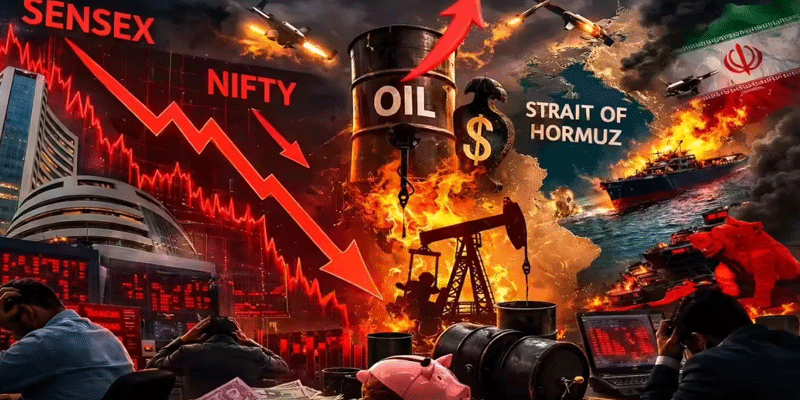
Alongside its biofuel initiatives, Nayara Energy has become the first fuel retailer in more than two years to reduce retail fuel prices, lowering petrol by ₹5 per litre and diesel by ₹3 per litre across its nationwide network. The price cut follows a moderation in global crude oil prices after easing geopolitical tensions in West Asia.
The move reflects the evolving dynamics of India's downstream energy sector, where companies are balancing conventional fuel pricing with investments in cleaner alternatives. Government support through administered ethanol pricing, GST rationalisation, long-term procurement agreements, logistics reforms and financial incentives has further encouraged companies to treat ethanol not merely as a regulatory requirement but as a commercially viable growth segment.
Building India's Future Energy Architecture
Nayara Energy's early adoption of E20, substantial investments in ethanol production and recent fuel price reduction collectively illustrate the changing face of India's energy sector. The company's initiatives reinforce the broader national objective of creating a cleaner, more secure and domestically driven fuel economy. While challenges relating to feedstock availability, quality standards and vehicle compatibility remain, the direction of policy and industry is unmistakable. E20 is no longer simply a blending target—it is steadily becoming a defining pillar of India's long-term energy architecture, with companies like Nayara playing a pivotal role in shaping that transformation.
(With agency inputs)