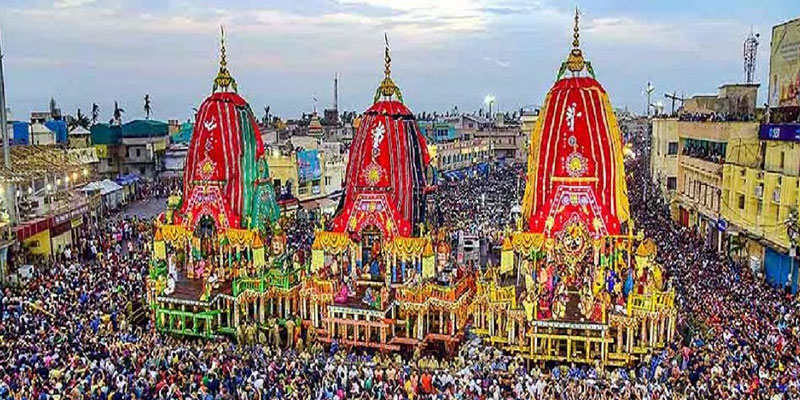
A stampede-like situation during the 2026 Puri Jagannath Rath Yatra has once again raised serious concerns over crowd management at one of India's largest religious gatherings. The incident reportedly left nearly 200 devotees hospitalised after severe overcrowding along the Grand Road (Bada Danda) led to breathing difficulties and panic among pilgrims. Although rescue teams responded swiftly and authorities managed to prevent a larger tragedy, the episode has reignited questions about whether existing safety measures are adequate for handling the millions of devotees who participate in the annual festival.
Puri Rath Yatra: A Celebration of Faith and Massive Scale
The Jagannath Rath Yatra, held annually in Odisha's temple town of Puri, is among India's oldest and most revered religious festivals. Every year, millions of devotees gather to witness and participate in the ceremonial procession of the majestic chariots carrying Lord Jagannath, Lord Balabhadra and Goddess Subhadra from the Jagannath Temple to the Gundicha Temple.
The sheer scale of the event makes crowd management exceptionally challenging. Successful conduct of the festival depends on seamless coordination among police, emergency services, temple authorities and district administration. Efficient movement of pilgrims, uninterrupted emergency access, regulated traffic and timely communication regarding ritual schedules are all critical to ensuring public safety.
Latest Incident During the 2026 Festival
According to the latest reports, an unusually dense crowd gathered along the Grand Road during the Rath Yatra, creating a stampede-like situation that left hundreds of devotees struggling to breathe.
Emergency response teams, including personnel from the Special Rescue Unit, immediately launched rescue operations, evacuating affected devotees to nearby medical facilities, including Puri Medical College and Hospital. Nearly 200 devotees were hospitalised, while several others received first aid, oxygen support and on-site medical treatment before being discharged.
Initial reports had indicated smaller casualty figures, but the number of those requiring medical attention subsequently increased as authorities assessed the situation. While there were unverified reports of a fatality circulating on social media, officials had not confirmed any deaths at the time of reporting.
Recurring Challenges in Crowd Management
The latest incident gains added significance because it follows last year's tragic crowd disaster near the Gundicha Temple, where a stampede claimed three lives and injured more than 50 people.
That tragedy had prompted the Odisha government to review crowd-control protocols, strengthen police deployment and improve emergency preparedness. However, the latest crowd surge suggests that managing the enormous influx of pilgrims continues to present formidable logistical challenges.
Experts note that such incidents are often triggered not by a single failure but by a combination of factors, including sudden crowd compression, delays in ritual movement, bottlenecks at access points and inadequate real-time communication. Even brief disruptions in the movement of thousands of devotees can rapidly escalate into dangerous situations requiring immediate intervention.
Need for Stronger Preventive Measures
The latest episode highlights that crowd safety at religious mega-events cannot rely solely on emergency response after congestion develops. Preventive planning remains equally important.
Authorities may need to further strengthen controlled entry systems, create segmented holding zones, improve surveillance through technology, deploy medical teams at regular intervals and provide continuous public announcements regarding crowd movement and ritual timings. Better coordination among multiple agencies will also be essential to minimise panic during peak congregation periods.
Faith Must Be Accompanied by Robust Safety Planning
The Puri Jagannath Rath Yatra remains a profound symbol of devotion and spiritual unity, attracting millions from across India and the world. Ensuring the safety of pilgrims is therefore not merely an administrative responsibility but an essential part of preserving the sanctity of the festival itself. The latest crowd surge serves as a timely reminder that as religious gatherings continue to grow in scale, safety infrastructure, scientific crowd management and proactive planning must evolve alongside them to prevent avoidable tragedies and protect every devotee's right to worship safely.
(With agency inputs)