Plastic Notes Become a Global Currency Trend
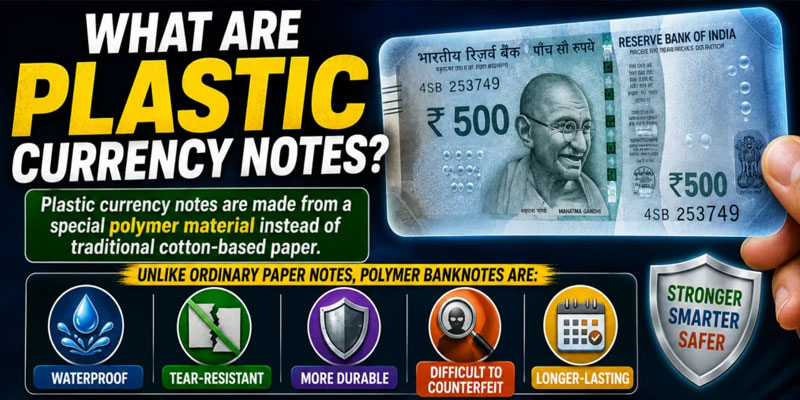
Plastic currency notes, also known as polymer banknotes, are now used fully or partly by around 60 countries across the world. Unlike traditional paper notes made from cotton-based material, polymer notes are manufactured using durable plastic substrates that last longer, resist wear and offer stronger protection against counterfeiting. While several countries have already embraced polymer currency, India is taking a cautious approach, opting for a limited pilot before deciding on a wider rollout.
How Polymer Banknotes Went Global
Polymer banknotes were first introduced by the Reserve Bank of Australia in 1988 to address growing concerns over counterfeit currency and the short lifespan of paper notes. Their superior durability and enhanced security features soon attracted the attention of central banks worldwide.
Over the past three decades, nearly 60 countries have adopted polymer notes either for their complete currency series or for selected denominations and commemorative issues. Nations with humid climates and high cash circulation have particularly benefited, as polymer notes remain cleaner and survive much longer than conventional paper currency.
Countries Leading the Transition
Australia, New Zealand, Canada, the United Kingdom and Romania have largely or completely shifted to polymer banknotes across almost all denominations. Others, including Singapore, Malaysia, Thailand, Indonesia, Vietnam, Nigeria, Botswana, Mauritania, Bhutan, China and the Maldives, use polymer notes selectively for certain denominations or special issues.
Many central banks have preferred gradual adoption because a complete transition requires expensive upgrades to printing facilities, ATMs and cash-handling systems. A phased approach allows authorities to evaluate durability, counterfeit resistance and public acceptance before expanding their use.
India's Cautious Roadmap
India has experimented with polymer currency before. In 2012, during the UPA government, the Reserve Bank of India (RBI) conducted a field trial involving nearly one billion ₹10 polymer notes across five cities. Although the pilot did not result in nationwide adoption, it provided valuable technical experience.
Now, the RBI has revived the initiative. In 2026, the central bank and its subsidiary, Bharatiya Reserve Bank Note Mudran Private Limited (BRBNMPL), invited global bids to establish a security-grade polymer substrate facility. The proposed pilot is expected to focus on ₹10 and ₹20 notes. Importantly, the RBI has described it as a trial, with no commitment or timeline for a nationwide transition.
Why Polymer Notes Are Becoming Popular
Polymer notes are printed on biaxially oriented polypropylene films, making them about 2.5 times more durable than paper notes and allowing many denominations to remain in circulation for five to seven years. They are resistant to moisture, dirt, tearing, folding and microbial damage, reducing replacement costs, especially in tropical countries.
Security is another major advantage. Polymer notes incorporate transparent windows, holograms, colour-shifting inks and advanced micro-optic features that are significantly harder to counterfeit than conventional paper-based security elements.
Although polymer notes cost nearly twice as much to produce, their longer lifespan reduces overall printing, transportation and replacement expenses. The recyclable material also offers environmental benefits by lowering the volume of discarded currency.
A Measured Step Towards Smarter Currency
India's renewed polymer note pilot reflects a balanced strategy rather than an immediate shift in currency policy. By testing ₹10 and ₹20 notes, the RBI aims to assess durability, public acceptance and machine compatibility before making larger investments. As cash continues to coexist with digital payments, polymer banknotes could provide a more secure, cost-effective and sustainable alternative. Whether India ultimately adopts a fully polymer-based currency or a hybrid system, the current pilot marks an important step in modernising the country's cash economy while carefully weighing costs, technology and public convenience.
(With agency inputs)