Deadly Blaze at Odisha’s Premier Hospital
A devastating fire at SCB Medical College and Hospital in Cuttack, Odisha, has triggered national concern over safety standards in government hospitals. The blaze broke out around 3 AM inside the Trauma Care ICU, where 23 patients—many critically ill and dependent on ventilators—were undergoing treatment. Within minutes, thick smoke engulfed the ward, creating chaos among patients, doctors and support staff.
Despite swift evacuation efforts, at least 11 patients lost their lives, while several others were injured. Hospital staff and emergency responders struggled to move patients to nearby wards as flames and smoke spread rapidly. Eleven staff members suffered burn injuries while attempting to rescue patients, with several in critical condition.
Preliminary reports suggest that the fire may have been caused by a short circuit on the first floor, although authorities have launched a formal investigation. Fire tenders from the Cuttack Fire Station and the hospital’s own emergency unit managed to control the blaze after several hours, preventing it from spreading to other sections of the large medical complex.
PM Modi Announces ₹2 Lakh Ex Gratia for Victims’ Families
The tragedy prompted immediate responses from both the state and central governments. Prime Minister Narendra Modi expressed deep sorrow over the loss of lives and announced financial assistance for the victims’ families. Ex-gratia of ₹2 lakh from the Prime Minister’s National Relief Fund (PMNRF) has been announced for the next of kin of each deceased patient, while ₹50,000 will be provided to those injured in the incident.
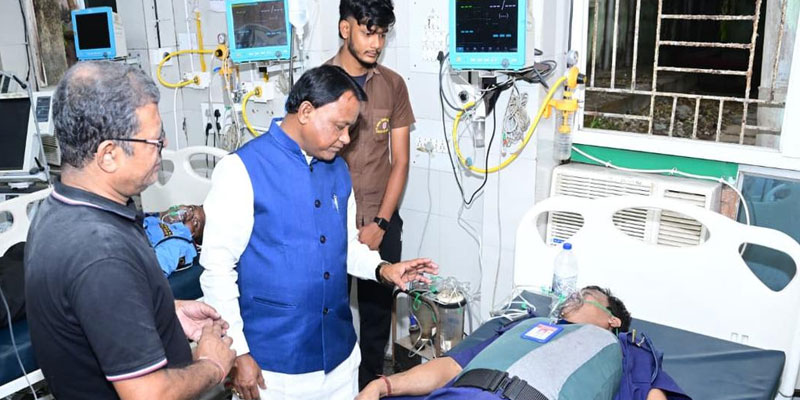
At the state level, Chief Minister Mohan Charan Majhi visited the hospital shortly after the incident to assess the situation and meet injured patients. The Odisha government announced ₹25 lakh compensation to the families of those who died through the Chief Minister’s Relief Fund. Majhi also ordered a judicial probe to determine the exact cause of the fire and identify any lapses in safety protocols.
The incident has also reignited debate over infrastructure preparedness in public hospitals. SCB Medical College, one of the largest healthcare institutions in eastern India with more than 1,500 beds, now faces scrutiny over fire safety audits, electrical maintenance and the adequacy of emergency response systems in critical care units.
Opposition Reactions and Political Fallout
Opposition parties in the state have expressed grief while sharply criticizing the government over alleged negligence. Former Odisha Chief Minister and Leader of Opposition Naveen Patnaik of the Biju Janata Dal (BJD) conveyed condolences to the victims’ families and wished a speedy recovery for the injured. While maintaining a measured tone, Patnaik urged authorities to ensure the best possible treatment for the affected patients and called for a thorough review of safety systems in hospitals.
The Indian National Congress took a more confrontational stance, staging protests and accusing the administration of ignoring repeated warnings about hospital infrastructure issues. Congress leaders alleged that negligence and poor maintenance contributed to the tragedy, citing earlier complaints regarding ICU management and patient care. They have demanded strict action against responsible officials and proposed the installation of CCTV monitoring in intensive care units to enhance accountability.
The political debate has intensified as the opposition questions whether fire safety audits were conducted properly and whether equipment such as fire extinguishers and electrical systems were regularly maintained.
A Wake-Up Call for Healthcare Safety
The SCB hospital fire is more than a tragic accident—it is a stark reminder of systemic vulnerabilities in India’s public healthcare infrastructure. Overburdened hospitals, aging electrical systems and inadequate safety drills can turn medical facilities into high-risk environments, especially for critically ill patients who cannot evacuate quickly.
While compensation and inquiries offer immediate responses, the real test lies in implementing lasting reforms. Comprehensive fire audits, modern safety technology, regular emergency drills and strict accountability mechanisms are essential to prevent similar tragedies. As public dependence on government hospitals continues to grow, ensuring patient safety must become a non-negotiable priority across the healthcare system.
(With agency inputs)