SC Draws the Line, Upholds President–Governor Discretion; Rejects Deadlines and Deemed Assent
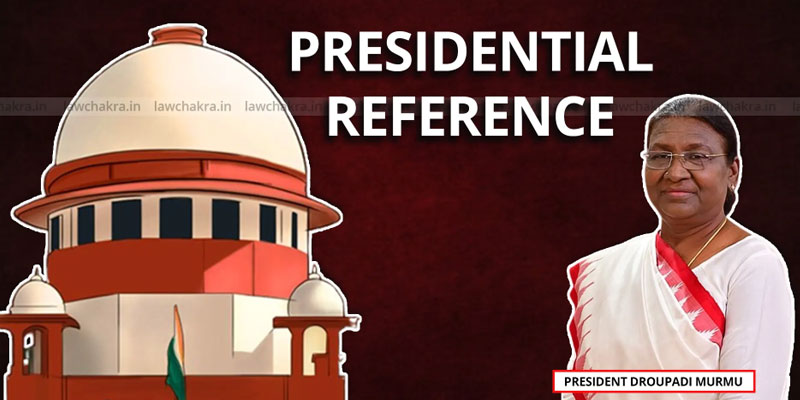
The Supreme Court of India has delivered a pivotal judgment on the long-disputed question of whether the President and Governors can be subjected to fixed timelines for granting assent to Bills. The ruling, issued in response to a Presidential reference, comes amid heightened tensions between state governments and Raj Bhavans over alleged delays that have stalled key legislative initiatives. By firmly rejecting rigid timelines and the notion of “deemed assent,” the Court has reshaped the contours of executive-legislative relations in India’s federal framework.
A Conflict Rooted in Federal Friction
Recent years have witnessed mounting friction between state governments and Governors over delayed assent to Bills—a constitutional function that, while discretionary, has often been criticized as a political tool. The controversy escalated when a two-judge Supreme Court bench attempted to curb such delays by introducing the concept of “deemed assent” if a Governor failed to act within three months. Political parties, legal scholars, and constitutional authorities fiercely debated the ruling, arguing that it risked altering the delicate balance between constitutional offices. The President’s subsequent reference under Article 143(1) brought the issue squarely before a Constitution Bench for authoritative interpretation.
A Detailed Analysis of the Judgment
· Reaffirming Constitutional Discretion
The five-judge Constitution Bench led by Chief Justice BR Gavai held that the Constitution intentionally grants “elasticity” to the offices of the President and Governors. Under Article 200, a Governor may assent to a Bill, return it with recommendations, or reserve it for Presidential consideration—none of which operate under fixed timelines. Imposing externally created deadlines, the Court reasoned, would undermine the discretionary space essential for these high offices.
· Striking Down “Deemed Assent”
One of the most consequential elements of the ruling is the categorical rejection of judicially created “deemed assent.” The Court held that compelling assent through inference amounts to the judiciary appropriating executive authority, violating the principle of separation of powers. It emphasized that constitutional design does not permit courts to substitute or dictate the Governor’s or President’s decision.
· Limiting Judicial Intervention, Not Accountability
While courts cannot prescribe timelines, the Bench clarified that Governors cannot sit on Bills indefinitely. Prolonged, unexplained delays that hinder governance may invite judicial scrutiny—but only to compel a decision, not dictate its content. The judgment underscores that structural remedies should lie in political dialogue, constitutional conventions, and inter-institutional engagement rather than judicial fiat.
· Guidance for Future Constitutional Queries
The Court further advised that when issues of constitutional interpretation arise, the President may seek the Supreme Court’s opinion before granting assent—a measure aimed at reinforcing clarity and constitutional fidelity.
Legal and Political Implications
Legally, the verdict restores equilibrium between constitutional authorities, prevents judicial overreach, and preserves the sanctity of the executive’s discretionary space. Politically, it tempers the growing trend of invoking courts to resolve executive-legislative stand-offs, shifting the responsibility back to constitutional and political processes. The ruling may reduce flashpoints between states and Governors, though the underlying tensions of India’s asymmetric federalism will continue to shape these interactions.
Preserving Balance Through Constitutional Wisdom
The Supreme Court’s judgment marks a decisive reaffirmation of constitutional principles—protecting the discretionary authority of the President and Governors while preventing abuse through unreasonable delay. By rejecting judicially enforced timelines and the concept of deemed assent, the Court safeguards separation of powers and reinforces cooperative federalism. The ruling ultimately calls for dialogue, convention, and constitutional propriety to resolve legislative bottlenecks—an approach vital to the health and stability of India’s democracy.
(With agency inputs)