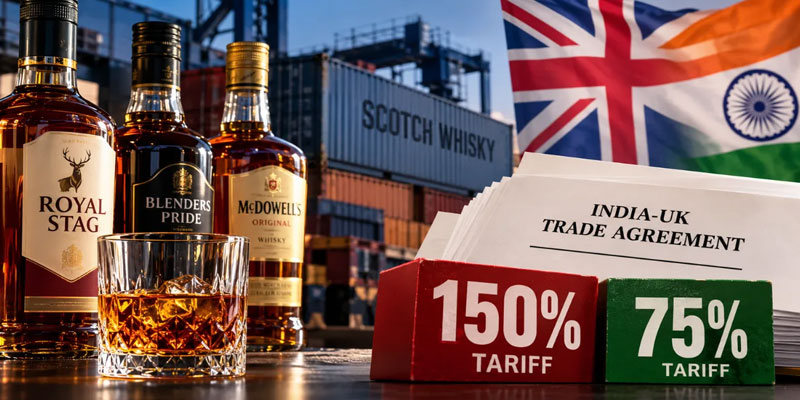
Scotch tariff dispute tests India-UK trade pact, raising questions about the implementation of tariff concessions under the Comprehensive Economic and Trade Agreement (CETA), which reportedly took effect on July 15, 2026. A disagreement over bulk Scotch whisky imports has emerged as a significant challenge for the agreement, with Indian customs authorities investigating duty classifications while industry representatives warn that the interpretation could undermine a key negotiated benefit.
Understanding the Core Tariff Dispute
Under the agreement, India agreed to reduce import duties on eligible Scotch whisky from 150% to 75% immediately, with a further phased reduction to 40% over ten years. The disagreement concerns bulk Scotch concentrates imported from Britain and blended domestically into popular brands, including Royal Stag, Blenders Pride and McDowell’s.
Indian investigators maintain that these concentrates may fall under a customs classification attracting the original 150% duty. The International Spirits and Wines Association of India (ISWAI), which represents major companies including Diageo and Pernod Ricard, argues that the agreement's wording covers the imports and that excluding them could render the tariff concession ineffective for an important segment of the industry.
DRI Investigation Raises Industry Concerns
The Directorate of Revenue Intelligence (DRI) has reportedly searched premises linked to Diageo and Pernod Ricard and questioned executives over the classification of bulk Scotch imports.
· Pernod Ricard India confirmed that DRI officials visited its premises and said it was cooperating with the investigation.
The outcome could affect Indian manufacturers that depend on imported Scotch concentrates. Higher duties could increase production costs, squeeze profit margins and eventually influence retail prices.
Why the Dispute Matters for CETA
Whisky tariffs were a sensitive issue during India-UK trade negotiations. Britain sought improved access for its whisky industry, while India needed to balance market access with domestic commercial interests.
If bulk concentrates are excluded from preferential treatment, the tariff reduction could primarily benefit bottled Scotch imports rather than British inputs used by Indian manufacturers. This could alter supply-chain decisions, investment plans and the commercial value of the agreement.
Diplomatic Engagement and the Road Ahead
The British government has said it is engaging with India to ensure exporters receive the tariff treatment negotiated under the pact. ISWAI has also sought urgent intervention from Commerce and Industry Minister Piyush Goyal.
The next steps may involve a formal customs classification decision, clarification by the commerce ministry or bilateral trade consultations.
Protecting Trade Credibility Through Clarity
The dispute is ultimately a test of whether negotiated commitments translate into predictable commercial outcomes. India must enforce customs laws while ensuring that legitimate tariff concessions retain their intended meaning. A transparent, mutually agreed clarification could protect government revenue, support domestic manufacturers and preserve confidence among British exporters. Conversely, prolonged uncertainty could weaken the agreement's credibility just as both countries seek deeper economic cooperation.
(With agency inputs)