Mamata Begins Sit-In Against Voter Roll Revision
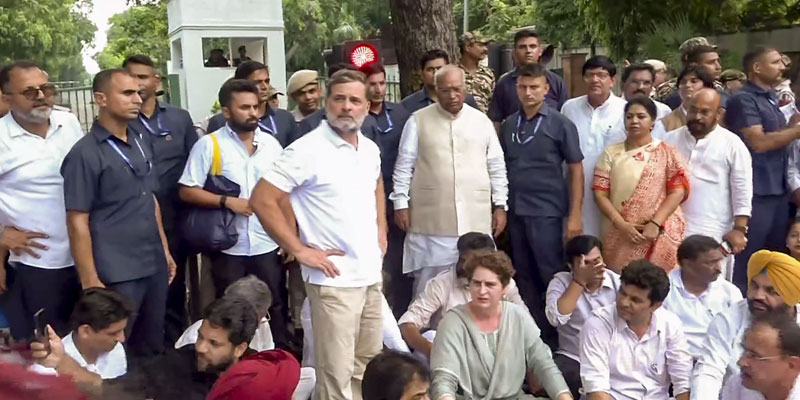
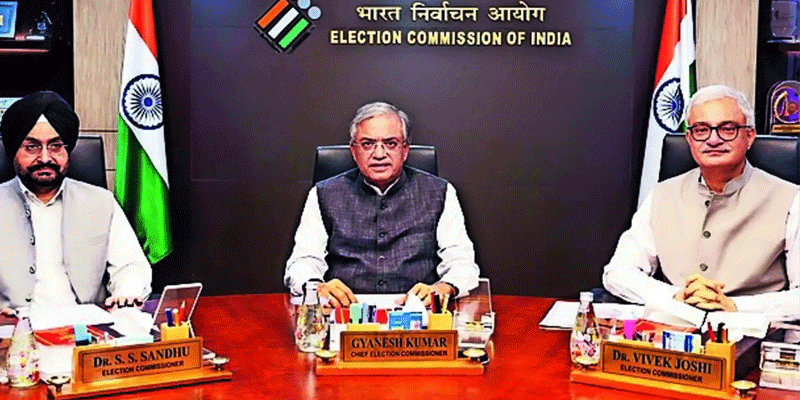
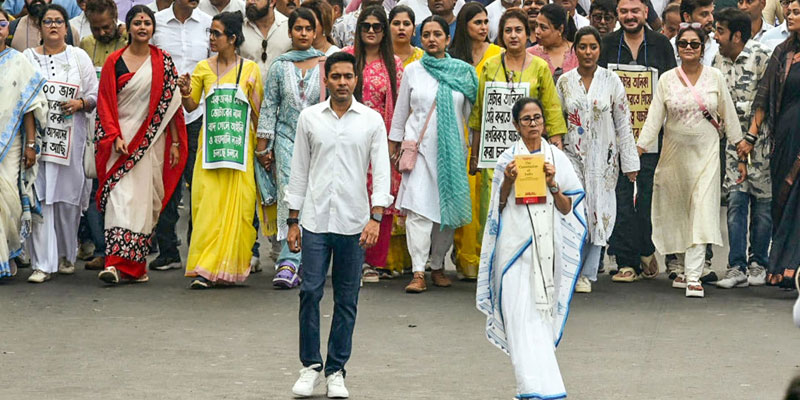
West Bengal Chief Minister Mamata Banerjee on March 6, 2026, launched a sit-in protest in Kolkata, intensifying the political confrontation over the state’s controversial voter roll revision. Addressing supporters at Moulali, Banerjee accused the Election Commission of India of colluding with the Bharatiya Janata Party to disenfranchise genuine voters ahead of upcoming civic elections.
Holding documents, she claimed proved that several “deleted” voters were still alive, Banerjee described the process as an attempt to manipulate the electoral base in the state.
What Is the Special Intensive Revision?
The controversy stems from the Special Intensive Revision (SIR) of electoral rolls initiated by the Election Commission in November 2025. The exercise involves door-to-door verification of voters to remove duplicate entries, deceased individuals, migrants who have shifted constituencies, and fraudulent registrations.
Election officials argue the revision is necessary to maintain clean and accurate voter lists in an era where digital records and migration patterns make duplication easier. According to the Commission, artificial intelligence tools flagged anomalies in several constituencies, prompting verification drives across districts.
Scale of Deletions Raises Alarm
Since the process began, around 63.66 lakh names—about 8.3 percent of the state’s electorate—have been removed from the voter rolls. Of these, 58 lakhs were identified in the initial draft published in December 2025, while another 5.46 lakh deletions occurred after hearings through Form-7 objections for deaths, duplicate entries, or relocation.
At the same time, approximately 1.82 lakh new voters were added through Form-6 applications. However, the high number of deletions, especially in districts like Bankura and central North Kolkata, which are considered strongholds of the All-India Trinamool Congress, has fueled political suspicion.
Adding to the uncertainty, over 60 lakh electors remain “under adjudication,” meaning their status could change after further verification or legal scrutiny.
TMC’s Allegations of Disenfranchisement
Banerjee and senior TMC leader Abhishek Banerjee have framed the SIR exercise as a targeted attempt to delete minority and rural voters who traditionally support their party.
The timing of the protest—just two days before a scheduled visit of the Election Commission’s full bench to West Bengal—signals a push to pressure the poll body into greater transparency. TMC leaders have also hinted at approaching the Supreme Court if large-scale deletions continue without adequate justification.
BJP’s Counterarguments
The BJP has strongly rejected accusations of conspiracy. State leaders including Sukanta Majumdar and Suvendu Adhikari argue that the revision simply exposes what they call years of voter roll manipulation under the Trinamool government.
According to BJP claims, the party had earlier submitted lists of over 13 lakh suspected fake voters—duplicates, deceased individuals, and ghost entries—to the Election Commission. They argue the current deletions validate those complaints rather than prove political interference.
BJP leaders also accuse the TMC of obstructing the process by pressuring booth-level officers and electoral registration officials. Party IT cell head Amit Malviya has defended the Commission’s use of technology and verification methods, calling the exercise essential for ensuring free and fair elections.
A High-Stakes Battle Over Electoral Integrity
The SIR controversy reflects the intense political polarization that defines West Bengal’s electoral landscape. For the Trinamool Congress, the issue represents a struggle to protect voter rights and prevent disenfranchisement. For the BJP, it is proof of a long-overdue clean-up of electoral rolls.
As millions of voters await final decisions on their status and the Election Commission prepares to review the process on the ground, the outcome could reshape political equations in the state. Ultimately, the challenge will be ensuring that voter verification strengthens electoral integrity without undermining public trust in the democratic process.
(With agency inputs)