India Is Not Facing a 1991-Style Crisis
India today is far removed from the balance-of-payments crisis that shook the country in 1991. Foreign exchange reserves are hovering around $700 billion, enough to cover nearly 11 months of imports. Services exports have reached record levels, remittances from Indians abroad continue to provide a steady inflow of foreign currency, and oil prices have eased from recent highs. Together, these factors have significantly strengthened India's external position and enhanced its credibility in global financial markets.
Yet, economists caution that a different challenge may be emerging. The issue is no longer whether India has enough dollars in reserve, but whether it can continue attracting the foreign capital that helps sustain economic growth in an increasingly uncertain global environment.
From Scarcity to Strength
The contrast with 1991 is stark. At the time, India had foreign exchange reserves sufficient to cover barely a few weeks of imports, forcing the government to undertake sweeping economic reforms and even pledge gold to secure emergency financing.
Three decades later, the picture is dramatically different. A diversified economy, stronger exports, rising services earnings, and prudent reserve management have given India a much larger financial cushion. The current account deficit remains manageable, while services exports and remittances have become important pillars of external stability.
This transformation explains why many economists dismiss comparisons with 1991 as misplaced. India's challenge today is not a shortage of reserves but the sustainability of capital inflows.
Understanding the Dollar Flow Question
A useful way to understand the issue is to think of India as a household. The country spends billions of dollars every year importing crude oil, electronics, machinery, chemicals, and gold. These payments require a constant supply of foreign currency.
Dollars flow into India through exports, remittances, and foreign investments. While reserves provide a safety buffer, long-term economic stability depends on maintaining these inflows. This is where foreign investment becomes crucial.
FDI and FPI: Two Very Different Sources of Capital
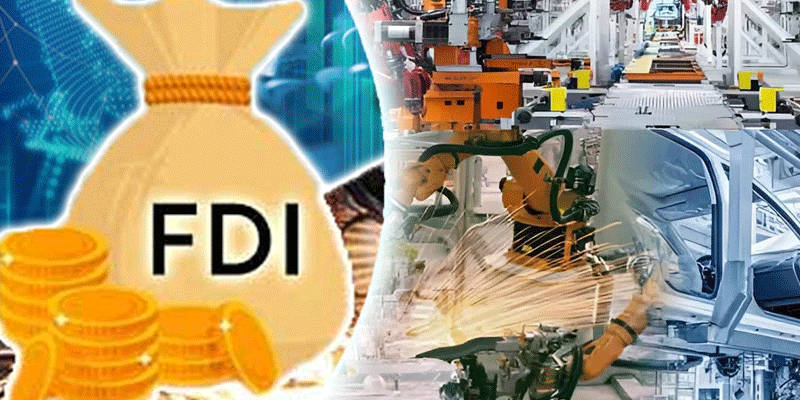
Foreign Direct Investment (FDI) refers to long-term investments made by overseas companies. These include setting up factories, establishing technology centres, investing in manufacturing facilities, or acquiring stakes in Indian businesses. Because such investments involve physical assets and long-term commitments, they are generally stable and less likely to leave suddenly.
Foreign Portfolio Investment (FPI), on the other hand, involves investments in stocks and bonds by global mutual funds, pension funds, hedge funds, and institutional investors. Unlike FDI, portfolio investments can move in and out of markets rapidly.
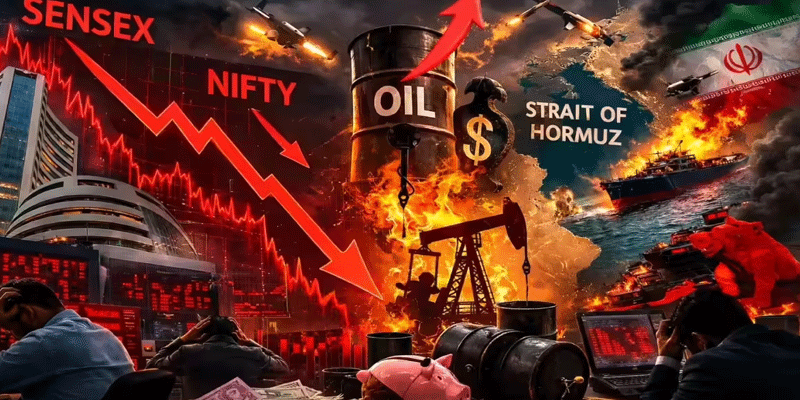
This is why FPI is often described as "hot money." When global conditions are favourable, large amounts of capital can enter the market. But if investors become nervous due to geopolitical tensions, interest-rate changes, or economic uncertainty, the same money can exit just as quickly.
Current Scenario: Managing Stability Amid Volatility
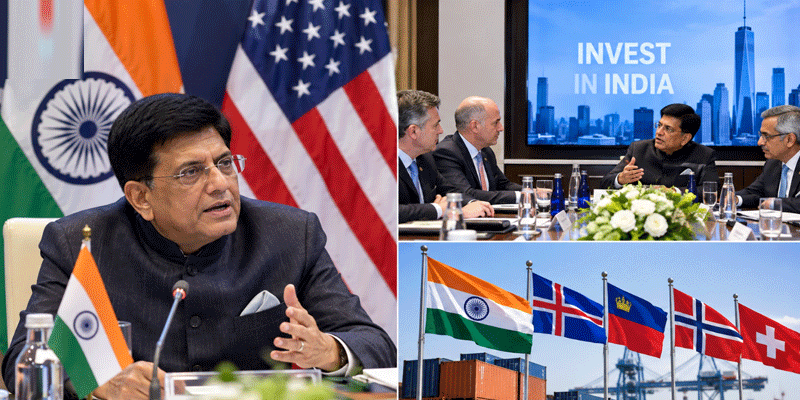
India's economic resilience today rests on a combination of strong reserves, growing services exports, and continued foreign investment. However, global uncertainty has increased the importance of attracting stable FDI while managing the volatility associated with FPI flows.
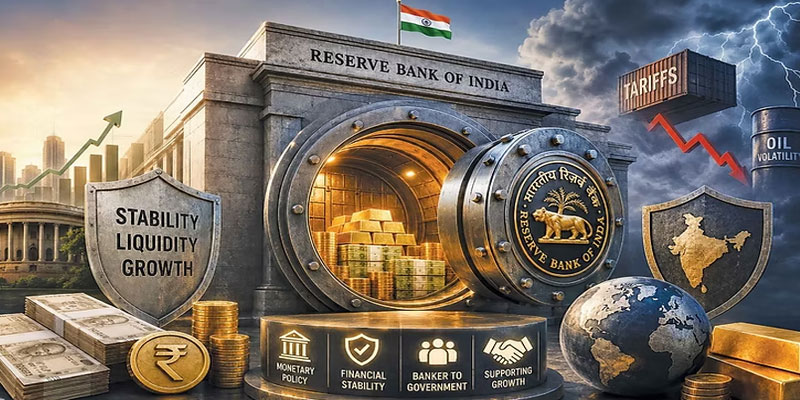
The Reserve Bank of India's sizeable reserve buffer provides protection against external shocks, but reserves alone cannot substitute for sustained investor confidence. As global capital becomes more selective and mobile, maintaining policy stability, improving ease of doing business, and strengthening growth prospects will remain essential.
The Real Test Lies Ahead
India's external finances are far stronger than they were in 1991, making fears of an immediate crisis largely unfounded. However, economic strength today depends not only on the stock of dollars held in reserves but also on the continuous flow of capital into the country. The challenge for policymakers is to ensure that India remains an attractive destination for long-term investment while navigating the volatility of global financial markets. In that sense, the future will be shaped less by the size of India's forex reserves and more by its ability to keep global investors engaged and confident.
(With agency inputs)