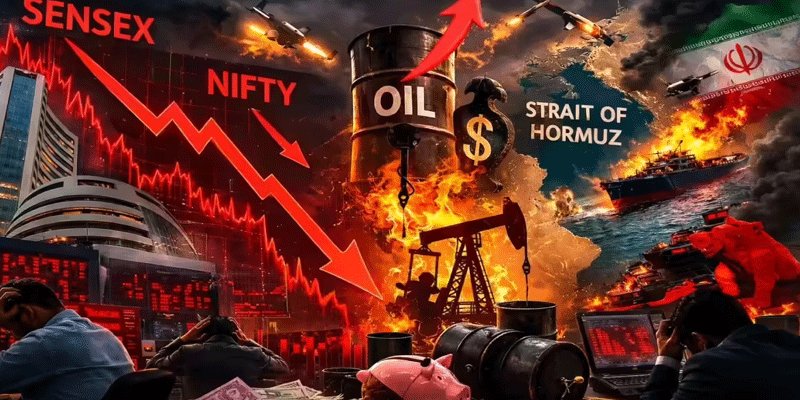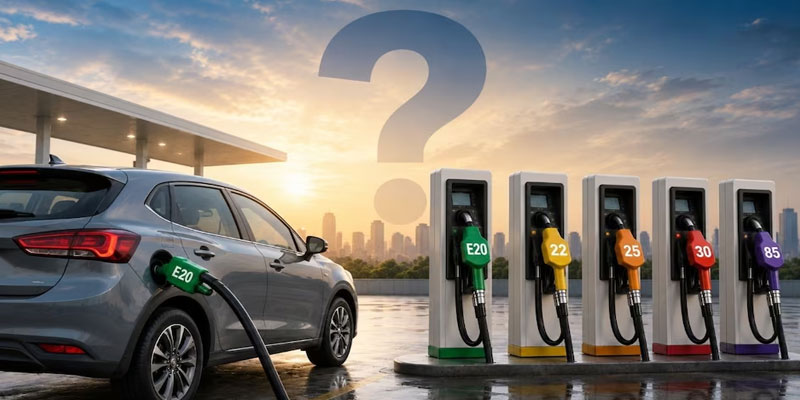
The Centre has reiterated that ethanol blending is designed to protect consumers from global oil price shocks rather than reduce petrol prices at the fuel station. Responding to concerns over the impact of E20 fuel, the government has maintained that the programme is primarily an energy-security measure aimed at reducing India's dependence on imported crude oil, insulating the economy from volatile international markets and advancing the country's clean-energy transition. While acknowledging that some vehicles may witness a modest decline in fuel efficiency, it argues that the long-term strategic, environmental and economic gains outweigh the immediate concerns over mileage.
India’s Long-Term Biofuel Strategy
India's ethanol blending programme is a key component of its broader energy-transition agenda. The initiative gathered momentum under the NITI Aayog roadmap for 2020-25, which envisioned ethanol blending as a means to strengthen energy security while creating an additional and stable market for agricultural produce. The Ministry of Petroleum and Natural Gas has consistently highlighted that higher ethanol blending has helped substitute substantial volumes of crude oil imports, conserve valuable foreign exchange, reduce carbon emissions and enhance farmers' incomes through procurement of sugarcane- and maize-based ethanol.
The government also maintains that ethanol has significantly lower lifecycle greenhouse gas emissions than conventional petrol, making it an important pillar in India's pathway towards achieving its net-zero emissions target.
Why Ethanol Has Become a Major Debate
Despite these stated benefits, ethanol blending has emerged as one of the country's most debated fuel policies because it affects multiple stakeholders differently. It brings together issues of energy security, environmental sustainability, agricultural economics, vehicle technology and consumer expenditure in a single policy framework.
The principal controversy centres on consumer costs. The government itself acknowledges that E20 fuel may reduce mileage by approximately three to five per cent in certain vehicles. Although ethanol offers higher octane ratings, improved anti-knock characteristics and cleaner combustion, critics argue that motorists effectively pay more because reduced fuel efficiency offsets any perceived benefit at the fuel pump. Consequently, many consumers feel the actual cost of using blended fuel is higher than what the retail price suggests.
Balancing National Interest and Consumer Concerns
The debate therefore extends beyond fuel technology to questions of policy priorities and fairness. The government argues that ethanol's real value lies in lowering India's vulnerability to global crude price fluctuations and reducing import dependence, rather than making petrol cheaper. It has also pointed out that ethanol procurement costs have increased, making it unrealistic to expect blending alone to reduce retail fuel prices.
On the other hand, vehicle owners continue to raise concerns over lower mileage, compatibility with older engines and possible long-term maintenance implications. These concerns have transformed ethanol blending into a broader public policy debate over who ultimately bears the financial burden of India's energy transition.
Finding the Right Balance
Ethanol blending represents a significant strategic investment in India's energy future. It promises greater fuel security, supports rural incomes and contributes to environmental goals. Yet, for the policy to enjoy wider public acceptance, consumer concerns over fuel efficiency and operating costs cannot be overlooked. The challenge before policymakers is to balance national energy security with consumer confidence, ensuring that the transition towards cleaner fuels remains both economically equitable and strategically sustainable.
(With agency inputs)