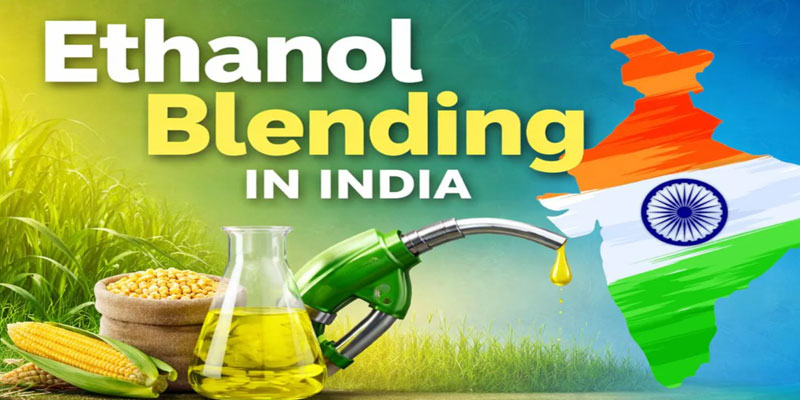
In a major move aimed at promoting cleaner fuels and reducing dependence on imported crude oil, the Indian government has removed central excise duties on petrol blended with higher levels of ethanol. The decision expands tax support beyond the existing E20 standard and signals a stronger policy push towards alternative fuels. While the measure is designed to accelerate India’s long-term transition toward ethanol-powered mobility, it has also sparked confusion among consumers, especially prospective car buyers uncertain about future fuel standards and vehicle compatibility.
Understanding the New Excise Duty Exemption
The government has granted nil central excise duty on petrol blended with ethanol concentrations ranging from 22% to 30%, including E22, E25, E27, and E30 fuels, provided they meet Bureau of Indian Standards specifications. Excise duty is an indirect tax imposed on production and sale, and its removal is intended to encourage refiners and fuel suppliers to produce higher ethanol blends without additional tax burdens.
The policy builds on India’s existing ethanol-blending programme, which has already introduced E20 fuel across several parts of the country. By extending tax incentives to higher blends, the government aims to reduce crude oil imports, support domestic ethanol production, and advance cleaner-energy goals.
However, despite the announcement, the exemption is unlikely to provide immediate financial relief to ordinary consumers because higher ethanol blends are not yet widely available at fuel stations.
Why Consumers Won’t See Immediate Fuel Savings
At present, most petrol pumps in India continue to supply E20 fuel, which contains 20% ethanol and therefore does not qualify for the newly announced exemption. As a result, monthly fuel expenses for vehicle owners are expected to remain largely unchanged in the near term.
The government’s latest move is therefore more strategic than consumer-oriented. It seeks to create incentives for fuel companies and automobile manufacturers to prepare for the next phase of ethanol adoption rather than offering instant price reductions at the pump.
Growing Consumer Confusion Over Ethanol Roadmap
A recent survey has revealed that nearly 43% of potential car buyers in India are postponing or avoiding vehicle purchases because of uncertainty surrounding the government’s ethanol-blending plans. The possibility of a shift from E20 to higher blends such as E30 and E85 has raised concerns over whether existing vehicles will remain compatible in the future.
Technical distinctions between fuel types have further complicated the issue. While E20 fuel has been tested extensively and declared safe for most new petrol vehicles, higher blends like E30 and E85 require specially designed flex-fuel engines capable of adjusting automatically to varying ethanol concentrations.
Rise of Flex-Fuel Vehicles
Automobile manufacturers are gradually responding to the policy shift. Maruti Suzuki has already introduced India’s first commercial flex-fuel version of the Wagon R and is preparing additional models. Mahindra & Mahindra is also developing flex-fuel engines for future SUVs.
Despite these developments, flex-fuel technology remains at an early stage in India’s mass-market passenger vehicle segment, limiting the immediate practical impact of higher ethanol blends.
A Long-Term Energy Transition
The government’s excise duty exemption reflects a broader strategy to strengthen energy security, reduce fossil fuel dependence, and promote cleaner transportation fuels. Yet the transition also highlights the importance of policy clarity and consumer awareness. Unless the rollout of higher ethanol blends is matched by adequate infrastructure, vehicle readiness, and clear communication, uncertainty may continue to influence purchasing decisions. India’s ethanol push may eventually transform the fuel ecosystem, but its success will depend on balancing environmental ambition with consumer confidence and technological preparedness.
(With agency inputs)