China has firmly denied allegations of providing military assistance to Iran, calling US claims “fabricated” amid rising geopolitical tensions. Chinese Foreign Ministry spokesperson Lin Jian reiterated Beijing’s neutral stance while cautioning Washington against imposing fresh tariffs. The statement comes at a time of heightened global anxiety following the collapse of diplomatic talks and growing suspicion over external involvement in the Iran conflict.
US–Iran Conflict
The current US–Iran crisis began on February 28, 2026, when joint US-Israel airstrikes targeted Iranian military sites and reportedly killed Supreme Leader Ali Khamenei, prompting Iran to retaliate by mining the strategic Strait of Hormuz. A temporary ceasefire on April 8 briefly eased tensions, but it quickly unraveled after failed talks in Islamabad on April 11–12 between JD Vance and Abbas Araghchi over nuclear limits and sanctions, leaving the situation fragile.
US Allegations: Suspected Chinese Military Support
US intelligence reports have alleged that China was preparing to supply weapons to Iran during the ceasefire period. These purported shipments reportedly included portable air defense systems, missile components, and other military hardware that could potentially target US assets in the region.
Additional concerns were raised over satellite imagery, dual-use technologies, and the movement of a sanctioned Chinese tanker through the Strait of Hormuz. These developments fueled speculation about a deeper strategic alignment between China and Iran, particularly within the broader context of cooperation involving Russia.
China’s Response: Denial and Strategic Positioning
China has categorically rejected all allegations, describing them as “baseless smears.” Lin Jian emphasized that Beijing adheres to strict export controls and has not contributed to escalating the conflict. He also reiterated China’s commitment to promoting dialogue and stability in the region.
At the same time, China has criticized US actions, particularly the naval blockade and military posture in the Gulf, calling them destabilizing. Beijing has positioned itself as a potential mediator, leveraging its longstanding economic and energy ties with Iran, including a long-term bilateral cooperation agreement.
Trump’s Tariff Threat and Economic Fallout
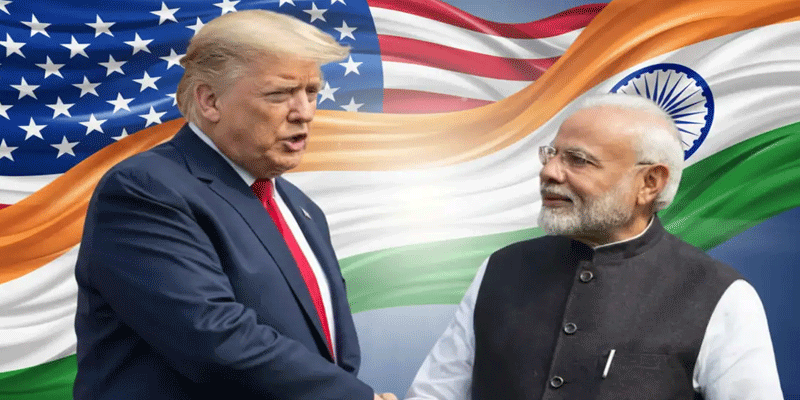
US President Donald Trump has escalated the situation further by warning of steep economic consequences if Chinese involvement is confirmed. He has proposed tariffs of up to 50% on Chinese goods, a move that could significantly disrupt global trade.
Such a step would strain already tense US-China relations and impact a bilateral trade relationship worth hundreds of billions of dollars. Markets are closely watching these developments, as any escalation could trigger inflationary pressures, supply chain disruptions, and broader economic instability.
Geopolitical Implications: A Fragile Global Balance
The unfolding situation reflects a broader geopolitical divide, often described as an emerging alignment between Iran, China, and Russia against Western powers. The Strait of Hormuz remains a critical flashpoint, with disruptions posing risks to global energy supplies.
China’s balancing act—denying involvement while advocating diplomacy—highlights its attempt to maintain influence without direct confrontation. Meanwhile, the US continues to assert pressure through both military and economic means.
Rising Tensions Demand Diplomatic Urgency
China’s denial and warning to the United States underscore the delicate balance in an already volatile geopolitical environment. With the ceasefire under strain and economic threats looming, the risk of escalation remains high.
For the international community, the priority must be to prevent further deterioration through sustained diplomatic engagement. As global powers navigate competing interests, the coming weeks will be critical in determining whether dialogue can prevail over confrontation in one of the world’s most sensitive regions.
(With agency inputs)