Fast Ends, But Movement Refuses to Slow Down
Sonam Wangchuk has ended his 26-day hunger strike in the presence of Union ministers, but the Cockroach Janta Party (CJP) has made it clear that its peaceful protest at Jantar Mantar will continue until Union Education Minister Dharmendra Pradhan resigns. While the Centre has persuaded the activist to withdraw his fast after negotiations and assurances of legislative reforms, the wider political confrontation over the NEET-UG 2026 paper leak remains unresolved. The development has eased immediate tensions but has not ended a movement that has evolved into a larger debate on examination integrity, accountability and public trust.
How the NEET Controversy Snowballed
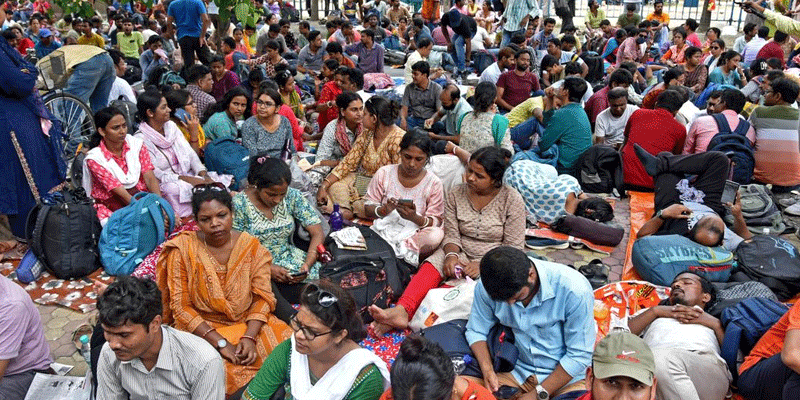
The agitation stems from alleged leaks and irregularities in the NEET-UG 2026 medical entrance examination, triggering nationwide student protests, a CBI probe and repeated disruptions in Parliament's Monsoon Session. The youth-led Cockroach Janta Party (CJP) emerged as a prominent voice demanding accountability, particularly the resignation of Union Education Minister Dharmendra Pradhan.
To strengthen the movement, climate activist and education reform advocate Sonam Wangchuk began an indefinite hunger strike on June 28, aligning himself with students seeking transparent examinations, systemic reforms and political responsibility.
Wangchuk's Fast Elevated the Movement
Wangchuk's 26-day fast became one of the defining moments of the NEET controversy. He reportedly lost over 11 kg, drawing nationwide attention and public sympathy. Around 65 Members of Parliament across party lines either visited him or appealed for him to end the fast, signalling that the issue had grown beyond partisan politics into a broader governance challenge.
The sustained protests, symbolic fast and possibility of larger demonstrations increased pressure on the Centre to seek a negotiated resolution.
Government's Assurances and a Strategic De-escalation
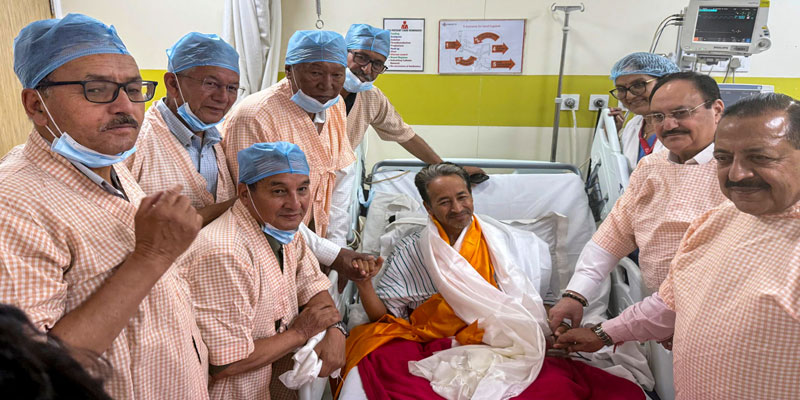
Wangchuk ended his fast shortly after midnight at Medanta Hospital in Gurugram in the presence of Union ministers JP Nadda and Jitendra Singh, members of the Apex Body of Leh Ladakh and his family.
He said the decision followed prolonged negotiations and concerns over possible violence in the country. Prime Minister Narendra Modi urged him to prioritise his health and announced that the government would introduce a stringent anti-paper leak Bill featuring tougher punishments and fast-track courts, with Cabinet approval expected before its introduction in Parliament.
CJP Maintains Pressure on Streets and in Politics
While welcoming Wangchuk's decision on health grounds, the CJP has reiterated that its peaceful protest at Jantar Mantar will continue until Dharmendra Pradhan resigns. The organisation argues that stronger laws alone cannot replace political accountability. According to its leaders, meaningful reform requires both legislative action and responsibility at the highest levels of governance.
Parliamentary Deadlock Reflects a Deeper Institutional Crisis
The battle has also intensified inside Parliament, where Opposition parties continue to demand a detailed discussion on NEET and the Education Minister's resignation. Although the government has expressed willingness to debate the issue, it has ruled out accepting the resignation demand, keeping political tensions alive.
Reports that the Centre may hold talks with CJP representatives indicate an attempt to channel street protests into institutional dialogue as Parliament prepares to consider examination reforms.
Beyond One Fast Lies the Bigger Test of Credibility
The end of Sonam Wangchuk's hunger strike has prevented an immediate escalation and created space for dialogue. Yet the NEET controversy has exposed a deeper crisis of confidence in India's competitive examination system. The proposed anti-paper leak law is an important step, but lasting credibility will depend on comprehensive reforms in examination management, digital security, independent oversight and transparent accountability. Until those structural changes are implemented and public confidence is restored, the NEET issue is likely to remain both a parliamentary flashpoint and a symbol of students' demand for institutional integrity.
(With agency inputs)