India Positions Itself for Global Green Fuel Leadership
India's AM Green is targeting full offtake for its giant green ammonia plant in Kakinada, Andhra Pradesh, by mid-2027, marking an important step towards establishing the country as a major exporter of low-carbon fuels. The company aims to secure buyers for the facility's entire annual production capacity of one million tonnes, with Japan, South Korea and Europe emerging as key markets.
AM Green has already secured committed or agreed demand for approximately 570,000 tonnes annually, leaving another 430,000 tonnes to be commercially tied up.
Understanding the Kakinada Project
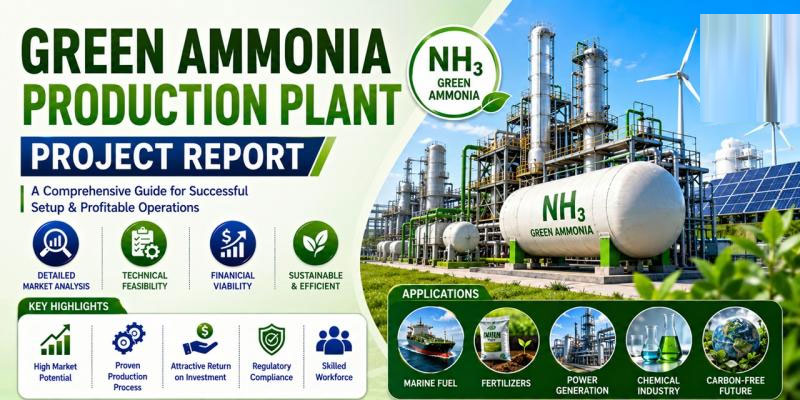
The Kakinada facility is AM Green's first commercial-scale green ammonia project, developed around a converted urea manufacturing plant. It will use renewable electricity and energy storage to produce green hydrogen, which is combined with nitrogen to manufacture ammonia.
Unlike conventional ammonia production, which relies heavily on natural gas, green ammonia offers a lower-carbon alternative with applications across several industries:
· Shipping and maritime transportation.
· Electricity generation and energy storage.
· Fertiliser manufacturing.
· Industrial processes and refining.
The project received its final investment decision in 2024 and is designed to operate in two phases, each producing 500,000 tonnes annually.
Production Timeline: Commercial Operations by 2028
AM Green expects construction to be completed around September-October 2027, with production beginning in early 2028.
The planned milestones are:
· Early 2028: Initial production begins.
· Mid-2028: Output reaches 500,000 tonnes annually.
· March 2029: Full one-million-tonne annual capacity is achieved.
The schedule has shifted from earlier expectations of a 2026 start, partly because of the need to align production with European renewable-fuel certification requirements and secure long-term buyers.
Global Buyers Provide Strong Commercial Foundation
Two major international agreements have already established the project's commercial credibility.
· Germany's Uniper: The energy company has signed a binding long-term agreement for up to 500,000 tonnes of renewable ammonia annually. Initial shipments could begin as early as 2028, subject to European Union renewable-fuel standards.
· Japan's JERA: The Japanese energy major has signed a binding head of agreement for approximately 70,000 tonnes annually over five years, with an extension option. Supplies will support maritime decarbonisation and operations connected to its Hekinan power station.
Together, these arrangements account for approximately 570,000 tonnes of annual demand. AM Green CEO Gautam Reddy Kumbam says market interest has strengthened across Japan, South Korea and Europe.
Strategic Importance for India's Green Hydrogen Mission
The project supports India's ambition to establish a globally competitive green hydrogen economy. The National Green Hydrogen Mission targets at least five million tonnes of annual green hydrogen production capacity by 2030.
AM Green's investors include Malaysia's Gentari, Singapore's GIC and Abu Dhabi's ADIA, alongside its founders. The company is also developing a broader three-million-tonne renewable ammonia portfolio across India.
The Execution Challenge: Turning Ambition into Exports
The remaining challenges include large-scale electrolyser deployment, uninterrupted renewable electricity, port infrastructure, shipping logistics and international certification. Nevertheless, securing major buyers ahead of commissioning gives Kakinada a strong commercial foundation. If AM Green meets its construction and offtake targets, the project could establish India as a serious global supplier of green ammonia, transforming its renewable-energy advantage into a valuable clean-fuel export industry.
(With agency inputs)