A Growing Indian-American Political Footprint
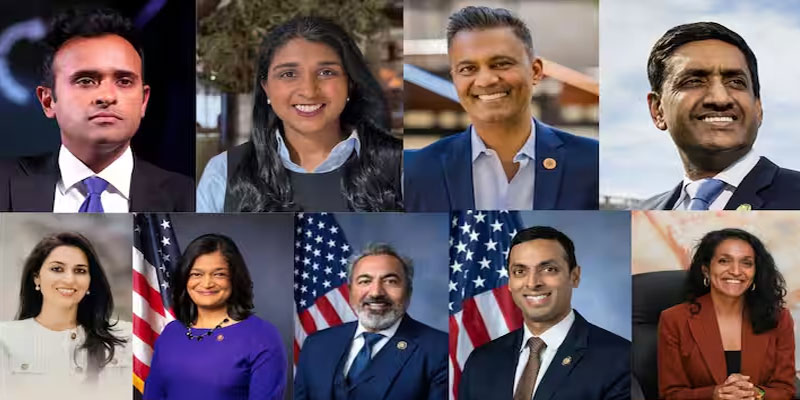
The 2026 US midterm elections have produced a significant breakthrough for Indian-origin politicians, with several candidates winning congressional and state-level contests. From Florida to Georgia, Virginia and Maryland, Indian-American leaders have strengthened their presence in American political institutions. Among the most notable victories are those of Pia Dandiya, who becomes the first South Asian American to represent Florida in Congress, and Jyot Singh, the first Sikh American elected to the Georgia General Assembly.
Who Won? Their Political Journey and Significance
1. Pia Dandiya – Florida: The 39-year-old Democrat defeated Republican Casey Askar in Florida's 22nd Congressional District with approximately 51.9% of the vote. Born and raised in Palm Beach County to parents who migrated from Jaipur, she is a former high-school principal, Harvard graduate and White House Fellow. Her campaign focused on affordability, education, healthcare, corruption and gun safety. She becomes the second Indian-American woman elected to the US House, after Pramila Jayapal, and the first South Asian American to represent Florida in Congress.
2. Jyot Singh – Georgia: A Yale-educated community organiser and son of Sikh immigrants, Singh defeated Republican Yassin Moghazy in House District 97. He becomes the first Sikh American and first Indian American elected to the Georgia General Assembly. His priorities include affordable housing, healthcare, public education and immigrant rights. His grassroots campaign attracted more than 770 individual donors.
3. Suhas Subramanyam – Virginia: The Democratic Congressman secured re-election from the 10th Congressional District with over 61% of the vote. A former adviser to President Barack Obama, he previously served in Virginia's legislature. His victory strengthens Indian-American representation in Congress, particularly on technology, economic opportunity and community development.
4. Aruna Miller – Maryland: The incumbent Lieutenant Governor won another term alongside Governor Wes Moore. Originally from India, Miller previously served in Maryland's House of Delegates. She remains an influential Indian-American woman in American state-level executive leadership.
5. Ro Khanna – California: The Democratic Congressman won re-election from the 17th District, defeating fellow Indian-origin Republican Ritesh Tandon. A prominent Silicon Valley representative, Khanna has built his national profile around technology, manufacturing, economic policy and congressional oversight.
6. Pramila Jayapal – Washington: The Democratic Congresswoman retained her 7th District seat. A prominent progressive voice, she has championed healthcare access, immigration reform, workers' rights and economic equality. She also congratulated Dandiya on her historic victory.
7. Arvind Venkat – Pennsylvania and Ram Villivalam – Illinois: Both Democratic incumbents secured re-election to their respective state legislative seats, extending Indian-origin representation in state policymaking.
The Setbacks and Unresolved Contests
The verdict was not uniformly favourable. Republican Vivek Ramaswamy lost the Ohio gubernatorial race to Democrat Amy Acton, while Republican Saritha Komatireddy lost New York's attorney general contest. Ami Bera and Amish Shah were among candidates leading in congressional races where counting was still underway in early reports.
From Representation to Political Influence
These victories demonstrate that Indian-American participation is moving beyond community representation towards meaningful influence over national and state policies. Their immediate priorities include affordability, healthcare, education, immigration, technology and economic opportunity. Their growing political presence could also strengthen diaspora engagement and India-US people-to-people connections. Ultimately, the challenge for these elected representatives is to convert historic victories into effective governance, demonstrating that their influence extends far beyond their heritage to the broader American electorate.
(With agency inputs)