India’s Food Label Fight Pits Health Against Industry
India’s food-label debate has intensified after regulators considered putting prominent warning symbols on packets of chips, instant noodles and soft drinks. The proposed approach would make products high in added sugar, salt or saturated fat immediately identifiable. But the food and beverage industry has pushed back, arguing that such colourful warnings could oversimplify nutrition and unfairly stigmatise a large share of packaged products.
At stake is a larger question: should consumers merely receive nutritional information, or should regulations make potentially harmful levels visible at first glance?
From Nutrition Tables to Front-Pack Warnings
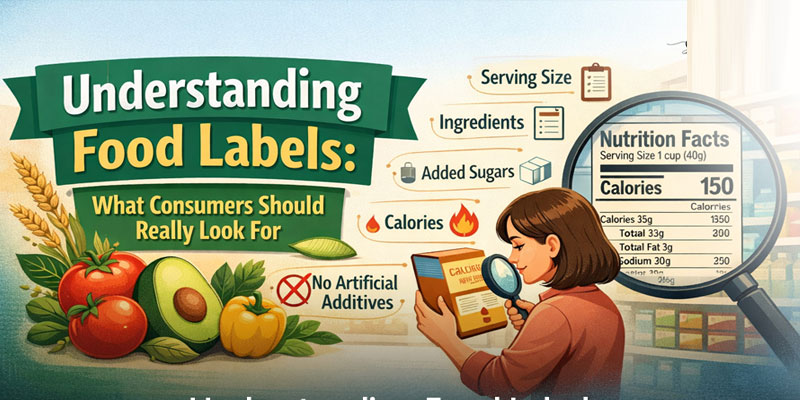
The Food Safety and Standards Authority of India (FSSAI) had considered colour-coded front-of-pack labels, including red warnings for products containing high levels of critical nutrients. Unlike conventional nutrition tables, interpretive labels would allow shoppers to make quicker decisions without calculating nutrient levels or comparing serving sizes.
However, in its August compliance affidavit before the Supreme Court, FSSAI proposed a black-and-white front-of-pack nutritional table instead. It would disclose added sugar, saturated fat and salt per 100 grams and serving, alongside recommended daily intake based on the 2024 ICMR-NIN dietary guidelines.
The suggested daily limits are 25 grams of added sugar, 10 grams of saturated fat and 5 grams of salt. The difference is significant: a warning interprets the information for consumers, while a numerical table leaves that interpretation to them.
Industry Pushback at a Tense Meeting
The regulatory retreat followed a contentious stakeholder meeting on March 19, according to Reuters. Industry representatives argued that colourful warnings could confuse consumers and urged greater emphasis on portion control. Coca-Cola India executive Mili Bhattacharya reportedly called the assumption that an icon would significantly improve diets “very simplistic.”
The commercial stakes are considerable. Industry estimates suggest around 80% of India’s packaged food and beverage products could potentially be classified as high in fat, sugar or salt. The Indian Food & Beverage Association has also warned that blanket criteria could flag products containing naturally occurring sugars, such as coconut water.
Yet international practices complicate that argument. Coca-Cola and affiliates use traffic-light-style labels across several European markets, while Nestlé has employed interpretive labelling in Britain for years. Some Maggi products sold in Britain carry prominent salt warnings that comparable Indian-market products do not.
Supreme Court Raises the Pressure
The Supreme Court has now injected urgency into the dispute. On August 13, Justices J.B. Pardiwala and K. Vinod Chandran asked FSSAI and the Centre to reconsider their position within two weeks, questioning whether the regulator was yielding to manufacturers and highlighting the implications for children’s health.
The case stems from a public-interest petition by 3S and Our Health Society, which argues that numerical disclosures cannot substitute for clear warnings, particularly where health literacy varies considerably.
Beyond Labels, A Public-Health Test
The debate comes as India confronts rising consumption of ultra-processed foods alongside increasing obesity, diabetes and cardiovascular risks. Activists have also drawn attention to differences between products marketed in India and overseas, intensifying demands for greater transparency.
Ultimately, the issue extends beyond packaging design. A nutrition table provides information; a warning label provides a signal. India’s policy choice will determine whether consumer protection depends primarily on individual interpretation—or whether regulation makes potential health risks impossible to overlook. The final FSSAI framework will therefore be an important test of whether public health takes precedence when it collides with powerful commercial interests.
(With agency inputs)