India Rejects Second-Class Seats in UN Security Council Reform
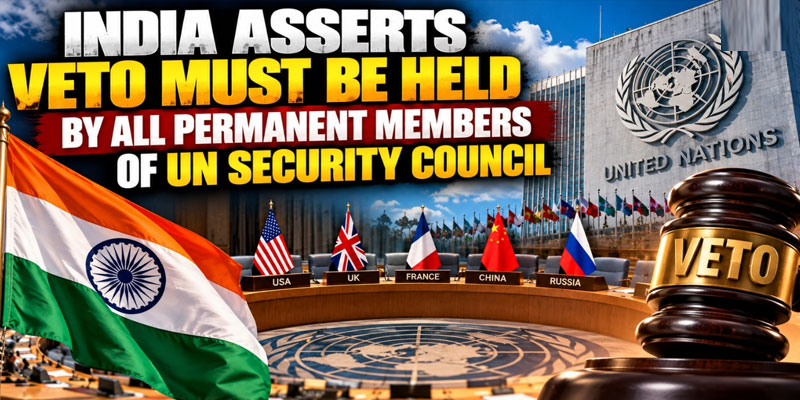
External Affairs Minister S. Jaishankar and India's UN mission have firmly rejected proposals for a reformed United Nations Security Council (UNSC) that would grant new permanent or long-term seats without veto power. India has described such an arrangement as creating a category of “second-class” permanent members, arguing that merely increasing the Council's membership without distributing decision-making authority would perpetuate the existing imbalance. New Delhi maintains that meaningful reform must provide new permanent members with rights and responsibilities equal to those enjoyed by the existing five permanent members.
Why India Wants Security Council Reform
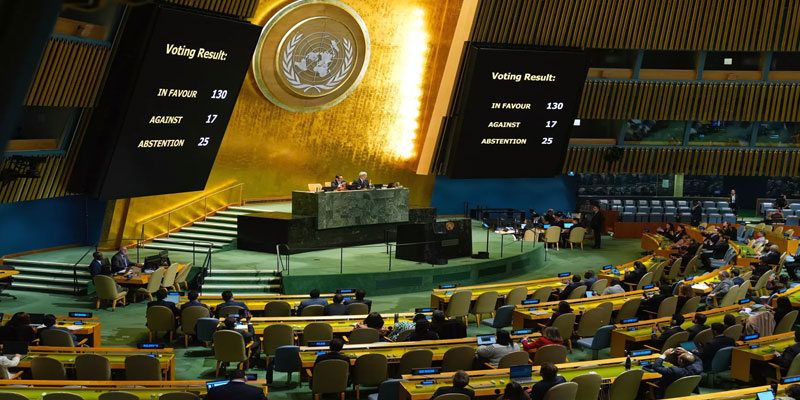
Established in 1945 after the Second World War, the UNSC was designed around the geopolitical realities of that period. Its five permanent members—the United States, Russia, China, France and the United Kingdom—possess veto powers that allow any one of them to block substantive resolutions.
Eight decades later, India argues that this arrangement does not reflect contemporary global realities. The world's most populous country and a major economy, India has consistently demanded permanent membership, citing its democratic credentials, contributions to UN peacekeeping, economic influence and growing international responsibilities.
However, reform remains difficult because changes to the UN Charter require approval from all five permanent members, alongside the necessary ratifications by UN member states.
Why India Opposes Permanent Seats Without Veto
India's principal objection is that creating permanent seats without veto rights would institutionalise inequality rather than eliminate it. India's Permanent Representative to the UN, Ambassador P. Harish, has argued that such a model would leave the existing P5 in control of the Council's most consequential decisions.
India believes:
· New permanent members must enjoy the same rights and responsibilities as existing permanent members.
· Expanding membership without sharing decision-making authority would offer symbolic representation rather than meaningful influence.
· The veto cannot be treated as an exclusive privilege of the existing five powers if permanent membership is being restructured.
This position also finds common ground with the African Union's Common African Position, which demands permanent African representation with equal privileges.
Five Areas That Must Be Reformed Together
India is advocating comprehensive reform rather than negotiations limited to veto powers. Its approach covers five interconnected areas:
· Membership categories: Creating a more representative permanent and non-permanent membership structure.
· Regional representation: Giving underrepresented regions, particularly Africa, a stronger voice.
· Council expansion: Increasing membership to reflect contemporary geopolitical realities.
· Working methods: Making decision-making more transparent, accountable and effective.
· Veto powers: Addressing the unequal distribution and exercise of veto authority.
India argues that changing only one aspect could preserve the fundamental weaknesses of the existing system.
The Hidden Problem: A De Facto Veto
India has also highlighted how informal practices within the Security Council can obstruct collective decisions even without a formal veto. For instance, individual members can prevent consensus on sanctions, press statements and other Council initiatives. Such practices allow powerful countries to influence outcomes beyond the formal exercise of veto authority.
Consequently, India wants reforms to address both institutional rules and informal decision-making practices.
Why India Wants Time-Bound Negotiations
India is demanding early, text-based Intergovernmental Negotiations (IGN) at the UN, supported by clear timelines and measurable milestones.
The objective is to move beyond repetitive discussions and establish an actionable framework for reform. Without a structured negotiating process, India fears that powerful countries could continue delaying changes indefinitely.
Representation Without Power Is No Reform
India's position reflects a larger struggle over who controls the international security architecture. New Delhi is not merely seeking a permanent seat; it is challenging a system that concentrates authority among five countries while expecting the wider membership to accept its decisions.
Ultimately, a reformed Security Council must represent today's world, not the power equations of 1945. Granting permanent seats without equivalent authority may increase the Council's size, but it will not necessarily strengthen its legitimacy. For India, genuine reform means sharing responsibility, representation and decision-making power—not simply offering emerging powers a place at the table without an equal voice.
(With agency inputs)