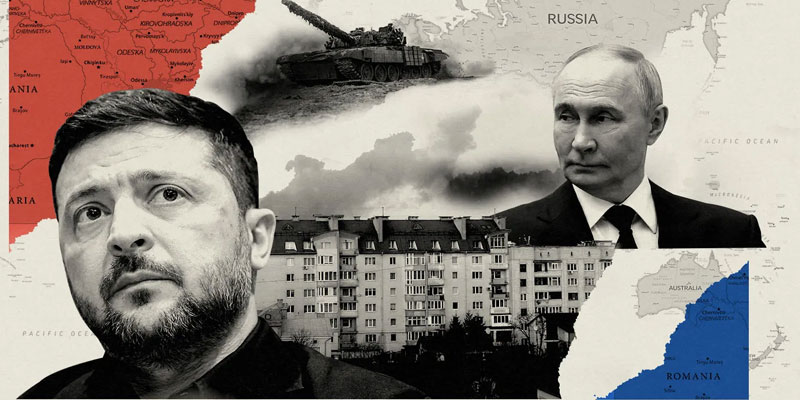
Ukrainian President Volodymyr Zelenskiy has warned that Russia could seek to draft 300,000 additional troops after its September parliamentary elections, signalling that Moscow may be preparing for a prolonged campaign in Ukraine. Zelenskiy’s assessment, released on August 23, is based on Ukrainian intelligence and is not evidence of a publicly announced Kremlin mobilisation order. Moscow has denied plans for another mass mobilisation.
Why Moscow May Need More Troops
According to Zelenskiy, Russia could pursue what he calls a “peripheral mobilisation”, concentrating recruitment in distant regions rather than major cities such as Moscow and St Petersburg. The objective, he argues, would be to minimise the political visibility of another nationwide mobilisation while maintaining the flow of personnel to the battlefield.
The warning echoes Russia’s September 2022 partial mobilisation, when Moscow called up around 300,000 reservists. That decision triggered protests and prompted many military-age Russians to leave the country. A new recruitment drive could therefore rely more heavily on contract soldiers, financial incentives and administrative pressure rather than another highly visible national call-up.
Donbas Remains the Central Battlefield
The manpower concern is closely linked to Russia’s continuing offensive in Donetsk oblast, part of the wider Donbas region. Moscow controls substantial territory and is seeking to capture the remaining Ukrainian-held areas. Zelenskiy says Russian commanders have been instructed to complete the occupation of Donetsk by the end of 2026.
An additional 300,000 personnel could help Russia rotate exhausted formations, replace battlefield losses, reinforce occupied territory and sustain its attritional offensive. But troop numbers alone cannot guarantee breakthroughs. Their effectiveness would depend on training, leadership, equipment, logistics and Russia’s ability to integrate recruits into functioning combat formations.
Missile Production Adds a Second Pressure Point
Zelenskiy’s warning extends beyond manpower. He says Russia is also rapidly expanding its missile production and could eventually reach capacity for 1,300 ballistic missiles annually. The figure cannot be independently verified from public information, but it reflects Kyiv’s assessment that Moscow is attempting to combine battlefield pressure with an expanding domestic weapons industry.
Ukraine is particularly concerned about its ability to counter such attacks. Zelenskiy said Kyiv expects 264 Patriot interceptors in 2026, compared with 364 in 2025 and 675 in 2023. Patriot systems remain among Ukraine’s most important defences against ballistic missiles, making declining interceptor availability a serious vulnerability.
Ukraine Seeks to Stretch Russia’s War Machine
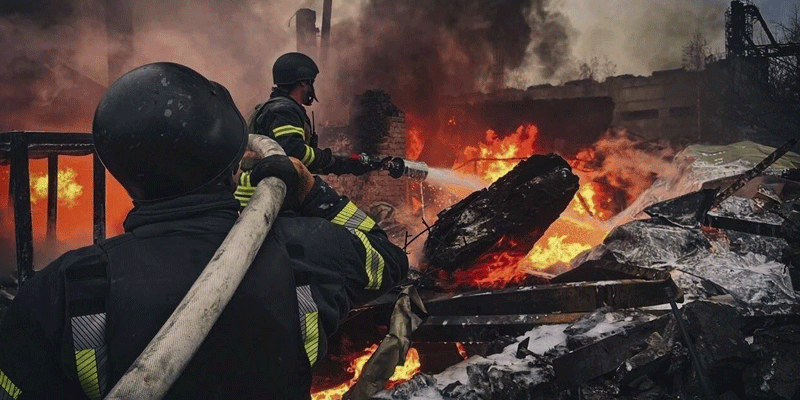
Kyiv has responded by intensifying long-range drone attacks against Russian economic infrastructure, including refineries and warehouses. The strategy is designed to impose costs on Russia’s energy revenues, logistics and industrial capacity while limiting Moscow’s ability to sustain its campaign.
European allies, meanwhile, are attempting to accelerate air-defence deliveries. French President Emmanuel Macron has pledged faster provision of French equipment following talks with Zelenskiy.
Russia Signals Endurance, Ukraine Faces a Race
Zelenskiy’s warning portrays a conflict increasingly defined by industrial capacity, manpower and endurance rather than rapid battlefield breakthroughs. If Russia can expand recruitment while increasing missile production, Ukraine could face simultaneous pressure on its front lines and cities.
The decisive question will be whether Western support can keep pace with Russia’s mobilisation of resources. For Ukraine, the coming months may therefore become a race between Moscow’s capacity to generate soldiers and missiles and Kyiv’s ability to secure air defence, sustain its forces and disrupt Russia’s war machine.
(With agency inputs)