“Fuel prices won’t rise, don’t panic,” government sources say as India prepares to increase purchases of Russian crude to cushion the impact of the escalating US–Israel–Iran War on global energy supplies. Officials emphasize that petrol and diesel prices will remain stable despite rising international oil costs, thanks to diversified imports, strategic reserves, and targeted policy interventions.
The move comes as disruptions across West Asia threaten traditional supply routes and trigger volatility in global energy markets.
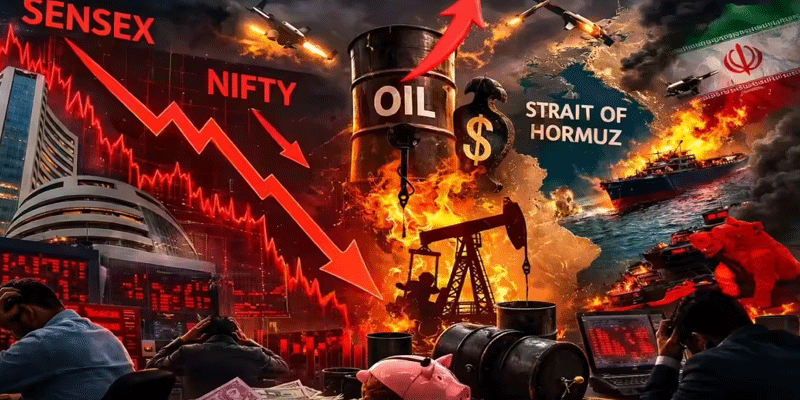
Hormuz Crisis Disrupts Global Oil Flows
The immediate trigger is the closure of the Strait of Hormuz, a narrow 21-mile-wide channel linking the Persian Gulf to the Gulf of Oman. Roughly one-fifth of global oil trade—about 21 million barrels per day—passes through this route, along with more than half of the world’s liquefied natural gas shipments.
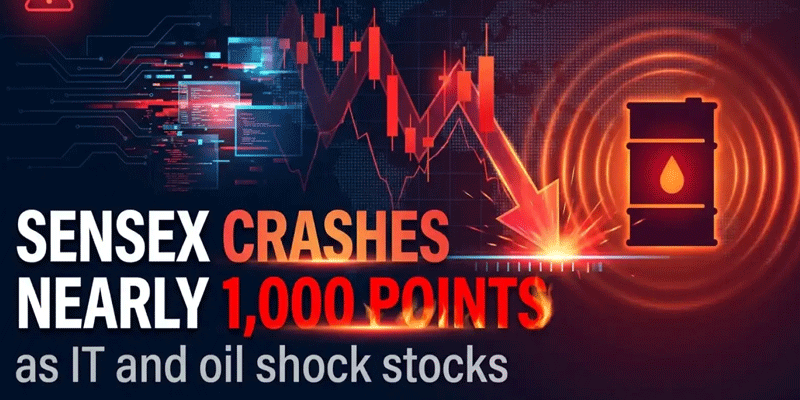
Following Iran’s declaration during the war, tanker movements through the strait have stalled. Brent crude prices have surged above $83 per barrel, while shipping insurance premiums have climbed sharply. The disruption has also been compounded by attacks on key energy infrastructure in the region, including strikes near Ras Tanura Oil Terminal, the world’s largest offshore crude loading facility, and disruptions at Rumaila Oil Field, one of OPEC’s biggest production sites. Together, these events have cut Gulf export capacity by roughly 20 percent.
Russian Oil Becomes India’s Safety Valve
To counter the supply shock, Indian state refiners—including Indian Oil Corporation, Bharat Petroleum, Hindustan Petroleum, and Mangalore Refinery and Petrochemicals Limited—have already secured around 20 million barrels of prompt Russian crude cargoes.
These purchases are aimed at replacing disrupted Middle Eastern supplies rather than exploiting price discounts. Russia currently accounts for roughly 35 percent of India’s crude imports, making it a crucial buffer during geopolitical shocks.
A temporary waiver issued by the US Department of the Treasury on March 5 allows India to acquire Russian oil cargoes already stranded at sea, ensuring they remain in circulation rather than withdrawn from global markets.
Measures Keeping Fuel Prices Stable
Despite rising global crude prices, domestic fuel costs remain controlled. The government is using a combination of fiscal and policy tools to absorb volatility.
Adjustable excise duties help cushion price swings, while blending mandates—such as India’s push toward 20 percent ethanol blending by 2026—reduce dependence on imported crude. Subsidized liquefied petroleum gas also provides a buffer for household energy costs.
Petroleum Minister Hardeep Singh Puri has repeatedly stressed that India’s diversified sourcing strategy and prior stockpiling during periods of low oil prices are helping maintain price stability.
Strategic Reserves Offer Additional Cushion
India’s energy security strategy also relies on strategic petroleum reserves maintained by Indian Strategic Petroleum Reserves Limited. Underground storage facilities at Visakhapatnam and Mangaluru currently hold about 5.33 million tonnes of crude.
Combined with commercial inventories maintained by oil marketing companies and refineries, India has roughly 74 to 90 days of net import coverage. Meanwhile, Phase II reserve expansions at Chandikhol and Padur aim to raise total storage capacity to 12 million tonnes.
Impact on India–US Relations
India’s continued Russian oil purchases have not significantly strained ties with the United States. Washington’s 30-day waiver reflects a pragmatic approach to maintaining global energy stability during the crisis.
While tensions had risen earlier—when the U.S. briefly imposed tariff penalties on Indian refiners for Russian imports—a subsequent trade agreement and India’s commitment to increase purchases of American energy helped ease concerns. As a member of the Quadrilateral Security Dialogue and a partner in emerging technology initiatives, India retains strategic flexibility.
Calm Today, Vigilance Tomorrow
India’s decision to ramp up Russian oil imports reflects a pragmatic balancing act between energy security and geopolitical diplomacy. By combining diversified imports, strategic reserves, and policy buffers, the government has managed to shield consumers from global turbulence—for now.
Yet the episode also underscores the vulnerability of global energy markets to geopolitical conflict. If the West Asian war drags on, sustained diplomacy, expanded reserves, and continued diversification will remain essential to keeping India’s fuel prices stable and its energy supply secure.
(With agency inputs)