India has set an ambitious target to reduce coal imports for the power sector by 30% in 2026, marking a decisive shift toward energy self-reliance. The move comes as electricity demand surges and domestic coal production crosses record highs, enabling the government to pivot away from costly overseas supplies while stabilising the grid.
Import Reduction: Targets and Rationale
In 2025, Indian power plants consumed nearly 50 million tonnes (MT) of imported thermal coal—largely sourced from Indonesia, South Africa and Russia—despite coal’s declining share in long-term energy transition plans. The government has now directed utilities to cut imports by at least 15 MT this year, lowering total purchases to around 35 MT.
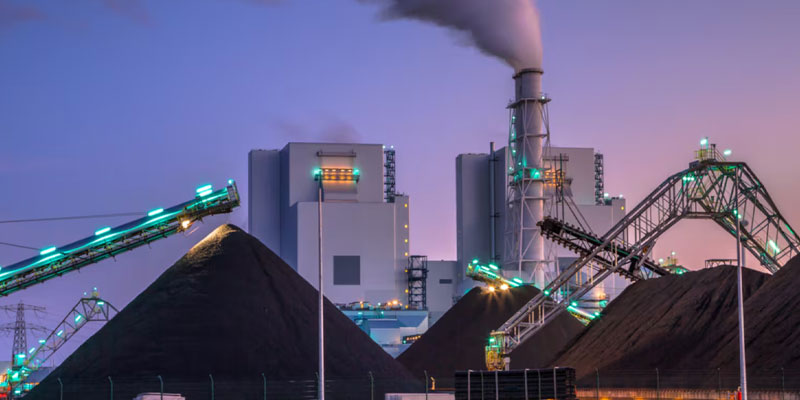
A key focus is on 17 GW of coastal power plants originally designed for imported coal. These facilities have been instructed to blend 20–30% domestic coal, up from current averages of less than 10%. The push is backed by record domestic production exceeding 1 billion tonnes and a substantial supply buffer, including 175.5 MT of “on-tap” reserves.
The financial logic is compelling. Coal imports cost India over ₹60,000 crore in 2025. A 30% reduction could generate additional forex savings of ₹20,000–25,000 crore, insulating the economy from global price volatility and supply disruptions such as Red Sea shipping crises.
Domestic Substitution Strategy
Replacing imports is not without challenges. Indian coal has a higher ash content (35–50%) compared to imported varieties (10–15%), which can affect boiler efficiency. However, expanded coal washeries and supercritical thermal technologies now allow blending without major efficiency losses.
Logistics also play a crucial role. Supplying pithead plants near coalfields reduces transport costs significantly compared to seaborne imports. Infrastructure upgrades, including enhanced rail connectivity and freight corridors, are central to ensuring seamless coal movement.
To manage surplus stockpiles, India has also opened limited export channels to neighbouring countries such as Bangladesh, Bhutan and Sri Lanka, balancing domestic supply while strengthening regional energy ties.
Meeting Surging Demand While Conserving Forex
India’s power demand is projected to reach 1,800 billion units in 2026, driven by heatwaves, electric vehicle adoption and industrial expansion. Even as renewable capacity grows rapidly, coal still accounts for about 75% of grid generation.
Reducing import dependence enhances energy security at a time when 97 GW of new coal capacity is planned by 2032, taking total capacity to 307 GW. The government’s strategy prioritises efficient, domestically sourced baseload power while avoiding excessive exposure to volatile international markets.
Aligning with the 2070 Net-Zero Goal
At COP26, India pledged to achieve net-zero emissions by 2070 under its Panchamrit commitments. The pathway includes 500 GW of non-fossil fuel capacity by 2030 and a gradual decline in coal’s share beyond 2040.
Cutting imports does not increase coal dependence; rather, it improves efficiency and reduces lifecycle emissions linked to transport and lower-grade fuel usage. Blending domestic coal in modern supercritical plants can trim carbon intensity per unit of electricity by 5–10%. Forex savings can also be redirected to renewable energy, green hydrogen and nuclear expansion—critical pillars of long-term decarbonisation.
In this context, the import reduction is a tactical bridge: securing reliable baseload power while accelerating investments that will eventually displace coal.
Pragmatic Energy Sovereignty
India’s decision to slash power sector coal imports reflects pragmatic energy management in a high-growth economy. By leveraging domestic production, strengthening logistics and improving plant efficiency, the country enhances energy security and fiscal stability.
Crucially, this short-term recalibration does not derail the 2070 net-zero ambition. Instead, it creates financial and operational space to scale renewables faster, modernise infrastructure and manage a gradual coal transition. In balancing sovereignty with sustainability, India is signalling that its energy transition will be strategic, sequenced and firmly aligned with long-term climate commitments.
(With agency inputs)