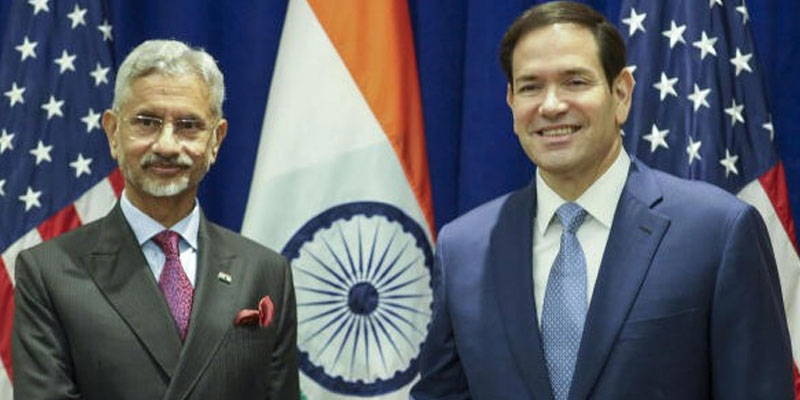
On the sidelines of the 80th session of the United Nations General Assembly (UNGA) in New York, U.S. Secretary of State Marco Rubio met with Indian External Affairs Minister S. Jaishankar on Monday, reaffirming the strategic significance of India for the United States. The meeting, lasting about an hour, marked the first in-person discussion between the two amid heightened tensions over trade, tariffs, and energy purchases. Both leaders emphasized sustained engagement to advance bilateral priorities and strengthen cooperation across a range of sectors.
Rubio Highlights India’s Strategic Importance
Following the meeting, Rubio described India as “a relationship of critical importance to the United States.” He commended New Delhi’s continued engagement on issues spanning trade, defence, energy, pharmaceuticals, and critical minerals, among others. Rubio emphasized the shared commitment to fostering a free and open Indo-Pacific region, highlighting collaboration through frameworks such as the Quad.
In a post on X (formerly Twitter), Rubio underscored discussions on generating prosperity for both nations through strategic economic and technological collaboration, reflecting the broader vision of a resilient and mutually beneficial partnership.
Jaishankar’s Perspective: Sustained Engagement Key
Jaishankar, echoing the sentiment, described the conversation as productive, covering “a range of bilateral and international issues of current concern.” He stressed the importance of sustained engagement to make progress on priority areas, signaling a willingness to maintain dialogue despite recent strains. Both leaders agreed to remain in close contact to ensure continuity and momentum in bilateral initiatives.
Context: Tensions in Trade and Tariffs
The meeting comes amid recent trade tensions between India and the United States. Washington has imposed tariffs of up to 50% on Indian goods, including a 25% punitive levy tied to India’s purchases of Russian crude oil. These measures have been perceived as among the highest levies globally, raising concerns in New Delhi about economic fairness and market access.
Further complicating matters, the Trump administration’s announcement of a $100,000 fee on new H-1B visas has caused anxiety among Indian professionals, particularly in the IT and medical sectors, which heavily rely on the skilled-worker program. These developments underscore the delicate balancing act in bilateral economic relations.
Trade Talks: Moving Toward a Bilateral Agreement
In parallel with the Rubio-Jaishankar dialogue, Union Commerce and Industries Minister Piyush Goyal is leading a delegation in New York to advance a mutually beneficial trade agreement with the U.S. The objective is to conclude the first tranche of the Bilateral Trade Agreement by October-November 2025, aiming to more than double bilateral trade to $500 billion by 2030 from the current $191 billion. Both sides have expressed optimism about achieving early resolution on critical trade issues, including market access, tariffs, and investment facilitation.
Balancing Challenges and Opportunities
The meeting between Rubio and Jaishankar underscores the strategic depth of India-U.S. relations, even as economic and policy differences persist. While tariffs, energy purchases, and visa regulations present short-term challenges, both nations are signaling a commitment to dialogue, cooperation, and long-term partnership. Progress on trade agreements, coupled with shared security and technological priorities, demonstrates that sustained engagement and mutual understanding remain central to strengthening this vital bilateral relationship. The discussions at UNGA reinforce the message that, despite hurdles, India’s importance to U.S. foreign and economic policy remains undeniable.
(With agency inputs)