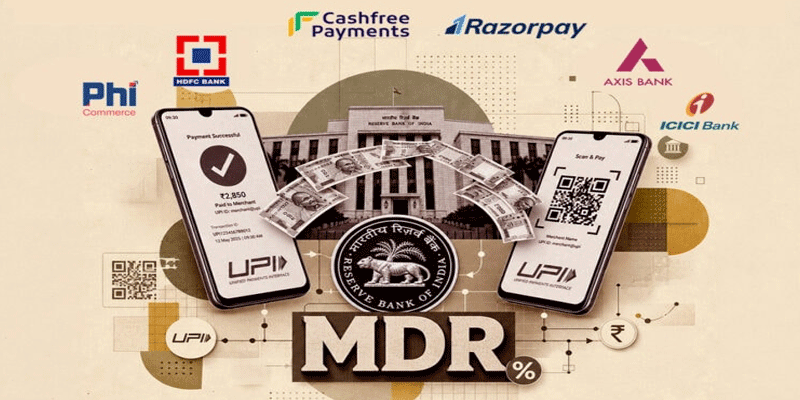
UPI payments are set for a significant change from October 15, with a 0.4% Merchant Discount Rate (MDR) being introduced on specified person-to-merchant transactions above ₹2,000. However, the change does not mean consumers will start paying a UPI transaction fee. The charge will be borne within the merchant payment ecosystem, while most everyday UPI transactions will remain unaffected.
Six Years After UPI Became Virtually Fee-Free
According to the Finance Ministry, the revised framework has been designed to support UPI’s long-term sustainability without imposing a direct financial burden on consumers or small merchants. The government has also clarified that MDR is neither a tax nor a government charge; it is distributed among participants in the payments ecosystem, including banks and payment application providers.
What Changes from October 15
Under the new framework:
· 0.4% MDR will apply to specified P2M UPI transactions above ₹2,000.
· For transactions of ₹75,000 and above, the MDR will be capped at ₹300.
· P2P transfers remain completely free, irrespective of transaction value.
· Merchant payments of ₹2,000 or less remain outside the MDR regime.
· Eligible small merchants covered by the zero-MDR framework will continue to be exempt.
For example, a ₹3,000 eligible merchant payment would generate an MDR of ₹12, while a ₹50,000 transaction would attract ₹200. At ₹75,000, the charge reaches the ₹300 ceiling and remains capped thereafter.
Special Treatment for Essential Services
The framework also creates differentiated rates for certain sectors. Merchant transactions above ₹2,000 involving railways, telecommunications, insurance, fuel and agricultural inputs will attract a flat ₹5 MDR. Capital-market-related payments, including those involving mutual funds, securities and stockbrokers, will carry a 0.02% MDR capped at ₹300.
This differentiated structure is intended to recognise sectors where margins may be relatively narrow or where continued digital adoption is considered particularly important.
Consumers Remain Outside the Charge
For ordinary users, the practical message is straightforward: there is no new UPI fee to pay. Person-to-person transfers remain free, while payments to merchants up to ₹2,000 continue without MDR. The government says approximately 96% of P2M transactions will remain unaffected by the new framework.
Banks have also been advised to ensure that merchants do not pass the MDR directly to customers.
A New Funding Model for UPI’s Next Phase
The revised MDR framework attempts to balance two competing requirements: preserving UPI’s affordability while creating a revenue mechanism for sustaining its rapidly expanding infrastructure. For consumers, the familiar payment experience remains largely unchanged. For merchants handling larger transactions, however, payment processing now carries a defined cost.
The real test will be whether the new structure strengthens investment in UPI without encouraging merchants to shift costs to customers. If that balance is maintained, the change could provide UPI with a more sustainable economic foundation while preserving its defining advantage: simple, widely accessible digital payments.
(With agency inputs)