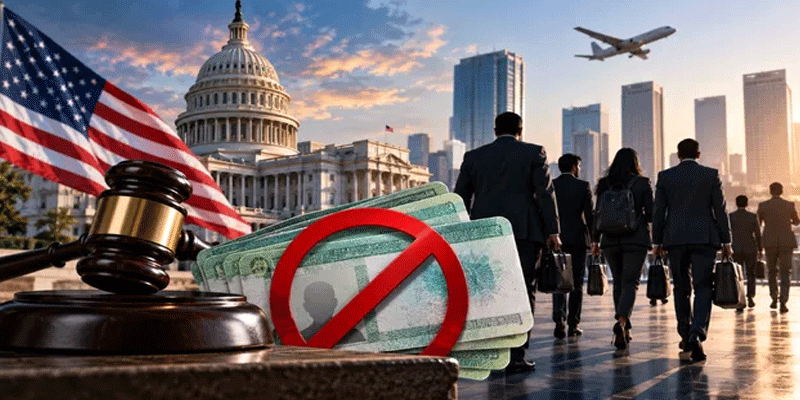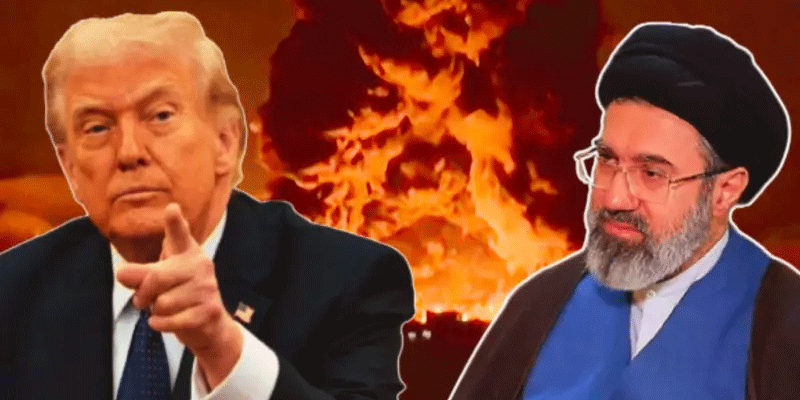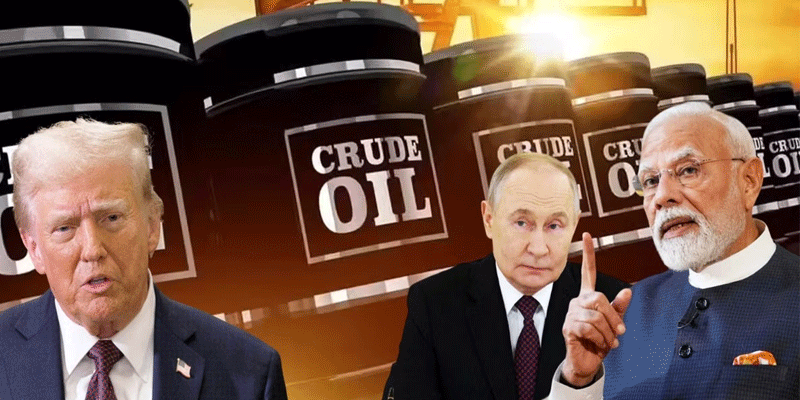
India faces a difficult energy and trade dilemma after the U.S. Congress approved legislation authorising President Donald Trump to impose tariffs of up to 100% on countries making major purchases of Russian oil. The measure has not yet resulted in a new 100% tariff on India.
India is the world’s third-largest oil importer, and Russian crude now accounts for more than 40% of its oil supplies. Discounted Russian oil has helped India contain energy costs since Moscow’s 2022 invasion of Ukraine.
Reducing Russian purchases could force refiners toward more expensive alternatives at a particularly difficult time. Global oil markets are already tight, with Brent recently remaining above $100 amid Middle East supply disruptions.
Higher crude costs could translate into pressure on fuel prices, inflation and government finances. With important state elections approaching, managing domestic energy prices also carries political sensitivity.
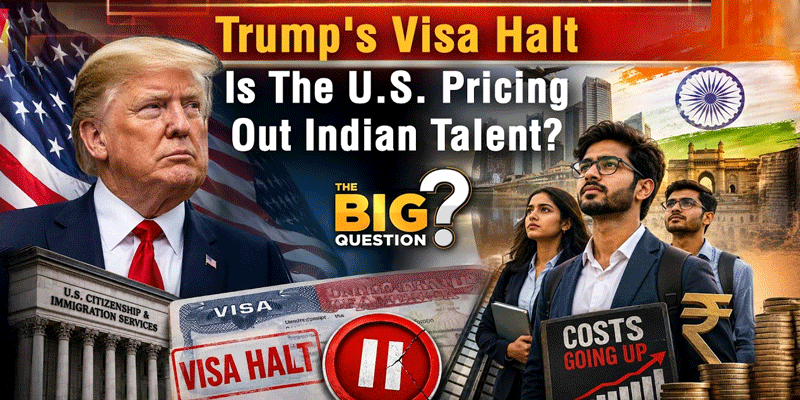
Continuing Russian purchases creates a different economic risk. The United States is India’s largest export destination, with goods exports reaching $42.79 billion during April-August 2026. Severe U.S. tariffs could therefore hurt Indian exporters and complicate supply chains.
The dispute also threatens progress on an India-U.S. trade agreement. New Delhi has warned Washington about potential consequences for bilateral relations and global energy markets while maintaining that affordable energy for its 1.4 billion people remains a priority.
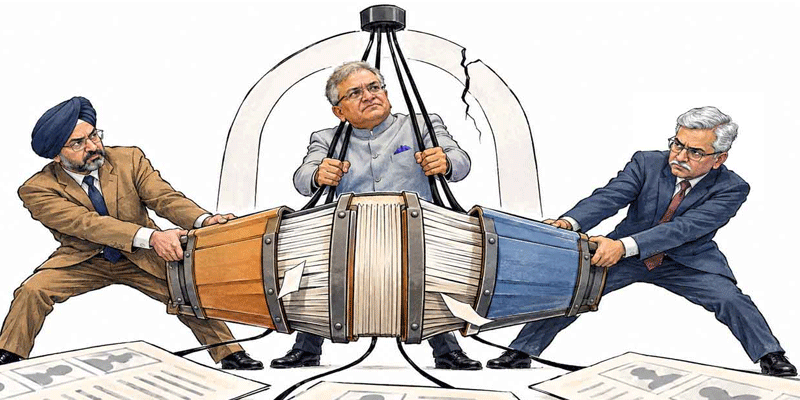
India’s challenge is now to balance energy security, export competitiveness, strategic autonomy and relations with Washington and Moscow—without allowing one priority to severely undermine another.