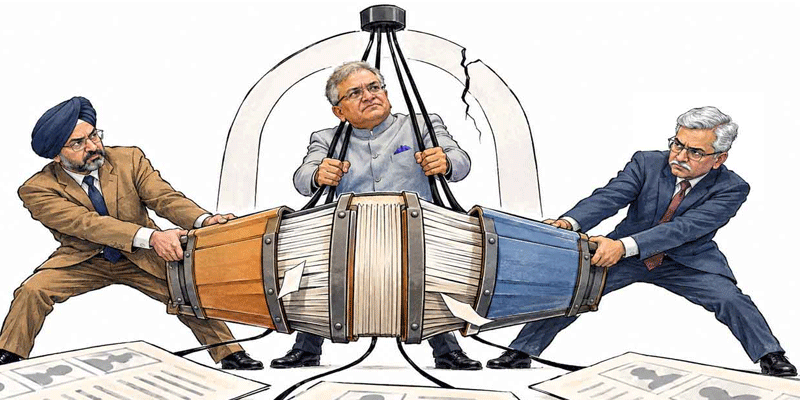
Google CEO Sundar Pichai recently remarked that AI will transform even the smallest kirana store in India, highlighting how digital tools could modernize inventory management, payments, and customer engagement. The promise is clear: empowering millions of small retailers with the same intelligence that drives global e-commerce.
Yet, experts caution that this transformation comes with strings attached. Google’s ecosystem thrives on data aggregation. By tracking sales patterns, product demand, and payment preferences (cash, cards, or UPI), Google could build unparalleled insights into India’s hyperlocal economy. If cameras and AI tools are installed inside stores, the scope expands further—capturing buyer images, conversations, and behavioral signals.
While this may optimize stocking, personalize offers, and strengthen fraud detection, it also risks creating a surveillance-driven retail model. For small sellers, the line between digital empowerment and corporate overreach is thin. The question is whether kirana stores gain genuine autonomy—or whether they become new nodes feeding data into global tech giants’ ecosystems.
The challenge for India lies in ensuring AI adoption aligns with data protection, consent, and fairness. Transformation must empower kirana owners with insights they control, not turn their daily trade into a data mine for outsiders.