A Meeting at a Critical Juncture
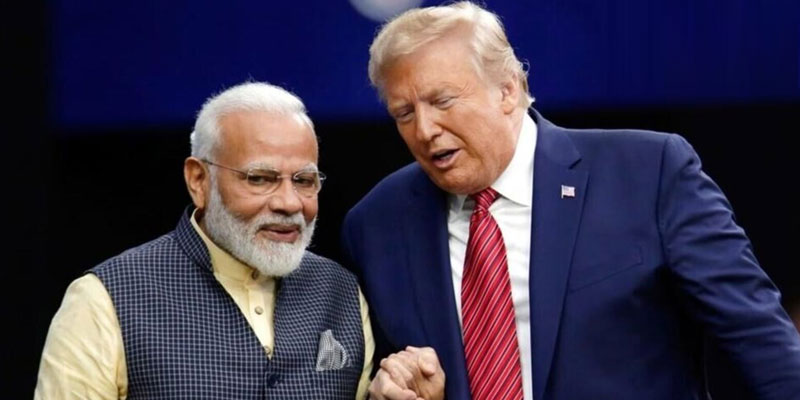
Days after a US court struck down President Donald Trump’s controversial tariffs, US Commerce Secretary Howard Lutnick met India’s Commerce and Industry Minister Piyush Goyal in New Delhi, signalling renewed urgency in bilateral trade negotiations. The meeting, attended by US Ambassador Sergio Gor, came at a pivotal moment: Trump’s unilateral tariff powers had been curtailed by judicial intervention, opening fresh space for structured dialogue.
Described as “fruitful” by Indian officials, the discussions underscored both countries’ commitment to move forward despite legal turbulence in Washington. The optics were clear—trade engagement would not stall, even if the rules of engagement were evolving.
The Tariff Backdrop: From Confrontation to Calibration
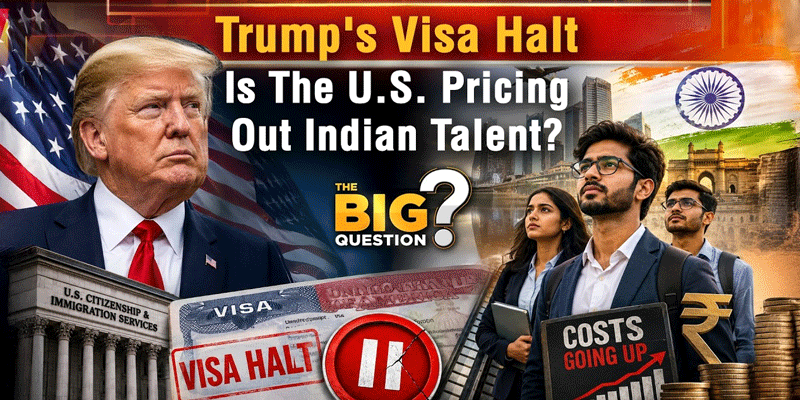
Before the court’s ruling, Washington had imposed steep duties on Indian goods—effectively pushing tariffs to nearly 50 percent. This included a 25 percent punitive levy linked to India’s continued import of discounted Russian oil. The measures, framed under Trump’s “America First” doctrine, strained ties and complicated market access for Indian exporters in sectors such as textiles, pharmaceuticals, and engineering goods.
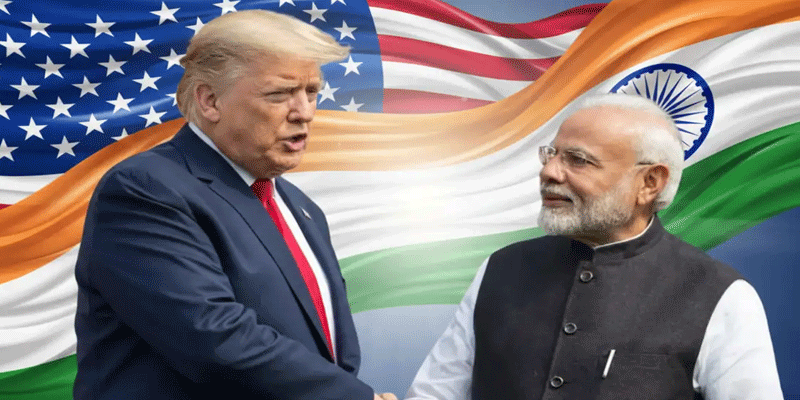
In early February 2026, however, negotiators reached an interim tariff reduction framework. The agreement proposed cutting US duties on Indian exports to a uniform 18 percent, replacing the layered punitive structure. This shift marked a de-escalation and created the foundation for a broader Bilateral Trade Agreement (BTA).
The court’s decision invalidating parts of Trump’s tariff regime has further strengthened India’s bargaining position, offering what analysts describe as “judicial breathing room” for recalibration.
Key Terms of the India–US Tariff Reduction Framework
The interim framework, formalised via a joint statement, rests on reciprocal concessions and medium-term purchase commitments.
US Commitments:
· Reduction of tariffs on most Indian exports to 18 percent, covering textiles, apparel, leather, chemicals, machinery, and artisanal goods.
· Removal of tariffs on select products such as generic pharmaceuticals, gems and diamonds, and aircraft parts after implementation.
· Lifting of Section 232 national security duties on Indian steel, aluminium, and copper used in aircraft components.
· Granting India preferential quotas in specific auto-part categories.
India’s Commitments:
· Elimination or substantial reduction of duties on US industrial goods.
· Tariff cuts on American agricultural and food products, including tree nuts, soybean oil, red sorghum, dried distillers’ grains (DDGs), wine, and spirits.
· Addressing non-tariff barriers in sectors such as medical devices and ICT imports within six months through standards harmonisation.
· Negotiation of rules of origin to ensure bilateral producers benefit directly.
Purchase Pledge:
India committed to importing $500 billion worth of US goods over five years—spanning energy, aircraft, defence equipment, technology, coking coal, and precious metals.
A flexibility clause reportedly allows either side to revisit terms if macroeconomic disruptions occur, safeguarding against abrupt policy reversals.
Strategic Stakes Beyond Tariffs
For Washington, deeper economic engagement with India serves as a counterweight to China’s manufacturing dominance and Indo-Pacific influence. For New Delhi, tariff relief could protect nearly $80 billion in annual exports to the US while securing technology transfers and supply chain integration.
Yet friction points remain—intellectual property protections, dairy access, digital taxation, and India’s Production-Linked Incentive (PLI) schemes continue to test alignment.
A Pragmatic Reset in a Volatile Era
If sustained, the interim framework could double bilaterally trade from its current $190 billion baseline and anchor a long-term partnership resilient to political shifts. In an era of fragmented global commerce, structured engagement—not tariff brinkmanship—appears poised to define the next chapter of India–US economic ties.
(With agency inputs)