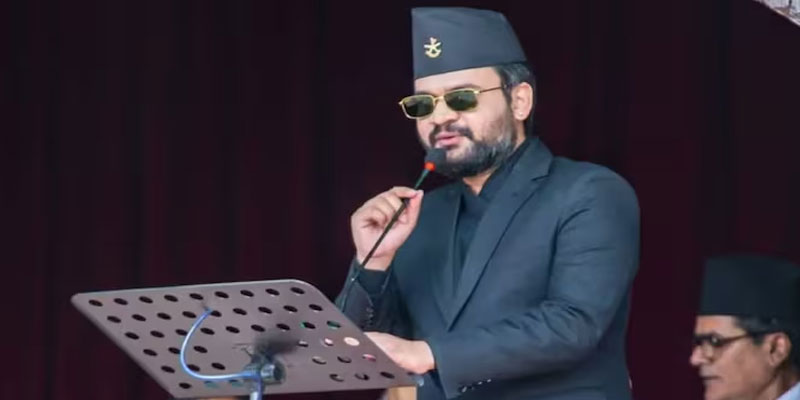
A Disruptive Rise Meets Immediate Action
Balen Shah, the rapper-turned-politician propelled to power by a Gen Z wave, has wasted no time redefining Nepal’s political trajectory. Within 48 hours of taking oath on March 28, 2026, Shah unveiled an ambitious 100-point action plan aimed at dismantling entrenched systems and fast-tracking reforms. His rapid-fire decisions signal a leadership style as unconventional as his rise—direct, disruptive, and unapologetically reformist.
Institutional Overhaul: Cleaning the System
At the heart of Shah’s agenda lies a sweeping institutional reset. One of the most controversial measures is the nationwide ban on student politics, targeting campus unions long associated with violence and political patronage. This extends further into bureaucracy and education, where civil servants and teachers are now barred from party affiliations, aiming to depoliticize governance.
Education reforms are equally ambitious. By removing citizenship requirements for undergraduate admissions, Shah’s government seeks to include marginalized groups, particularly stateless communities. Academic calendars are being tightened, and early education is shifting toward project-based assessments, reducing rote learning. These changes aim to modernize Nepal’s human capital framework while addressing systemic inefficiencies that have hindered growth.
Crackdown on the Old Guard
Shah’s reforms are not limited to policy—they are backed by aggressive enforcement. The arrest of former Prime Minister KP Sharma Oli and ex-Defence Minister Ramesh Lekhak marks a dramatic escalation in his anti-corruption drive. Both face serious allegations tied to past unrest and governance failures.
This crackdown fulfills Shah’s campaign promise to hold entrenched elites accountable, but it also consolidates his authority. With his independent Gen Z-backed movement holding significant parliamentary strength, Shah is reshaping Nepal’s political hierarchy—though not without risks of backlash from established parties and their support bases.
Recalibrating India Relations
Despite earlier criticism of India, Shah has signaled a pragmatic shift. In response to outreach from Narendra Modi, he expressed willingness to deepen cooperation in trade, hydropower, and reconstruction. This marks a departure from the China-leaning stance of previous governments, particularly under KP Sharma Oli.
For India, stability in Nepal is critical given the open border and economic interdependence. Shah’s recalibration suggests a balancing act—maintaining sovereignty while leveraging regional partnerships for economic growth.
Goals and Potential Impact
The core objective of Shah’s government is clear: dismantle entrenched patronage networks and replace them with a streamlined, merit-driven system. By targeting politicization in education and governance, he aims to restore institutional credibility and unlock economic potential.
If successful, these reforms could accelerate growth, attract foreign investment, and position Nepal as a model for governance renewal in South Asia. However, the risks are equally significant. Banning student unions and cracking down on opposition figures could trigger protests, especially in politically sensitive regions like the Terai. Moreover, rapid reforms may strain administrative capacity and test public patience.
Internationally, Shah’s approach could strengthen Nepal’s strategic position, particularly if it balances relations between India and China effectively. Domestically, his success hinges on translating bold announcements into sustainable outcomes.
Reform or reckoning?
Balen Shah’s early days in office have set a transformative tone, blending ambition with assertiveness. His government’s goals—clean governance, inclusive growth, and institutional efficiency—resonate strongly with a young electorate eager for change. Yet, the path ahead is fraught with challenges. Whether Shah’s disruptive approach leads to lasting reform or political instability will depend on his ability to balance speed with consensus. For now, Nepal stands at a decisive crossroads, with its boldest experiment in leadership underway.
(With agency inputs)