Trump’s Warning Raises Stakes
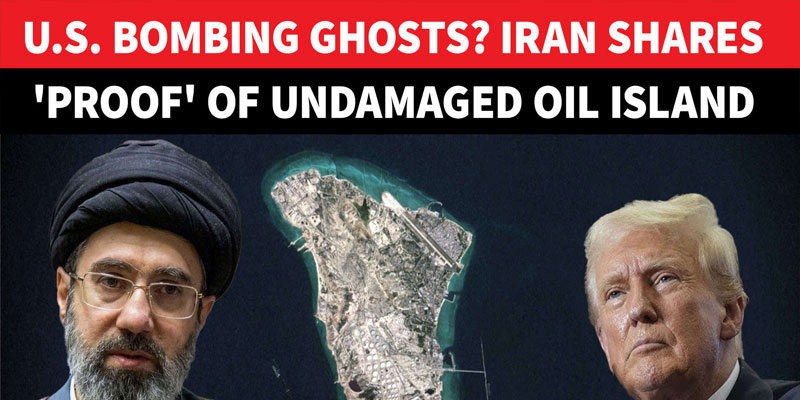
U.S. President Donald Trump has issued a stark warning to Iran: keep the Strait of Hormuz open or face devastating strikes on critical infrastructure, including power plants, oil wells, and the strategic Kharg Island. Even as backchannel talks reportedly continue, this rhetoric signals a sharp escalation. At the center of this confrontation lies a small but crucial territory—Kharg Island—now emerging as the focal point of military, economic, and geopolitical tensions.
Why Kharg Island Matters
Kharg Island is not just another geographic asset; it is the backbone of Iran’s oil export system. Historically handling up to 70–75% of the country’s crude exports, its importance has only grown, now accounting for nearly 90% of shipments. Its deep-water access allows very large crude carriers (VLCCs) to dock—something rare along Iran’s coastline.
The island also hosts massive storage facilities capable of holding over 30 million barrels of crude, along with petrochemical infrastructure. In effect, Kharg represents a single, highly concentrated choke point. Whoever controls it influences Iran’s economic lifeline and, by extension, global oil flows.
Ground Invasion: A Real Possibility?
Speculation is mounting over whether the U.S. could move from airstrikes to a ground operation. Trump has publicly suggested that seizing Iran’s oil infrastructure—including Kharg—could be done “very easily.” Such a move would aim to cripple Iran’s export capacity while providing a forward operating base close to the mainland.
However, military experts caution that capturing territory is far easier than holding it. Kharg, despite its size, would likely be heavily defended. Any invasion would require sustained troop deployment, naval protection, and constant logistical support—all under the threat of counterattacks.
Why Kharg Is Central to the War
Kharg’s importance extends beyond economics—it is strategic leverage. By targeting or capturing the island, the U.S. could directly disrupt Iran’s revenue streams, weakening its ability to fund military and proxy operations. Conversely, for Iran, defending Kharg is synonymous with safeguarding national sovereignty and economic survival.
This dual significance places the island at the heart of the conflict. It is both a military objective and a symbol of control, making it a high-risk, high-reward target.
Risks of Escalation and Global Impact
Any attempt to seize Kharg would almost certainly trigger a strong Iranian response. Tehran has warned of mining the Strait of Hormuz—a move that could disrupt a significant portion of global oil and LNG shipments. Such an escalation would not remain regional; it would ripple across global markets, driving up energy prices and destabilizing supply chains.
Already, the conflict has strained oil markets, increased shipping costs, and disrupted air routes. A ground invasion would amplify these effects, potentially triggering a broader geopolitical crisis involving major powers.
Diplomacy vs. Military Posturing
Despite the aggressive rhetoric, diplomatic channels remain open. Trump has suggested that Iran may be willing to concede on key issues, while Tehran continues to reject any terms that compromise its sovereignty. This contradiction—negotiations on one hand, threats on the other—underscores the fragile and unpredictable nature of the situation.
A Tipping Point in the Gulf
Kharg Island has become more than a strategic asset—it is the epicenter of a potential turning point in the Iran–U.S. conflict. While seizing it may promise short-term tactical gains, the long-term consequences could be severe, risking a wider war and global economic disruption. The real challenge lies in balancing strength with restraint, ensuring that strategic ambitions do not ignite a conflict far beyond control.
(With agency inputs)