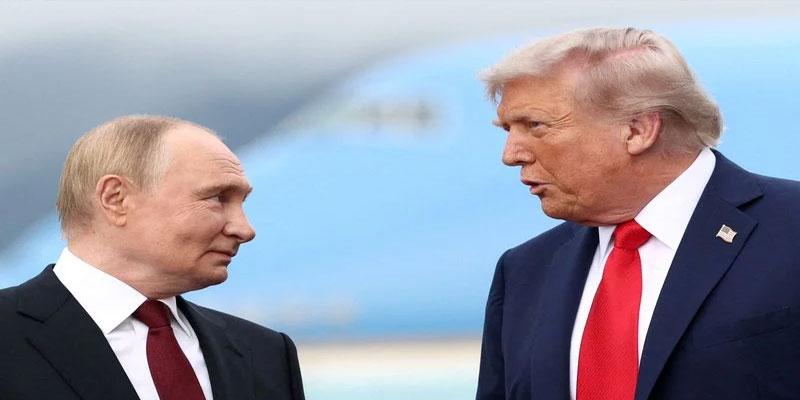
President Donald Trump has declared that the United States is “very close” to achieving its military objectives in West Asia, even as he firmly rules out a ceasefire with Iran. The statement comes amid continued escalation, including the deployment of thousands more US Marines to the region. This dual messaging—suggesting both imminent success and ongoing military build-up—captures the paradox at the heart of Washington’s current strategy: tactical gains on the battlefield, but no clear path to political resolution.
What Goals Has the US Achieved?
Washington’s claims of progress rest on a set of defined military benchmarks, most of which focus on weakening Iran’s conventional and strategic capabilities.
1. Degrading Missile Power
US and allied strikes have reportedly targeted hundreds of missile launchers, storage facilities, and command centres. According to American officials, this has significantly reduced the scale and precision of Iran’s missile attacks compared to the early phase of the conflict. While Iran retains some capability, its ability to sustain large-scale offensives appears constrained.
2. Disrupting Defence Manufacturing
A sustained campaign against Iran’s defence-industrial infrastructure has hit factories, research hubs, and logistical networks. The aim is not just immediate damage but long-term disruption—limiting Tehran’s ability to replenish its arsenal. However, Iran’s reliance on dispersed facilities and external supply chains suggests that complete degradation remains unlikely.
3. Weakening Naval and Air Capabilities
The US claims to have severely degraded Iran’s naval and air assets, particularly in the Persian Gulf. While conventional strength may have been reduced, asymmetric threats—such as drones, mines, and fast-attack vessels—continue to pose risks, especially around the Strait of Hormuz.
4. Containing Nuclear Ambitions
Though no confirmed strikes on nuclear facilities have been reported, the US maintains that its pressure campaign has pushed Iran further from a potential nuclear breakout. The strategy appears rooted in deterrence—combining military readiness with surveillance to prevent escalation into nuclear territory.
5. Reassuring Regional Allies
Protecting allies such as Saudi Arabia, United Arab Emirates, and Qatar remains central. US air defence systems and naval patrols have mitigated some threats, but repeated attacks on energy infrastructure highlight the fragility of regional security.
No Ceasefire: Trump’s Strategic Rejection
Despite suggesting that the war is “militarily won,” Trump has explicitly rejected calls for a ceasefire with Iran. This position underscores a broader strategic logic: maintaining pressure without committing to a negotiated settlement.
At the same time, the US is reinforcing its military presence, deploying additional Marines and naval assets. This indicates that Washington is preparing not for de-escalation, but for sustained deterrence—or even further confrontation if necessary.
Trump has also criticised NATO allies for what he perceives as insufficient support, labelling the alliance ineffective in addressing threats to global shipping routes. While some European and Asian partners have expressed willingness to assist in maritime security, their involvement appears contingent on reduced hostilities.
Tactical Success, Strategic Uncertainty
The US may indeed be nearing its immediate military objectives—weakening Iran’s capabilities and asserting dominance in key operational areas. However, these achievements do not equate to strategic closure. By rejecting a ceasefire, Washington is choosing to extend leverage rather than convert battlefield gains into diplomatic outcomes.
The sustainability of this approach remains uncertain. Iran’s capacity for asymmetric retaliation, the risk of prolonged regional instability, and the question of allied support all loom large. In essence, the US stands at a critical juncture: having demonstrated military strength, but still searching for a pathway to lasting peace.
(With agency inputs)