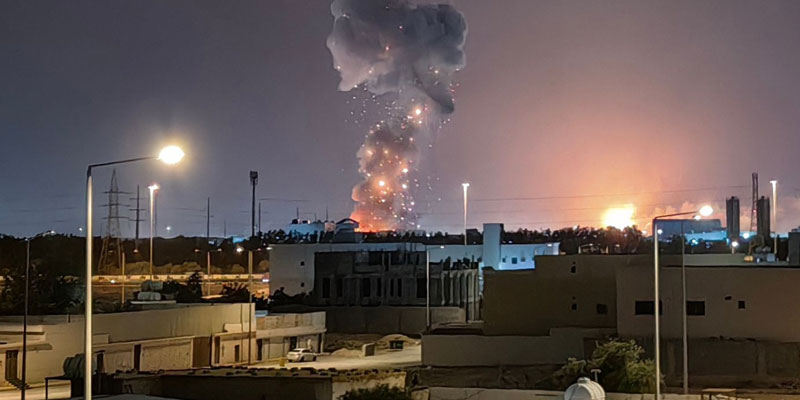
Airstrike Kills Key Iranian Spokesperson
In a major escalation of the ongoing conflict, Iran’s Islamic Revolutionary Guard Corps (IRGC) has confirmed the killing of its spokesperson, Ali Mohammad Naeini, in a joint US–Israeli airstrike. Iranian state media described the attack as a “cowardly” act, framing Naeini as a martyr and vowing continued resistance. His death marks yet another high-profile loss for Tehran, as the war increasingly targets not just military assets but the leadership structure itself.
More Than a Spokesperson: The Power of Narrative
Naeini was not merely a media figure—he was central to the IRGC’s messaging strategy. As the public face of the Guards, he played a key role in shaping domestic morale, projecting defiance, and communicating red lines to adversaries. His frequent appearances in state media reinforced Iran’s narrative of resilience and deterrence.
In modern warfare, information is as critical as firepower. By targeting Naeini, adversaries appear to be aiming not only at Iran’s command structure but also at its psychological and propaganda apparatus. Disrupting this layer weakens the regime’s ability to control public perception and coordinate messaging across allied groups in the region.
A Pattern of Decapitation Strikes
Naeini’s death is part of a broader campaign targeting Iran’s senior leadership. In recent days, several high-ranking figures have reportedly been killed, including Ali Larijani, Gholamreza Soleimani, and Esmaeil Khatib. These strikes follow earlier losses that reshaped Iran’s leadership landscape, including the death of Ali Khamenei.
This systematic targeting reflects a deliberate “decapitation strategy”—aimed at weakening Iran’s ability to coordinate military operations, manage internal stability, and project strength externally. By removing both operational commanders and key communicators, the campaign seeks to create disruption at multiple levels of governance and control.
The Scale of Recent Losses
Reports suggest that over 45 senior IRGC commanders and officials have been eliminated since the conflict began. While Iran’s leadership insists that its institutional depth ensures continuity, the cumulative impact of these losses is significant.
Each strike removes experience, disrupts decision-making chains, and forces rapid replacements under pressure. While the IRGC is structured to ensure quick succession, the repeated targeting of top figures can erode cohesion and reduce the effectiveness of strategic planning. Morale, both within the military and among the public, also faces sustained strain.
What Comes Next: Escalation Risks
Despite these setbacks, Iran has signaled that it will not back down. Officials have framed the attacks as justification for intensified retaliation, particularly through missile and drone strikes. The risk of escalation remains high, especially in the Gulf region, where energy infrastructure and shipping lanes are increasingly vulnerable.
The continuation of such strikes could trigger a cycle of retaliation, drawing in more actors and expanding the conflict’s scope. The focus on leadership targets also raises the stakes, as each loss invites a stronger response to maintain credibility.
A War of Attrition at the Top
The killing of Ali Mohammad Naeini underscores a critical shift in the conflict—from battlefield engagements to targeted dismantling of leadership. While Iran’s system may absorb individual losses, the sustained campaign against its senior figures poses a deeper challenge.
This is no longer just a military confrontation; it is a war of attrition aimed at the very structure of power. Whether Iran can maintain cohesion and deterrence under such pressure will shape the trajectory of the conflict—and determine how far this escalation ultimately goes.
(With agency inputs)