A Strike That Redefined the Conflict
Israel’s unprecedented attack on Iran’s South Pars gas field marks a decisive and dangerous escalation in the West Asia conflict. By targeting a cornerstone of Iran’s energy infrastructure—rather than purely military assets—Israel has expanded the battlefield into the economic domain. The offshore strike, aimed at one of the world’s most critical natural gas reserves, signals a shift toward undermining state revenues and long-term strategic capacity. In response, Iran has retaliated forcefully, widening the conflict across the Gulf and placing global energy systems under acute stress.
About the South Pars Gas Field
South Pars, located off Iran’s southern coast in the Bushehr–Asaluyeh region, is the Iranian segment of the world’s largest natural gas reserve, shared with Qatar’s North Field. It underpins Iran’s domestic energy supply, petrochemical industry, and export potential. Any disruption here directly impacts not only Iran’s economy but also interconnected global LNG flows. Its strategic importance lies in both scale and integration—feeding industries, exports, and regional energy dependencies. By striking this hub, Israel has effectively challenged the long-standing notion that such infrastructure remains off-limits in wartime.
Iran Retaliates: Expanding the Battlefield
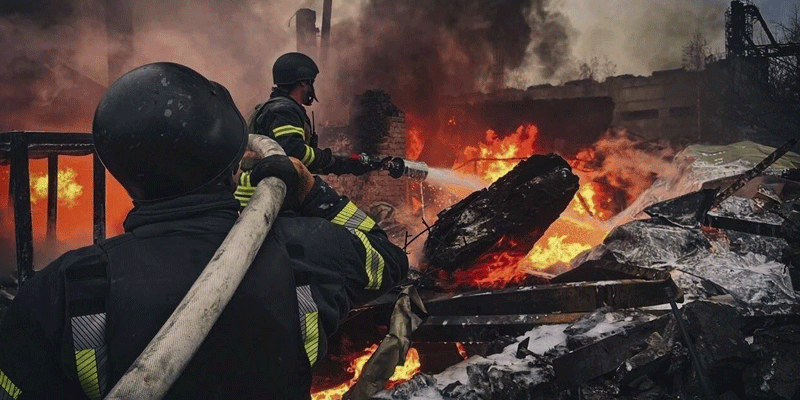
Tehran’s response has been swift and expansive. Missile and drone strikes have targeted energy infrastructure across the Gulf, including Qatar’s Ras Laffan Industrial City—one of the world’s largest LNG hubs—and critical sites in Saudi Arabia’s Eastern Province. This retaliation reflects a clear strategy: if Iran’s energy lifelines are attacked, regional competitors and global suppliers will share the cost. The result is a widening conflict zone where energy infrastructure itself becomes both weapon and target, pulling Gulf states deeper into a volatile war-economy dynamic.
How Global Gas Prices Have Reacted
Markets have reacted sharply, with global gas prices surging amid fears of supply disruption. European benchmarks saw dramatic spikes, with Dutch TTF futures rising over 35% in a single session, while UK prices jumped to multi-year highs. In Asia, LNG prices climbed as buyers scrambled to secure shipments, fearing prolonged outages at Qatari facilities. Even the United States, relatively insulated by domestic production, experienced a rise in futures prices. This surge reflects a classic risk premium—markets pricing in uncertainty around the Strait of Hormuz and the stability of Gulf exports.
Impact on Share Market Investors
For investors, the crisis has triggered immediate volatility. Energy stocks, particularly oil and gas producers, have surged on expectations of higher prices and tighter supply. Conversely, sectors heavily dependent on stable energy costs—such as manufacturing, aviation, and logistics—have faced sell-offs. Broader equity markets have shown signs of stress, as rising energy prices threaten inflation control and economic growth. Investors are increasingly shifting toward defensive assets, including commodities and energy-linked equities, while avoiding exposure to regions and industries most vulnerable to supply shocks.
A Conflict with Global Consequences
The strike on South Pars has transformed a regional geopolitical conflict into a full-fledged energy war with global ramifications. By targeting the foundations of energy production and supply, both sides have elevated the stakes far beyond conventional military engagement. The resulting price shocks, market volatility, and strategic uncertainty highlight how deeply interconnected global energy systems are. If the conflict persists, the world may face not just temporary disruption, but a prolonged period of elevated energy costs and economic instability—reshaping policy, markets, and alliances alike.
(With agency inputs)