Supply Chains in Turmoil: The Tariff Backdrop
The world economy has been unsettled for years by President Donald Trump’s aggressive use of tariffs as a policy weapon. His blanket duties, often framed as “reciprocal” measures against trading partners, disrupted supply chains, inflated import costs, and triggered retaliatory measures worldwide. From steel and aluminum to consumer goods, his tariff war reshaped commerce and unsettled long-standing trade relations.
This week, a pivotal judicial ruling has brought that strategy under scrutiny. A US appeals court has declared many of Trump’s sweeping tariffs illegal, though it allowed them to remain temporarily in place while the case edges closer to the Supreme Court. The decision not only affects American businesses and consumers but also casts a shadow over international partners—India included—who were hit with some of the steepest duties.
The Court’s Verdict: Beyond Presidential Powers
In a 7-4 ruling, the US Court of Appeals for the Federal Circuit concluded that Trump exceeded his authority under the International Emergency Economic Powers Act (IEEPA). The court reasoned that while the 1970s-era law does give presidents broad authority in times of emergency, it does not explicitly permit the imposition of tariffs or duties.
“The statute bestows significant authority on the President… but none of these actions explicitly include the power to impose tariffs, duties, or the like,” the judgment read. In essence, the court ruled that Trump’s across-the-board tariffs lacked legal standing.
Yet the judges allowed the duties to remain until mid-October, giving the administration time to appeal to the Supreme Court. The temporary reprieve means businesses must still pay the contested tariffs while uncertainty looms over their eventual legality.
Trump’s Defiance and Political Spin
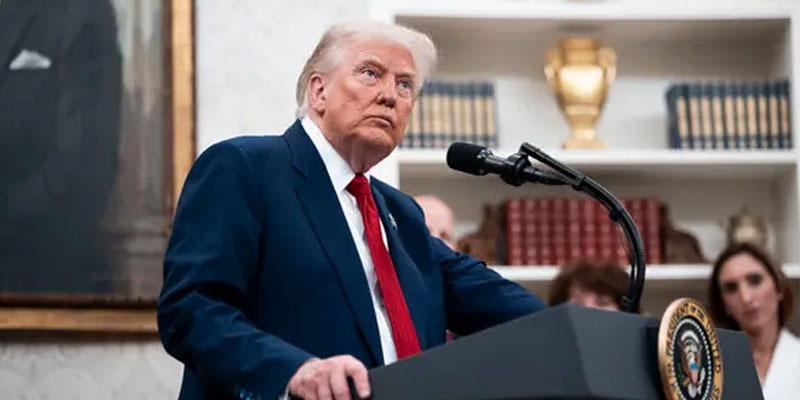
Never one to step back quietly, Trump quickly lashed out at the ruling on his Truth Social platform. He argued the appeals court “incorrectly said that our tariffs should be removed,” and promised to fight on with the backing of the Supreme Court, where conservatives hold a majority.
To Trump, tariffs have been more than an economic instrument—they are a political tool and a symbol of “America First” policy. He has used them to punish trading partners, force negotiations, and project strength at home. The latest ruling, therefore, is not just a legal setback but a challenge to the very foundation of his trade doctrine.
Diplomatic Fallout: Embarrassment and Retaliation Risks
Senior officials within Trump’s cabinet rushed to defend the tariffs, warning that striking them down could undercut American foreign policy. Commerce Secretary Howard Lutnick argued that invalidating the duties would unravel existing trade deals and trigger retaliation by partners. Treasury Secretary Scott Bessent went further, cautioning that lifting tariffs would cause “dangerous diplomatic embarrassment.”
The fears are not unfounded. Trading partners such as the European Union, Canada, Mexico, and China have long bristled at what they see as unilateral and unjustified measures. If the tariffs collapse under judicial review, these nations may demand compensation or reverse concessions already made in trade talks.
Implications for India and Other Partners
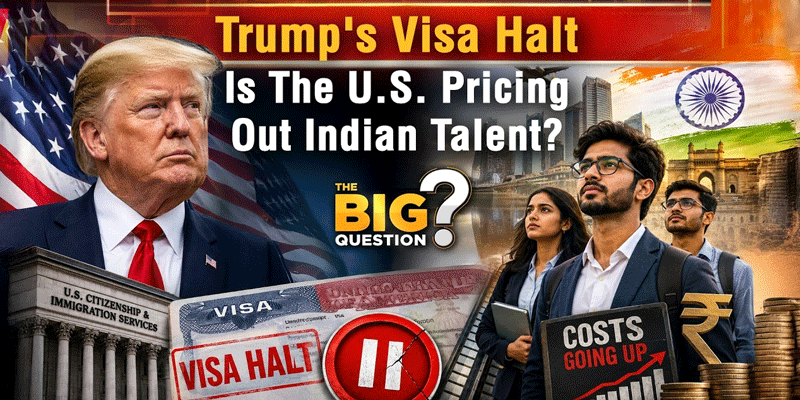
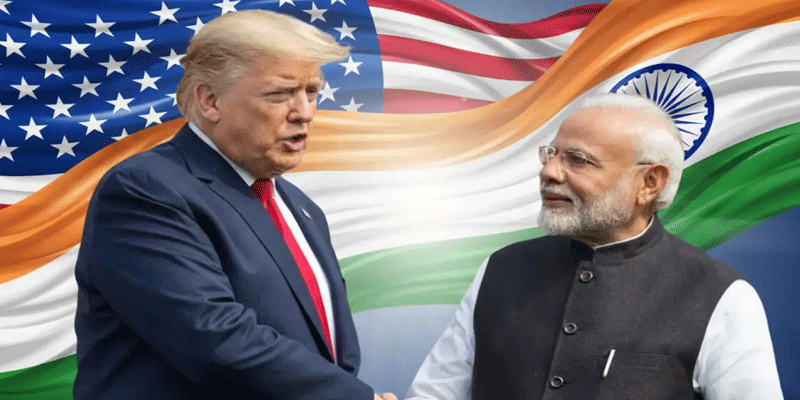
For India, the ruling injects fresh uncertainty. In April, Trump imposed a sweeping 10% baseline tariff on virtually all countries, followed by targeted penalties. New Delhi was hit especially hard, with duties reaching 50% on certain goods, including a 25% surcharge linked to India’s purchase of Russian energy.
The question now is whether these measures will survive legal scrutiny. If ultimately overturned, it could open the door for Indian exporters to seek refunds or renegotiate market access. But if upheld, India may continue to face restricted entry into the US market—complicating its already strained trade relations with Washington.
What Lies Ahead: A Supreme Court Test
The case will likely head to the US Supreme Court, which has historically been deferential to presidential powers on trade and security issues. However, the justices will now have to address a central question: does IEEPA, designed to respond to emergencies, give a president carte blanche to impose sweeping tariffs worldwide?
Alternatively, the Court of International Trade could revisit the matter, determining whether the ruling applies to all affected businesses or just those directly involved in the case. Either way, the legal path ahead is complex and prolonged, ensuring that uncertainty will continue for months.
A Turning Point for Trade Policy
The appeals court ruling marks a critical juncture in global trade governance. It underscores the limits of executive power, even for a leader who sought to redefine trade policy single-handedly. For American businesses and foreign partners, it offers hope that tariff chaos may eventually be curbed, though the final outcome rests with the Supreme Court.
For the world economy, the decision is equally consequential. If Trump’s tariffs are struck down, billions collected from companies could be subject to refunds, while supply chains may gradually stabilize. If upheld, the era of unpredictable trade duties could extend further, entrenching uncertainty.
Ultimately, the ruling is a reminder that trade policy cannot be built on emergency declarations alone. Durable economic strategy requires consensus, cooperation, and respect for both domestic law and international commitments. Whether Washington chooses that path will shape not only its own prosperity but also the health of the interconnected global economy.
(With agency inputs)