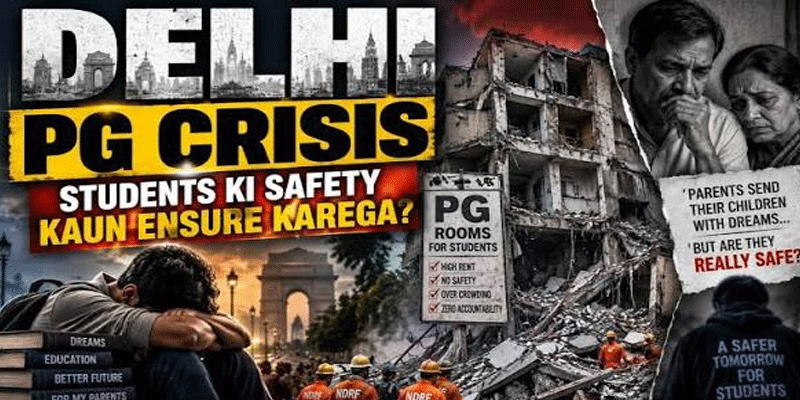
A dilapidated building near Hostel Days is set for demolition, reflecting the intensified crackdown on unsafe paying guest (PG) accommodation across Delhi. The move comes after a series of inspections triggered by the Satya Niketan building collapse and growing concerns over unauthorised construction, overcrowding and inadequate fire-safety arrangements.
Satya Niketan Tragedy Triggers Citywide Crackdown
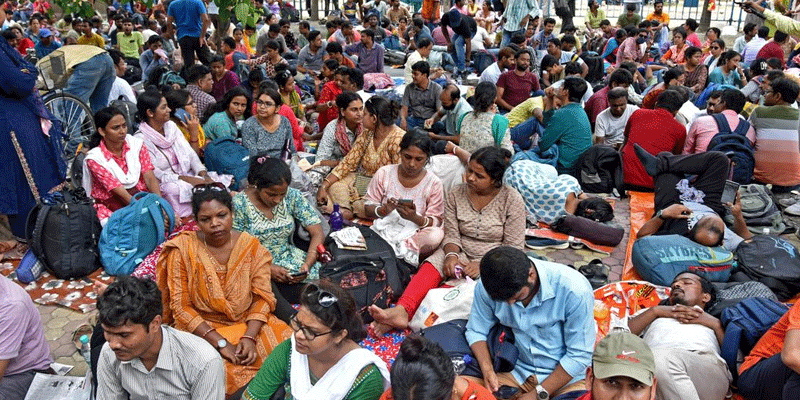
Delhi’s rapidly expanding PG sector has become an essential part of the city’s accommodation ecosystem, serving thousands of students, professionals and migrants. But its growth has also exposed a troubling gap between demand and regulation.
On September 6, a five-storey building operating as a boys’ PG in Satya Niketan collapsed during alleged basement repair work, killing seven people and injuring several others. The tragedy immediately prompted the Municipal Corporation of Delhi (MCD) to intensify inspections and enforcement across major PG clusters.
MCD Survey Intensifies After High Court Rebuke
The MCD survey has intensified after a Delhi High Court rebuke over alleged lax enforcement. Officials have identified 51 dangerous buildings in targeted areas, with demolition orders issued against 27 and seven already sealed.
Civic teams are now examining PGs and hostels for fire-safety clearances, building permissions, occupancy certificates and structural compliance. Several establishments have reportedly been found operating without fire NOCs, emergency exits or adequate access routes.
Notices have also been served on 35 PGs in areas including Laxmi Nagar, Lalita Park and Sahaspur, warning operators that continued violations could lead to sealing.
The Dangerous Math Behind Delhi’s PG Boom
At the heart of the crisis lies a powerful financial incentive. A floor that might generate ₹30,000–40,000 a month as conventional accommodation can potentially produce ₹72,000–1.44 lakh when divided into six to eight beds charging ₹12,000–18,000 per occupant.
That arithmetic encourages landlords and operators to maximise every available square foot. Unauthorised partitions, illegal extensions, excessive occupancy and compromised ventilation or escape routes can consequently become financially attractive—even when they undermine safety.
Government Moves Towards Formal PG Regulation
The Delhi government is also working on the proposed Paying Guest Accommodation Regulation and Safety/Welfare Bill, 2026, aimed at bringing the sector under a formal regulatory framework.
The proposed system includes mandatory registration and PG operating licences, police verification, structural and fire-safety approvals, and a unique PG Registration Number. A proposed digital portal would allow occupants to verify registration, permitted occupancy and inspection records and lodge complaints.
Other proposals include rent bands, a three-month cap on security deposits and advance rent, 30-day notice requirements, CCTV systems, visitor registers, wardens and periodic inspections.
From Demolition to Sustainable Reform
The immediate demolition drive is necessary to remove imminent dangers, but it cannot by itself solve Delhi’s PG crisis. The deeper challenge is to change the economics that reward overcrowding and regulatory evasion.
A credible licensing system, regular inspections and meaningful penalties must operate consistently—not only after tragedies. Delhi’s PG sector needs regulation before revenue, safety before capacity, and prevention before demolition. The real test will be whether this crackdown becomes a sustained reform rather than another temporary response to tragedy.
(With agency inputs)