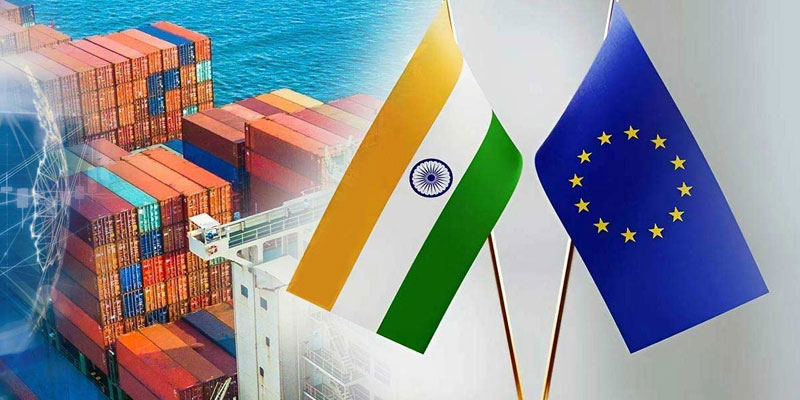
A New Chapter in EU–India Strategic Convergence
The European Union and India have agreed to push forward a new Security and Defence Partnership, marking a significant deepening of their strategic relationship at a time of mounting global uncertainty. Announced by EU foreign policy chief Kaja Kallas on January 21, 2026, just days ahead of the 16th EU–India Summit in New Delhi, the initiative reflects a shared recognition that economic cooperation alone is no longer sufficient in an increasingly volatile international environment.
From Economic Partners to Strategic Stakeholders
For decades, EU–India ties were anchored primarily in trade, development cooperation, and people-to-people exchanges. The proposed security and defence partnership represents a qualitative shift, positioning both actors as stakeholders in regional and global stability. As conflicts multiply, sea lanes face growing militarisation, and cyber threats intensify, Brussels and New Delhi are seeking to align their strategic outlooks more closely while reinforcing a rules-based international order.
Core Elements of the Security and Defence Partnership
The emerging pact is designed to respond to what EU officials describe as a “more dangerous world.” It expands cooperation across maritime security, counterterrorism, cybersecurity, and cyber defence. Particular emphasis is placed on the Indo-Pacific, where freedom of navigation and protection of open sea lines of communication have become strategic priorities.
The agreement is expected to be accompanied by negotiations on a security of information framework, enabling more structured intelligence sharing. It will sit alongside a Comprehensive Strategic Agenda for 2030, which aims to integrate security cooperation with broader goals in trade, technology, supply chains, and mobility.
Strategic Calculations for India and the European Union
For India, the partnership supports defence diversification at a moment of sustained pressure along its borders and in the Indian Ocean region. Access to European technology, surveillance capabilities, and counterterrorism expertise can strengthen India’s maritime domain awareness and internal security capacities, while aligning with its ambition for greater defence self-reliance.
For the EU, closer security ties with India provide a strategic entry point into the Indo-Pacific without relying exclusively on U.S.-led frameworks. India’s geographic position, growing naval footprint, and expanding market make it an indispensable partner as Europe seeks to reduce overdependence on China and safeguard critical supply chains.
China’s Likely Response: Strategic Suspicion and Subtle Pushback
Beijing is likely to interpret the EU–India partnership as an indirect attempt to constrain its regional ambitions. The focus on maritime security and resistance to coercion resonates uncomfortably with China’s activities in the South China Sea and along the India–China border. While official rhetoric may call for “dialogue and stability,” China could respond through calibrated economic pressure, sharper diplomatic messaging, or renewed assertiveness along contested frontiers to signal displeasure.
Russia’s Perspective: Quiet Unease Beneath Public Restraint
Moscow is expected to adopt a more restrained public posture. Given its continued reliance on India as a major energy customer and arms buyer, Russia is unlikely to openly criticise the pact. However, privately, it may view the EU–India security alignment as eroding its long-standing defence relationship with New Delhi. Russia could seek to reassert influence through trilateral and multilateral platforms such as RIC, BRICS, or the SCO, framing the partnership as excessive Western encroachment.
Balancing Alignment and Autonomy
The EU–India Security and Defence Partnership underscores a broader strategic realignment driven by shared concerns over instability, coercion, and technological vulnerability. While it strengthens both sides’ ability to protect their interests, it also tests India’s traditional balancing act between competing power centres. If managed carefully, the pact could enhance security, economic resilience, and strategic autonomy. Mishandled, it risks intensifying geopolitical pressures from China and Russia. Ultimately, its success will depend on whether Brussels and New Delhi can translate ambition into sustained, mutually beneficial action without narrowing their diplomatic room for manoeuvre.
(With agency inputs)